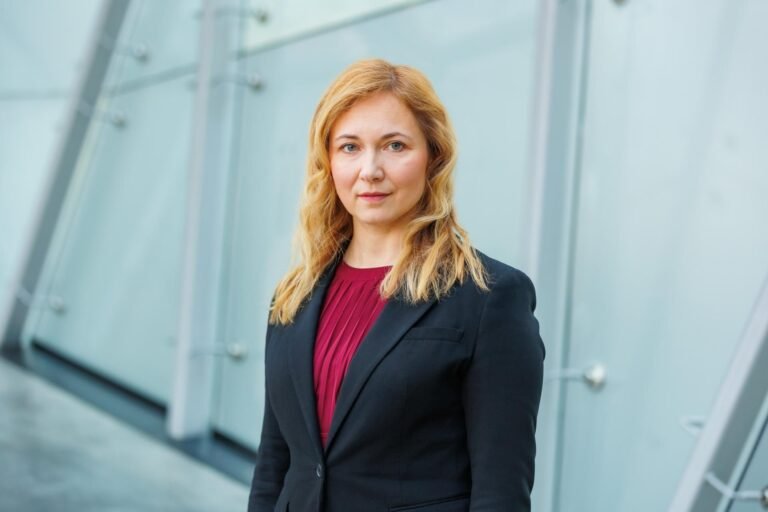
By Evija Dundure, Head of the Insurance and Pension Supervision Department at Latvijas Banka.
We still too often think of a pension as something the state will pay us in the future. However, Latvia’s pension system already works differently. Part of our social security contributions is invested in financial markets, and our future pension depends not only on how much we have contributed, but also on how much our money has earned.
The figures clearly illustrate the scale of these funds. More than €11 billion has already been accumulated in Latvia’s second-pillar pension system. Investments generated €556 million in returns in 2025 and as much as €891 million in the first half of 2026. Naturally, financial markets will experience both rises and falls, and we cannot expect such growth to continue uninterrupted or in a straight line. However, over a period of several decades, this is precisely the purpose of the second pension pillar – the money we contribute is invested so that it can generate returns and increase our future pension capital. Recent years have demonstrated that investment returns make a significant contribution.
This is also where the principle of “money making money”, or the effect of compound interest, comes into play. During the first years of saving, most of the accumulated capital consists of our own contributions. Over time, however, investment returns become increasingly important – the money earned is reinvested and continues to generate further returns. The true power of this effect becomes apparent in the third and fourth decades of saving. This is why time is one of the most valuable resources when building pension savings, particularly for younger people.
The importance of the second pension pillar will only increase. It is expected that in approximately 20 years it will account for at least 30% of newly granted old-age pensions. This means that how a person’s second-pillar pension capital is invested today will have an increasingly significant impact on their income in retirement. From the perspective of pension system supervision, one of the most important questions is therefore seemingly simple: is people’s money being invested in a way that makes the best possible use of the long period remaining until retirement?
Only a few years ago, too many young people were enrolled in pension plans that were excessively conservative for their age. Many had originally been placed in these plans automatically and had not reviewed their choice for years. Their money was less exposed to financial market fluctuations, but it also had less potential to generate long-term returns.
The situation has changed dramatically in recent years. Since pension fund managers began more actively informing clients about whether their chosen plans were appropriate for their age two years ago, people have been switching pension plans almost 50% more frequently than before. People aged between 25 and 40 have been the most active in reviewing their choices.
These changes are already visible in the pension plans themselves. More and more young people are choosing plans with a higher proportion of investments in equities, thereby giving their money greater potential to grow over the long term. Nevertheless, more than one in ten second-pillar participants under the age of 45 are still in a pension plan that is too conservative for their age. Two years ago, this was almost one in seven. Considerable progress has been made, but these figures also clearly show that there is still work to be done: some people have several decades remaining until retirement, yet their money is not making full use of that time.
As retirement approaches, however, the situation is reversed. Protecting accumulated capital from sharp financial market fluctuations becomes increasingly important. There is therefore no single pension plan that is best throughout a person’s entire working life. A good pension plan at the age of 30 is not the same as a good pension plan at the age of 60.
This brings us to one of the most important conclusions about the pension system. A well-functioning system is not simply one that offers people a wide range of pension plans. Fund managers need to manage people’s money professionally, costs must be reasonable, competition must work effectively, and investment risk must correspond to the time remaining until retirement. But that alone is not enough. People must also understand the options available to them and be able to make use of them.
Another figure illustrates this well. In Latvia, people can determine what happens to their second-pillar pension savings if they die before reaching retirement age. However, only 43% of second-pillar participants have indicated their choice. This means that more than half have yet to make this decision. Of those who have made a choice, 98% want their savings to pass to their heirs rather than be transferred to the state special pension budget. These figures reveal more than simply a desire to leave money as an inheritance. They demonstrate the gap between the opportunities the pension system provides and the opportunities people actually use. I encourage everyone who has not yet done so to log in to the Latvia.gov.lv portal and indicate their choice regarding the inheritance of their accumulated pension capital.
I see an even greater challenge in voluntary savings. Only around 200,000 people in Latvia regularly make additional savings for retirement. This is insufficient. The first and second pension pillars provide the foundation for retirement income, but for people who want to maintain a standard of living in retirement comparable to that of their working years, this may not be enough.
Here too, time is the best ally. Starting earlier with a relatively small amount can be far more effective than trying to make up for lost time ten years before retirement. The same principle applies: money makes money, and the longer the saving period, the greater the importance not only of the contributions themselves but also of the returns those contributions have had time to generate.
In my view, this is precisely the next stage in the development of Latvia’s pension system. In recent years, we have done a great deal to improve the system itself – expanding investment opportunities, reducing costs and encouraging people to choose plans that are more appropriate for their age. Now, an increasingly important question is whether people know how to make use of these opportunities. The data from the past two years provide grounds for cautious optimism: when people are clearly shown how their choices can affect their future pension, they take action.
It is precisely with this objective that Latvijas Banka has taken over and completely redesigned Manapensija.lv. Our aim is not to create yet another website filled with pension tables and figures. Information has value when it helps people understand their options and make decisions.
On Manapensija.lv, everyone can learn how to use the opportunities offered by the pension system to their advantage, compare pension plans and other forms of savings, including their costs and performance, and choose the most suitable solution for building greater savings for the future.
The website also provides answers to practical questions that arise at different stages of life. What should you do if financial markets fall sharply? Should you switch pension plans at such a time? What should you do with pension capital accumulated in Latvia if you live abroad? When should you begin reducing investment risk? How should you build additional savings? And what must you do to ensure that your second-pillar pension savings pass to your heirs in the event of your death?
As the supervisory authority, Latvijas Banka’s responsibility is to ensure that the pension system is safe and efficient, that people’s savings are professionally managed and that costs are reasonable. However, individuals’ own choices also matter – and when it comes to pension savings, it is particularly important not to postpone them.
Time is one of the most valuable resources in building a pension. The longer money remains invested, the longer it has the opportunity to generate returns not only on the contributions made but also on the returns already earned. This means that even relatively small differences in the choices we make today can lead to significantly different outcomes several decades from now.
A future pension will not be determined by a single decision made shortly before retirement. We are building it today – through choices whose value can be multiplied by time.
Source: bank.lv