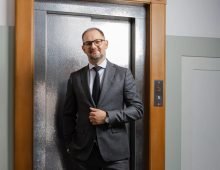
“It’s definitely worth going abroad – the people you meet and the experiences that broaden your horizons alone make it worthwhile,” says Mantas Bonda, a third-year student at the Faculty of Political Science and Diplomacy (FPSD) at Vytautas Magnus University (VMU), who is currently studying in Canada under an exchange programme. This is, however, already his third international mobility in a row.
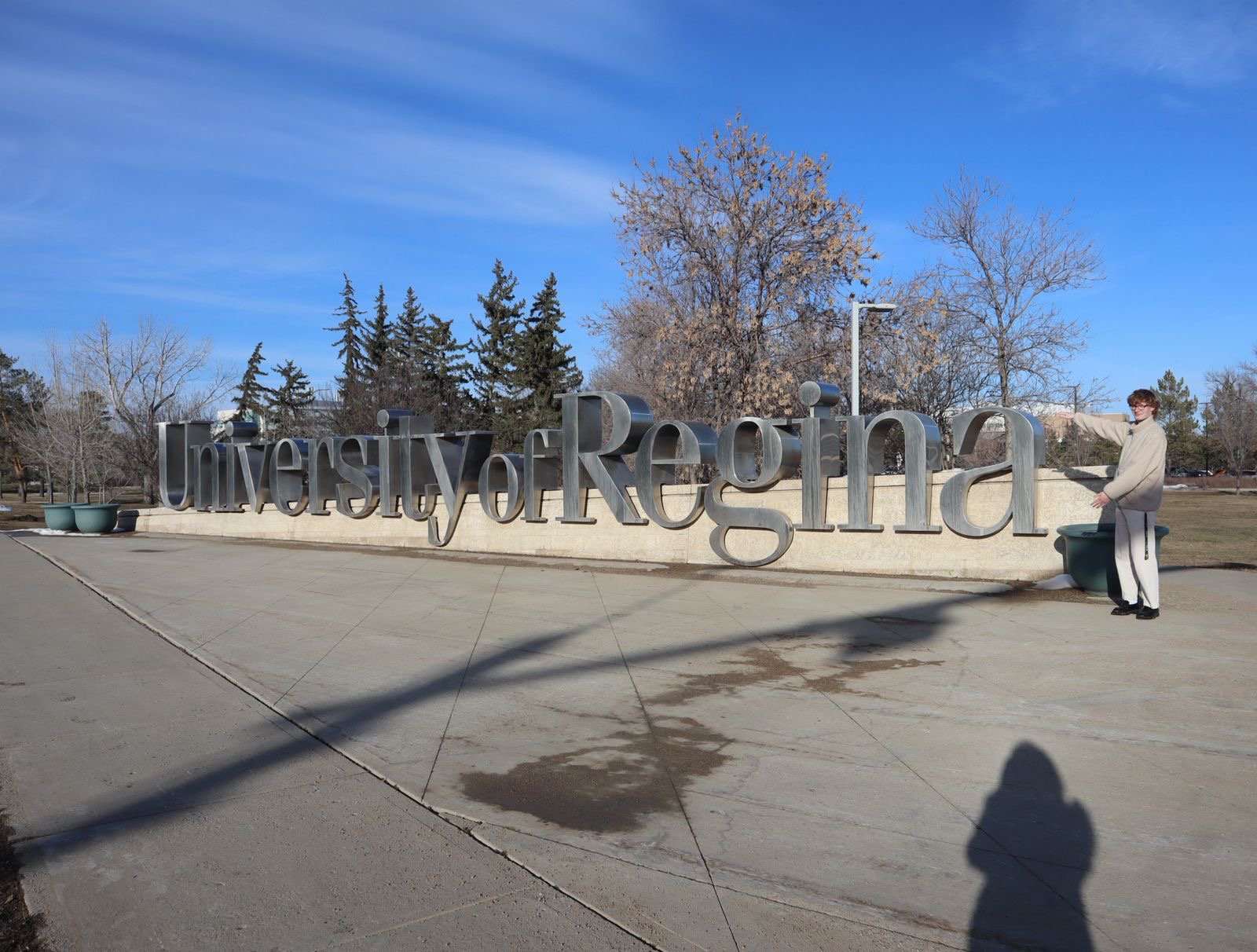
Over the past year and a half, Mantas has managed to complete an Erasmus+ internship at the Embassy of the Republic of Lithuania in Rome, study politics at the University of Milan, and is currently spending a semester at the University of Regina in Canada. According to Mantas, each experience has been different, but they have all helped him to better understand his professional goals and how international experience can enrich his future path in Lithuania.
High-responsibility tasks and invaluable experience
Mantas’s first international experience was an Erasmus+ internship at the Embassy of the Republic of Lithuania in Rome, Italy. He found the placement by actively exploring opportunities and speaking to his teachers. “The FPSD regularly shares information about internships and job opportunities, especially in institutions related to politics. All you have to do is say that you want to go – the opportunities are there. If you send an email to an embassy saying you would like to do an internship there, they will usually reply straight away, pleased to hear from you and asking when you can come,” the student says.
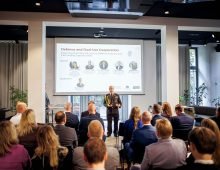
During his three-month internship, he worked alongside the entire embassy team: he helped to organise cultural events, collaborated with the cultural attaché, translated various documents and interpreted during in-person meetings. One of the most memorable experiences was interpreting for Lithuania’s Minister of Foreign Affairs Kęstutis Budrys. “It was my first internship, and to be given that level of responsibility straight away was quite daunting, but at the same time it was an invaluable experience,” Mantas recalls.
During his internship, he also had to handle more emotionally demanding tasks: he drafted letters of condolence to the Embassy of Ukraine in Italy. “When you are confronted every few days with the reality of war through the death toll and the tragic fates of people, it really takes a toll on you,” he says.
Nevertheless, his overall internship experience at the Lithuanian Embassy in Italy was a real success – afterwards, he was even offered a job.
Italian language, accent, and choice of country
Italy was a natural choice for him partly because of the language – Mantas is half Italian, so for his first international mobility he chose a country where he could communicate fluently in the local language. However, the student says that in the end his half-Italian background did not really “help” him much.
“It can even be something of a problem, because in Lithuania, when I start speaking, people see me as a foreigner, and in Italy I don’t look like a local either – in Milan, for example, people often mistook me for a German. So I don’t always feel fully accepted in either Lithuania or Italy,” the student says, describing the challenges.
During his internship at the Lithuanian Embassy in Italy, Mantas also had to get used to the quite different Roman accent. “It was really hard to get used to; when I first arrived, I couldn’t understand half of what people were saying. But after spending a few months there, my parents and other relatives in Italy all noticed that I’d started speaking with a Roman accent myself. It was pretty funny,” he says with a smile.
After three months of his internship in Rome, Mantas went on to study at the University of Milan, where he spent four months deepening his knowledge of political science.
Friends abroad and the Italian pace of life
“I was very lucky to have met Italian students who had come to VMU, so I had friends and their families in both Rome and Milan whom I could turn to for help,” Mantas recalls. He advises anyone considering international mobility in other countries to get to know students from those countries studying at VMU.
“If you’re thinking about France, Italy, or Spain, there are plenty of students from those countries at VMU. It’s easy to strike up a connection with them, they’re always looking for people to spend time with, or just have a chat with. And it certainly doesn’t hurt to have one or two acquaintances in the country you’re planning to visit,” the student advises.
Mantas notes that in Milan, located in northern Italy, people are more “Lithuanian” – a little more reserved and more organised.
“In Rome, on the other hand, you never know when someone will invite you out for a meal or a walk. It’s hard to get used to that kind of pace. And to the sheer size of the city itself as well – people are very warm, friendly, and welcoming, but there are so many of them that during the three months I spent there, I felt as though I could never quite get beyond the city,” the student says, recalling the differences between the people he met in the two Italian cities.
The biggest difference in studies: pace and the amount of independent work
Mantas is currently studying in Canada as part of an exchange programme and will spend the whole semester at a university in Regina, continuing to deepen his knowledge of political science.
When asked how his studies at VMU differ from those at universities in Milan and Canada, Mantas says the biggest difference lies not in the content of the lectures, but in the pace and the large amount of independent work.
“For each class, you have to read one or two chapters from long, complex academic books, so it takes time not only to read, but also to understand what you’ve read. It’s quite hard to keep up the pace, to find time to prepare properly for each day, and you’re constantly worried that you might forget something or mix up the different books needed for different classes,” Mantas says, sharing his experience.
According to him, VMU teachers distribute the workload more proportionately. “I think our teachers expect you to study independently and to take the initiative in developing a deeper interest in what you’re studying. I prefer this approach because it’s closer to my own learning style,” says Mantas.
He also points to studying in Canadian English as an additional challenge: “My study programme at VMU is also taught in English, but here you still hear your coursemates, whereas in Canada the English is very different. Even though I’m confident in my English skills, I still have to stay alert all the time and make sure I’ve understood everything correctly.”
Canadian cold and incredibly friendly people
When Mantas first arrived in Canada, he was surprised to find that Canadians, although colder and calmer in manner than Italians, are nevertheless incredibly friendly. “You walk into a store and everyone asks you how you’re doing, how your day is going. You don’t even know whether they expect a full answer, whether you’re really supposed to start telling them what you’re doing and why you’re buying those particular items. In the first few days, it felt very unusual,” Mantas recalls.
He was also struck by the fact that, during official university events, the local Indigenous people are thanked for allowing the use of their land. “We don’t have anything like that either in Lithuania or elsewhere in Europe, because we ourselves are the native population, so this tradition was one of the most interesting things for me,” he says.
Another thing that surprised Mantas was the large number of students from Latin America at the university. “There are about 20 Mexican students, while the total number of exchange students is 60. It is this Mexican contingent, making up a third of the international students, that keeps everyone’s energy and warmth up,” Mantas says. And warmth is certainly needed in Canada: he says he has already experienced a perceived temperature of -45°C.
“We went to see the northern lights, but it was impossible to stay outside for more than ten minutes. I’ve never experienced such cold,” he recalls. That is why he was delighted when the temperature became a little more familiar by Lithuanian standards. “It’s funny to say that it ‘warmed up’, because it only got up to -6°C, but Canada is actually so cold that I couldn’t live here. Nor could I live in Italy, because it’s too hot there. Lithuania, in terms of temperature, is the perfect mix of those two countries,” he says.
Benefits that outweigh any fears
When asked whether it is worth going abroad to study or do an internship, Mantas has no doubts. “I think all students, even those who never go on international mobility, definitely know that it’s worth going,” he says.
He identifies the fear of finding oneself in an unfamiliar environment as the main reason why students choose not to go abroad during their studies. “It definitely isn’t easy. This is already my third mobility in a row, because I want to make the most of every opportunity, but I’m starting to feel a bit worn out. It’s always new friends, a new environment – everything is new,” the student says, sharing his experience.
However, Mantas insists that students should not be afraid of these challenges, because the opportunities and benefits outweigh them.
“Besides, there will always be people you can turn to for help – both at VMU’s International Cooperation Department and at your place of study or internship.
And in the worst-case scenario, there’s always the option of cancelling your mobility and returning to Lithuania if it becomes too difficult, if you don’t like the culture, or if other problems arise,” he advises other students who are considering mobility opportunities.
There’s no place like home
Although Mantas describes all three of his international mobility experiences as highly valuable, he says he has come to realise that he would not want to stay and live in either Canada or Italy.
“It’s too cold in Canada, and in Italy there’s too much chaos and too many people. Even though I’m half Italian and I really get on well with other Italians, the cultural differences are too great, and people here don’t seem too concerned about wasting time or about work,” he says, adding that life in Lithuania is simpler, the country is smaller, and everything is more accessible.
“And there’s patriotism too – after all, I chose to study politics for a reason, and it’s in this field that I want to continue on my path,” the student says.