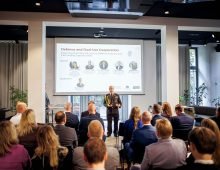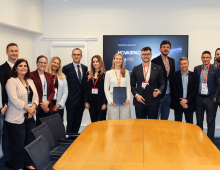
Latvian defence and dual-use technology companies are meeting with US industry firms Neros, Anduril, Shield AI, Kratos Defense & Security Solutions, Qualcomm and Starling Systems in Los Angeles and San Diego. The programme, organised by the Investment and Development Agency of Latvia (LIAA), is taking place during Latvian President Edgars Rinkēvičs’ working visit to the United States. It aims to help Latvian developers and manufacturers find US customers, investors, systems integrators and manufacturing partners, and explore opportunities to participate in joint product development, testing and supply chains.
“The United States is one of the world’s largest defence technology markets. It is home to global systems integrators and investors capable of funding rapid product development and the scaling of manufacturing. Latvia’s exports of goods and services to the US exceeded €1 billion in 2025, and our next ambition is to increase the share of high-value technology in those exports. Latvian companies are bringing their own solutions, engineering expertise and manufacturing capabilities to these discussions. The goal is to find partners with whom they can jointly develop, test and manufacture new products. The value of these talks will be measured by the technical cooperation, orders and investment that follow,” says Raivis Bremšmits, State Secretary at Latvia’s Ministry of Economics.
Southern California: Talks with Next-Generation Defence Technology Companies
The Latvian delegation will meet Neros, Anduril, Shield AI, Kratos Defense & Security Solutions, Qualcomm and Starling Systems in Los Angeles and San Diego. Discussions will cover potential cooperation in component supply, joint product development, testing and manufacturing, as well as opportunities for Latvian companies to join their US partners’ supply chains. Each Latvian company is participating in meetings relevant to its specialisation and commercial objectives.
A business roundtable is also planned in Torrance, where the Latvian delegation will meet defence and dual-use technology companies from the surrounding area. The discussion will focus on the technologies Latvian companies can offer, joint product development and manufacturing, and opportunities to participate in US supply chains.
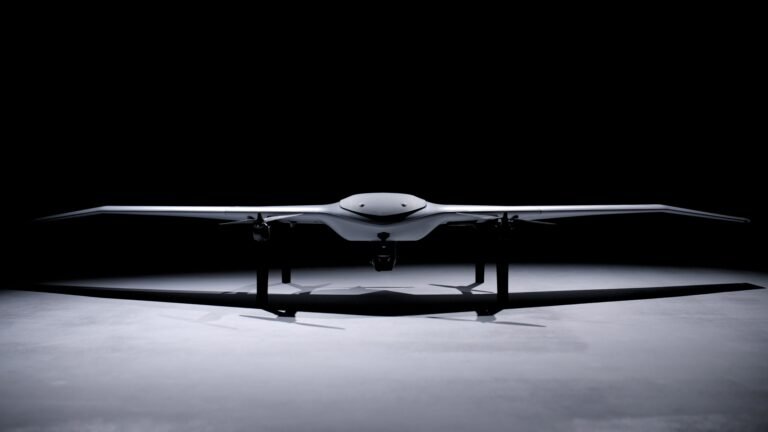
Collectively, these US companies work in fields that include tactical and autonomous unmanned systems, counter-drone solutions, defence electronics, AI-based control software, sensors, radio communications, semiconductors, connectivity and high-performance computing, as well as space, hypersonic and rocket propulsion technologies.
Technologies in these fields are used for reconnaissance, target identification, carrying various payloads, protecting facilities and military units, processing and transmitting data, and operating autonomously when communications or navigation signals are disrupted or unavailable. Such systems require secure data transmission, radio electronics, sensors, energy-efficient semiconductors, software and the integration of different technologies into a single system.
Latvian companies can offer electronics and communications modules, sensors, software, systems integration expertise and manufacturing capabilities in these areas. The meetings are intended to establish which Latvian solutions meet US partners’ technical requirements and where Latvian companies could contribute to technology development, testing, manufacturing or supply chains. Practical cooperation will depend on an assessment of technical requirements, compatibility and commercial terms.
“Latvian companies combine strong engineering expertise with the ability to develop and adapt technologies quickly to real defence needs. We see potential for cooperation in unmanned systems, secure communications, sensors, software and systems integration. Working with Latvian partners could help develop and test solutions that strengthen allied technological readiness and interoperability on NATO’s eastern flank. During this visit, we want to identify specific joint projects and agree on the next steps in technical cooperation,” says Ido Gur, founder and CEO of Starling Systems.
San Diego: Autonomy, Military Aviation and Connectivity
San Diego is one of the leading US centres for military aviation, unmanned systems and defence technology. Separate meetings with US partners are planned there, taking into account the capabilities and development goals of the Latvian companies involved.
Discussions will focus on autonomous platforms operating in complex electromagnetic environments, secure data transmission, sensors, the use of artificial intelligence, interoperability between systems and the integration of different technologies into a single product. Connectivity, semiconductors and on-device data processing needed for energy-efficient autonomous systems will also be discussed.
Latvian companies’ experience in electronics, secure data transmission, sensors, software and systems integration provides a basis for technical discussions with US partners. The meetings will explore whether specific Latvian products or engineering capabilities could contribute to joint projects or supply chains. Another possible area of discussion is adapting technologies to the requirements of European allies, where both sides see a technical and commercial case for doing so.
Latvia Offers Technology, Engineers and Manufacturing Expertise
The defence and dual-use technology programme includes Aumeux, SAF North America, Origin Robotics, Raw-tech, Ardlat, Perkons Energy, LMT, LMT Defence and VIC TEC. It also includes the Latgale Special Economic Zone, the Latvian Exporters’ Association “The Red Jackets”, the Latvian Federation of Security and Defence Industries, the Latvian Chamber of Commerce and Industry, the University of Latvia and Riga Technical University.
“The Latvian delegation’s offering is not limited to one product or technology. It brings together expertise in unmanned and counter-drone systems, radio communications, electronics, sensors, software, artificial intelligence, cybersecurity and manufacturing. Our task is to find a place for these technologies in specific projects run by US companies. The mission’s results will be determined not by the number of meetings, but by the companies’ ability to continue technical discussions after the visit, move towards testing and establish commercially viable partnerships,” says Ieva Jāgere, Director of LIAA.
One example of Latvia’s technology offering is SAF Tehnika, which develops and manufactures microwave radio equipment for high-capacity data transmission, solutions for ultra-low-latency networks and portable radio-frequency spectrum analysers in Riga. This equipment is used to test communications quality, analyse radio signals and detect interference.
“The US is the world’s wealthiest market, and every exporter dreams of securing a place at the table. LIAA has done tremendous work in arranging meetings with some of the most important US companies in the dual-use sector. A small, motivated LIAA team has achieved what larger countries do with many times the resources. I have been eagerly awaiting my arrival in California to take part in this valuable programme,” says Jānis Bergs, Member of the Management Board and Vice President of Sales and Business Development at SAF Tehnika.
After the visit, Latvian companies will continue discussions with partners where specific technical or commercial opportunities have been identified. LIAA will support the coordination of contacts, provide guidance on the US market and help identify suitable export and investment support instruments.
The defence and dual-use technology programme is part of LIAA’s Latvian business trade mission to the United States, which runs until 27 September and covers New York, Los Angeles and San Diego. Separate programmes have also been prepared for startups, film industry companies and life sciences companies.
LIAA organises participation in international trade missions under the EU-co-financed Innovative Business Development Programme for Small and Medium-Sized Enterprises (SMEs), with support from the European Regional Development Fund and national funding. Companies may participate either by paying their own costs or by receiving support to cover eligible expenses.