By Roberts Samtiņš, Head of AJ Power Group.
In 2022, the energy crisis was largely the price we paid for Russia’s war against Ukraine. Today, a combination of new geopolitical factors, energy market developments and weather forecasts suggests that Europe and the Baltic states could face an energy crisis of a similar scale this winter.
This time, the energy crisis could develop faster than in 2022. Businesses still have an opportunity to reduce their exposure to rising prices, but the time available to make decisions is shrinking. During the first two days of November, Latvia’s average wholesale electricity price was EUR 290/MWh — 157% above the October average. On 2 November, the daily average reached EUR 347/MWh, with prices rising as high as EUR 483/MWh in individual 15-minute intervals. In Poland, the highest price reached EUR 698.93/MWh.
Five factors affecting prices simultaneously
First, Europe is entering winter with limited gas reserves. At the end of October, EU gas storage facilities were approximately 75% full. This is 15 percentage points below the average for the previous five years and the lowest storage level since records began in 2011. In Germany, which has the largest gas storage capacity in the European Union, facilities are currently only around 62% full. Withdrawals from storage have already begun in Austria, Czechia, Slovakia, France and Belgium.
Second, the Strait of Hormuz remains effectively closed to LNG tankers. Before the war with Iran, approximately 93 LNG cargoes were shipped from Qatar and the United Arab Emirates each month. In September and October, that figure was just 27 cargoes per month — around 30% of the usual volume. US President Donald Trump has not ruled out expanding strikes against Iran after the 3 November elections. This could further reduce LNG exports, potentially for a prolonged period. Current gas prices reflect expectations of a partial resolution rather than a further escalation.
Third, Europe is competing with Asia for every LNG cargo. Japan, South Korea and China have the financial resources to compete for supplies. If supply falls short, competition for gas could push prices higher in both regions. Prices could continue rising until high costs force industrial users to reduce their gas consumption. Demand for heating, however, will remain.
Fourth, the weather. Forecast models point to a possible exceptionally early breakdown of the polar vortex in early November, potentially the earliest on record. The effects of such events are usually felt two to four weeks later, meaning that the risk of cold spells and periods of low wind in Europe could increase from mid-November. This could raise gas consumption both for heating and for electricity generation if wind power output declines.
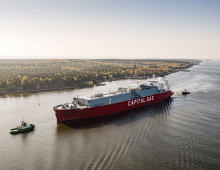
Fifth, the risk of deliberate disruption to Baltic energy infrastructure is increasing. During winter, the Baltic states depend on imports, making electricity supplies from Finland and Sweden, as well as gas imports through the LNG terminals in Klaipėda and Inkoo, particularly important. Any incident affecting an interconnector or terminal in an already tight market could trigger an even sharper price increase. This risk is not merely theoretical: we have already experienced incidents in the Baltic Sea.
The market is already feeling the pressure. The TTF gas price rose by almost a fifth in two weeks, from approximately EUR 88 to EUR 103/MWh — its highest level in almost four years. The price of the December gas delivery contract has increased by 84% in three months.
Gas prices also affect electricity prices. When wind power output is low, electricity prices in the region are more frequently set by the production costs of gas-fired power plants. Prolonged periods of low wind increase demand for gas in electricity generation and can drive further price rises. The wholesale electricity prices seen in the first days of November are therefore a warning rather than a surprise.
The difference between 2026 and 2022
In 2022, gas prices for delivery in the following months reached as high as EUR 340/MWh in Germany, while electricity prices reached EUR 670/MWh. The Baltic electricity market is also influenced by price developments in Germany and other European markets, where gas-fired generation costs play a significant role in price formation. Comparing the 2021/2022 and 2026/2027 winter seasons shows that gas and electricity futures prices are currently still well below the peaks reached in 2022. This means businesses still have an opportunity to reduce their exposure to rising prices.
There is, however, an important difference. In 2022, the most serious problems began after Russia’s invasion of Ukraine, when energy prices were already high and markets had been under pressure for several months. This time, the risk factors are already present before winter, meaning that prices could reach the peaks of 2022 more quickly than they did then.
What does this mean for Latvia?
For now, there is no reason to fear a physical shortage of gas or electricity. On 30 October, the Inčukalns underground gas storage facility held 12.46 TWh of gas, including 4.03 TWh in regional security reserves. This is 2.13 TWh, or 15%, less than a year earlier and the lowest level for this time of year since 2020. Meanwhile, the Klaipėda and Inkoo LNG terminals are operating reliably, with deliveries also scheduled for the coming winter months.
Nevertheless, we are not protected against rising prices. Natural gas prices in Latvia are closely linked to the European TTF index, while changes in gas prices also affect the electricity market. Latvia could therefore feel the impact of rising prices much like other European countries.
What should businesses do?
Businesses with fixed-price gas and electricity contracts are currently in a favourable position and better protected against short-term price fluctuations. Those whose electricity prices are linked to Nord Pool or whose natural gas prices are linked to the TTF index should consider now how to reduce their potential price exposure.
There are two options. The first is to fix the price for the entire consumption volume by entering into a fixed-price contract. In this case, I would recommend fixing prices until the end of March 2027. Prices for subsequent periods are also rising, but pressure on electricity prices could ease in spring and summer as renewable electricity generation and battery energy storage system (BESS) capacity expand across the region.
The second option is to fix the price for only part of the consumption volume. In my view, this is the best solution. If the market experiences a price surge as sharp as that of 2022, the price for part of the volume will be fixed, reducing the impact. If the situation is resolved and prices fall, the business will benefit from lower prices for the remaining volume. We already offer this partial price-fixing model to AJ Power clients.
Alongside either price-fixing option, businesses should consider now how to reduce their energy consumption. The higher energy prices rise this winter, the greater the savings from every megawatt-hour not consumed.
Are prices certain to rise?
No. However, the current combination of factors points to a very tight situation in energy markets. If LNG tanker traffic through the Strait of Hormuz returns to normal, or if the winter is mild, windy and wet, the worst-case scenario may not materialise and energy prices could fall.
As we saw in 2022, many businesses fixed their energy prices only after they had already multiplied. This time, businesses still have an opportunity to reduce their price exposure in advance, but the time to act is running out.