Latvia has entered a period of political transition after Prime Minister Evika Siliņa announced the resignation of her government, opening the door to intensive coalition negotiations and consultations at the presidential level.
The collapse of the ruling coalition followed weeks of growing political tension inside the government led by New Unity, the Union of Greens and Farmers, and the Progressives. Disagreements over defence policy, internal coordination and responsibility for recent national security incidents eventually fractured the alliance beyond repair. The dismissal of Defence Minister Andris Sprūds became the turning point that accelerated the government’s downfall, as the Progressives publicly withdrew their support for the coalition.
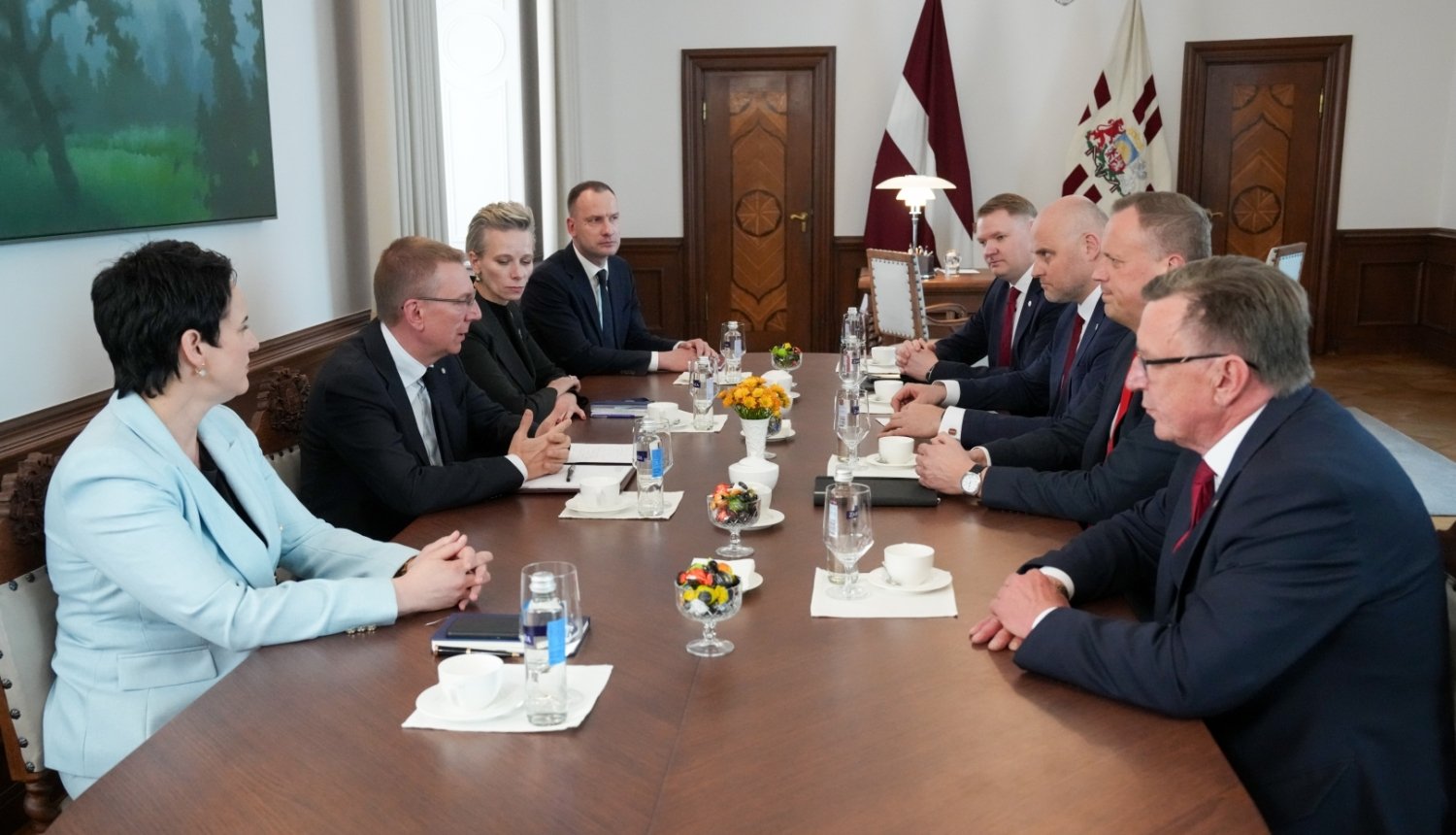
Following the resignation announcement, attention immediately shifted to Edgars Rinkēvičs, who has now assumed a central role in overseeing consultations on the formation of a new government. In recent days, the president has already held meetings with representatives of parliamentary parties and coalition leaders to assess possible governing scenarios and determine whether a stable majority can be assembled in the Saeima.
According to Latvian media reports, the consultations are expected to continue throughout the coming days, with additional meetings planned between the president and party leaders representing both current coalition members and opposition forces. Political parties are attempting to map out several potential coalition formats, though none currently appears straightforward.
One of the scenarios under discussion involves cooperation between the National Alliance, the Union of Greens and Farmers and the United List. However, negotiations remain fluid, and multiple parties have signalled that broader talks will still be necessary before any formal nomination for prime minister can be made. President Rinkēvičs has so far avoided publicly endorsing any specific coalition model, instead emphasizing the need for political stability, effective governance and national security continuity.
Behind closed doors, discussions are reportedly focused not only on coalition arithmetic but also on the future direction of Latvia’s defence and security policy. The government crisis erupted amid criticism surrounding Latvia’s preparedness to respond to drone-related incidents near its eastern border, an issue that exposed wider concerns about institutional coordination and military readiness.
Although Siliņa’s government will continue in a caretaker capacity until a replacement cabinet is confirmed, Latvia now faces a politically sensitive transition period less than two years before the next parliamentary elections. The coming presidential consultations are therefore expected to shape not only the next coalition, but potentially the broader balance of power ahead of the 2026 election campaign.
For President Rinkēvičs, the challenge will be to broker a coalition capable of surviving both parliamentary pressure and growing public demands for stronger leadership in matters of security and governance. The next round of meetings at Riga Castle may ultimately determine whether Latvia moves toward renewed political stability – or a prolonged period of coalition turbulence.