The Latvian national airline airBaltic today outlines the key elements of its business plan following its approval by the company’s Supervisory Board. The plan is designed to strengthen airBaltic’s long-term competitiveness, establish a sustainable capital structure, support its future development and maintain reliable connectivity for Latvia and the wider region.
The plan combines a more focused network centred around Riga, a reduced all-Airbus A220-300 fleet, stronger year-round ACMI partnerships and improved operational efficiency. It is intended to create a more resilient business with improved financial sustainability.
This announcement is being made in connection with airBaltic’s discussions with key stakeholders and prospective providers of interim financing. As part of this process, certain financial and operational information from the revised business plan has been shared with selected parties under confidentiality arrangements and is now being made public through a cleansing statement via Euronext Dublin. The proposed interim financing and broader recapitalisation have not yet been agreed or completed and remain subject to stakeholder agreements, the required bondholder resolutions and other approvals.
In connection with the proposed recapitalisation and new business plan, holders of airBaltic’s 2029 Senior Secured Notes are encouraged to participate in the upcoming voting process(es). The reconvened vote on the required resolutions will occur on 17 August 2026, with further voting rounds expected to follow.
A revised plan for a materially changed operating environment
The previous business plan, developed in preparation for the planned initial public offering, envisaged sustained growth in passenger volumes and ticket revenue across the Baltic region and wider European markets, supporting expansion towards a 100-aircraft fleet. Since then, the operating environment has changed materially. Demand and revenue growth have moderated, geopolitical developments in Ukraine and the Middle East have increased uncertainty and operating costs, and prolonged Pratt & Whitney engine availability constraints have affected the airline’s ability to deploy its full fleet.
The revised business plan responds to these developments with a deliberate shift in priorities: financial stability first, growth second. It aligns airBaltic’s network, fleet, cost base and capital structure with current market conditions, while preserving the airline’s core role in providing connectivity for Latvia and the wider Baltic region. Future growth will be measured and focused on opportunities that support sustainable profitability, cash generation and a stronger balance sheet.
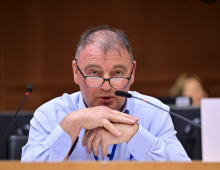
Erno Hildén, President and CEO of airBaltic: “Every successful airline must continuously adapt to a changing market. Thus, this business plan is about making disciplined choices that strengthen airBaltic’s long-term competitiveness while preserving what matters most – reliable connectivity and operations, together with financial sustainability. It provides a stronger foundation for the company’s future and positions us to create long-term value for our customers, partners and Latvia.”
Commitment to maintaining connectivity for Latvia and the wider region
The new business plan positions airBaltic as a strong national airline with a demand-driven network, efficient operations and a solid foundation for long-term financial performance.
The business plan introduces a network strategy centred on Riga, Latvia as the airline’s primary hub. Rather than pursuing broad expansion, airBaltic will focus on deepening its presence in existing markets by increasing depth and frequency where demand and profitability are strongest. The company’s bases will continue to complement the network through selected point-to-point services, while tactical and seasonal flying will improve fleet utilisation throughout the year.
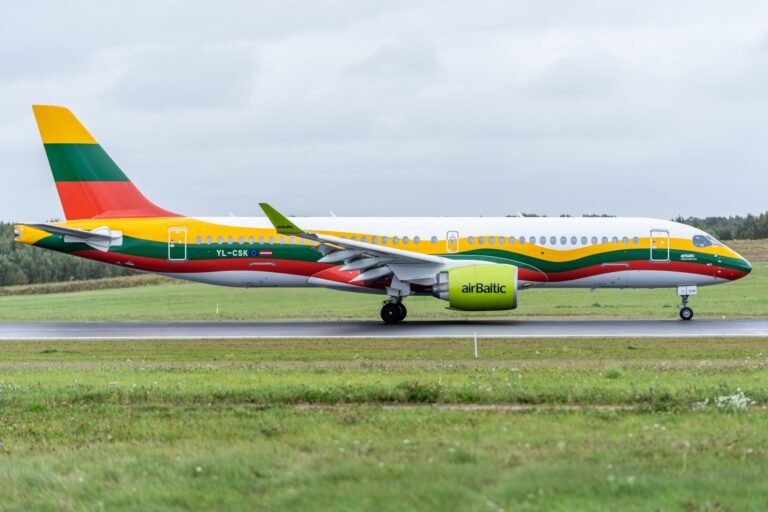
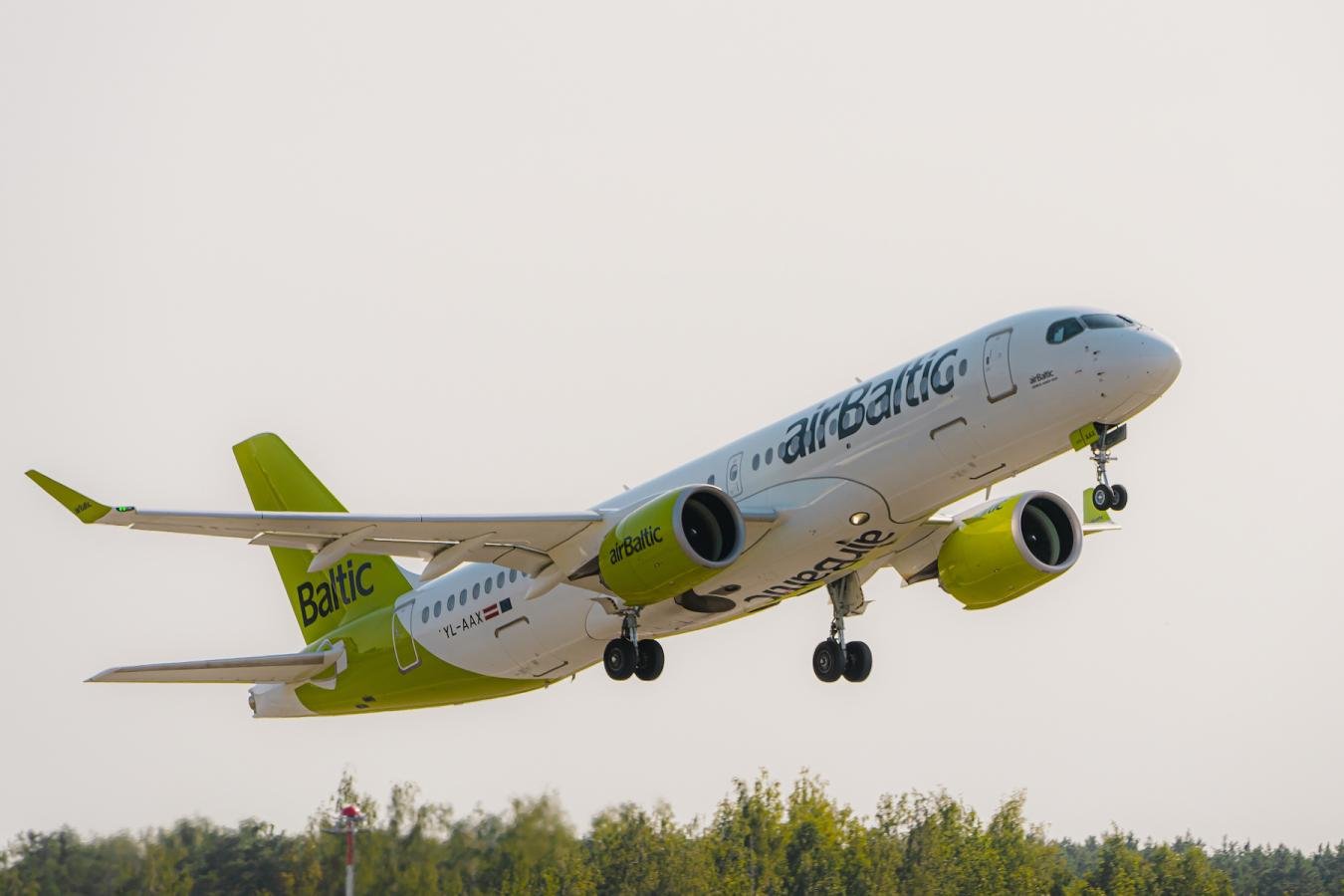
airBaltic expects to operate approximately 36 Airbus A220-300 aircraft by the end of 2026 (currently 54), with the fleet gradually increasing to around 40 aircraft by 2031. Despite the smaller fleet, scheduled capacity is expected to remain broadly stable through improved aircraft utilisation. Moreover, enhanced commercial partnerships with ACMI partners will enable more efficient year-round aircraft deployment while reducing seasonal volatility across the business.
Scheduled service Available Seat Kilometres (ASKs) are projected to decline from approximately 9.6 billion in 2026 to 8.7 billion in 2027, before gradually increasing to approximately 10.5 billion by 2031, reflecting a more focused network strategy centred on profitable growth.
Greater resilience through ACMI partnerships and a structurally lower cost base
A strengthened commercial partnership with ACMI customers will support airBaltic’s return to profitability under the new model. Deploying capacity in a more balanced way during both the summer and winter seasons supports margins by materially reducing the company’s fixed-cost burden during the winter season, while mitigating the seasonality of the network business, diversifying the revenue base and providing greater flexibility to allocate aircraft according to market demand.
Through the combined fleet, network and operational initiatives, airBaltic is targeting approximately EUR 45 million in recurring annual benefits, primarily through operating cost reductions but also revenue opportunities. The revised plan prioritizes rigorous cost discipline alongside revenue growth to rebuild financial strength: improved margins and cash generation are expected to result from both more disciplined capacity deployment and a structurally lower cost base.
A recapitalisation designed to establish a sustainable capital structure
To address near-term liquidity requirements and support implementation of the revised operating plan, airBaltic is seeking EUR 225 million of interim financing. The interim financing is intended to bridge the company to a permanent financing solution and remains contingent on the required bondholder resolutions and other approvals.
The proposed permanent financing package comprises up to EUR 225 million of new debt financing and EUR 100 million of new equity capital. The proposed recapitalisation also contemplates partial equitisation of the 2029 Senior Secured Notes, with the remaining portion replaced by new, reduced debt of up to EUR 125 million, as well as partial equitisation of selected other balance-sheet obligations. Certain elements of the proposed recapitalisation remain subject to the required approvals.
Financial Outlook
Under the revised business plan, airBaltic expects revenue to reach approximately EUR 0.8 billion in 2027, increasing to EUR 0.9 billion in 2029 and EUR 1.0 billion by 2031.
EBITDAR is projected to increase to approximately EUR 192 million in 2027, EUR 243 million in 2029 and EUR 300 million in 2031, representing an EBITDAR margin of approximately 25–29%.
The business plan also envisages a gradual strengthening of the company’s financial position, driven by both improved operating performance and the implementation of the proposed recapitalisation. This is reflected in the net leverage ratio, measured as net debt to EBITDAR, which indicates how many times the company’s net debt exceeds its annual earnings capacity; the lower the ratio, the stronger the company’s financial position. Net leverage is projected to be approximately 4.8x following completion of the recapitalisation at year-end 2026, declining to approximately 2.4x by year-end 2029 and further to approximately 1.6x by year-end 2031.
The financial information set forth above is based on airBaltic’s current expectations and assumptions and is not a guarantee of future performance. Actual results may differ materially due to a variety of factors, including fuel prices, foreign exchange rates, inflation, demand trends, supply chain disruptions and the successful implementation of the company’s business plan.
The company continues to implement the business plan through a number of interconnected steps and will make further disclosures through the stock exchange, as required, in due course.
airBaltic continues to operate as normal, and all scheduled flights are operating according to plan. The implementation of the business plan will not affect the airline’s day-to-day operations or the services provided to its passengers.
The full announcement is available on the Euronext Dublin website here.
About airBaltic:
airBaltic (Air Baltic Corporation AS) is the Latvian flag carrier and a leading airline in the Baltic States, connecting the region with more than 80 destinations across Europe and beyond. The company is majority-owned by the Latvia state, holding 88.37% of voting rights, with Deutsche Lufthansa AG holding 10% and the remaining 1.63% owned by private shareholders. Founded in 1995, the airline operates a modern and one of Europe’s youngest fleets of Airbus A220-300 aircraft and employs over 3 000 people. In 2025, airBaltic became the first European airline to introduce free high-speed SpaceX Starlink internet onboard its flights.
airBaltic has received numerous international awards recognizing its safety, service quality, innovation, and sustainability. In 2026, the airline was named among the world’s 50 safest airlines by Airline Ratings for the second consecutive year. The same year, APEX awarded airBaltic the Five Star Major Airline Award for its high-quality travel experience and Best Wi-Fi in Europe Award. In 2025, Airline Ratings recognized airBaltic as a global leader in sustainability and one of the most preferred airlines in Europe and the UK. airBaltic has also been named Best Airline in its region by Skytrax for three consecutive years.
Source: company.airbaltic.com