Trials of a private 5G network at Klaipėda Port in Lithuania have successfully concluded, marking a key milestone in defining the port’s digital future. Santa Monica Networks and Latvian telecommunications provider LMT (LMT Group) have completed the comprehensive design phase for a potential port-wide private network and demonstrated concrete, practical applications directly to port company executives, illustrating how 5G technology can optimize daily workflows.
According to Mindaugas Žiūkas, Director of Santa Monica Networks, as the port increasingly digitizes its operations, reliable connectivity is becoming crucial as the foundation for a growing number of machines, devices, and daily processes, not just for human communication. “Numerous processes take place simultaneously at the Port of Klaipėda, making it clearly evident where technology can deliver practical benefits, such as boosting operational efficiency, automating more processes, and reliably managing machinery and data. For us, as a strategic IT partner, this is one of the most significant projects of recent years and an opportunity to leverage our expertise to help modernize the port that connects Lithuania to the world,” said M. Žiūkas during the event.
Autonomous systems demonstrate private 5G applications
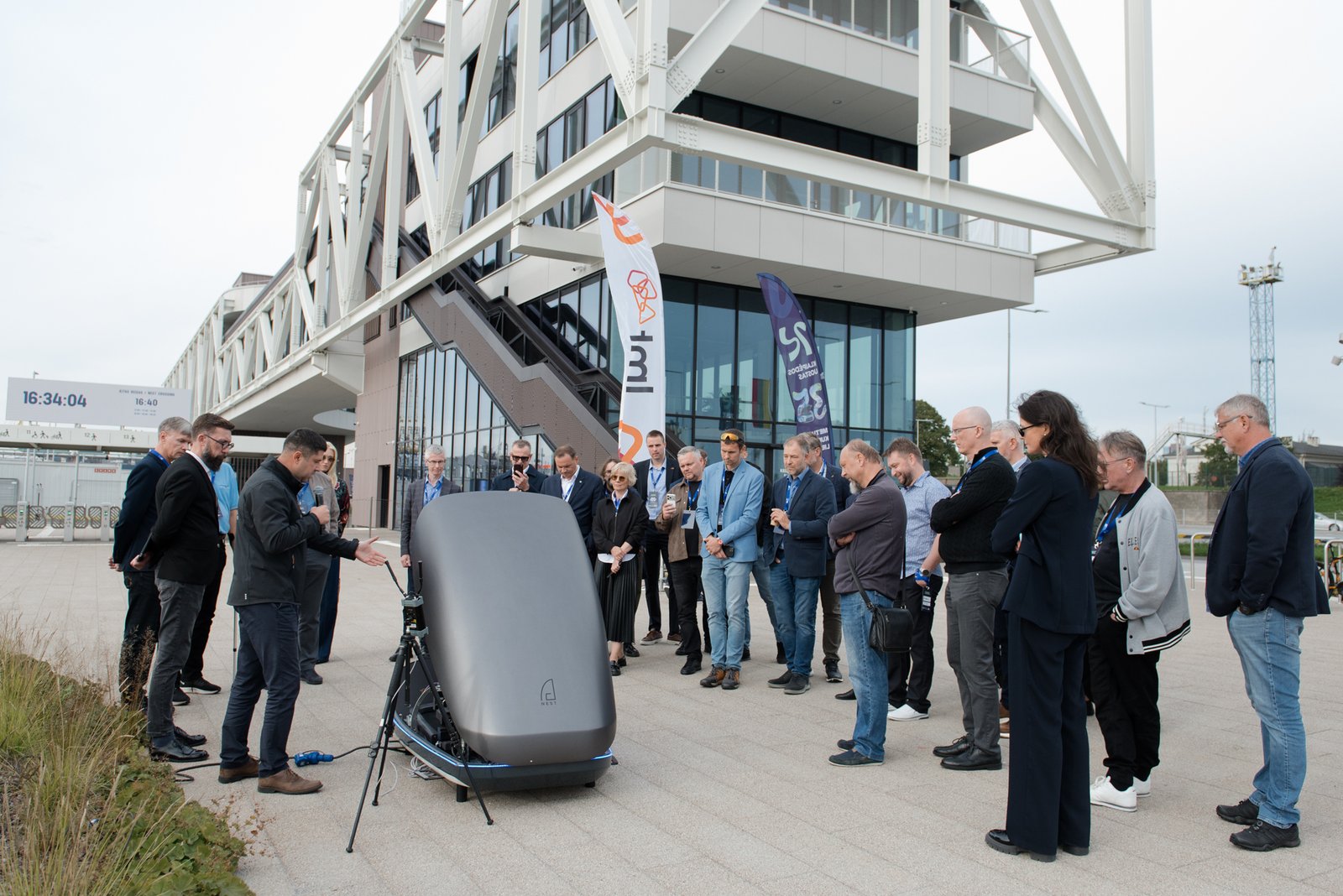
Executives and IT specialists from companies operating at the Port of Klaipėda attended the demonstration. Santa Monica Networks, LMT, and their technology partners showcased specific private 5G use cases in a real-world port environment and discussed with port representatives how these solutions could further modernize the port.
Atlas demonstrated its autonomous drone-in-a-box solution, combining AtlasNEST with the AtlasPRO unmanned aerial system to enable persistent remote monitoring and autonomous operations. The integrated system enables remote deployment, operation, recovery, and recharging of the drone, supporting inspection, situational awareness, and monitoring missions in complex and hard-to-reach port environments.
LVR Flote, a provider of port technical services in Latvian ports, demonstrated its uncrewed surface vessel, the Otter USV, which is used for hydrographic surveys of the harbor bed. LVR Flote also presented a tool to improve the transfer and processing of large survey datasets and a data pre-processing tool that applies initial filtering before detailed quality control by hydrographers. Combined with 5G connectivity, these solutions are intended to reduce manual work, shorten the time between data collection and analysis, and support faster operational decision-making in ports.
“At LVR Flote, we see strong potential in using digitalization and data more effectively to support better, data-based decisions – whether in fleet management, hydrographic surveys or other operational areas. For any digital solution to work in practice, safe, reliable and secure connectivity is essential, especially in critical infrastructure such as ports,” said Kaspars Ozoliņš, Member of the Board of LVR Flote.
According to Algis Latakas, Director General of the Klaipėda State Seaport Authority, technological development is crucial for the port not only in terms of modernization but also regarding competitiveness.
“Today’s market rewards those who are fast, reliable, flexible, and resilient. A private 5G network could unlock even more opportunities for the Port of Klaipėda by enabling the implementation of advanced solutions, process automation, and increased operational capacity, while ensuring uninterrupted connectivity and secure data transmission, even in extraordinary situations. Resilient, modern, and flexible – that is how we envision the future of the Port of Klaipėda, and that is the port we are building every day,” says Algis Latakas, Director General of the Klaipėda State Seaport Authority.
Increasing use of digital solutions in port operations
A private 5G network would give the port greater control over connectivity management. The port could independently decide which processes are prioritized, which devices can connect to the network, and keep certain sensitive operational data within its own infrastructure. This contributes to an increase in security, and would help ensure controlled communication and coordinated action during incidents.
According to Aigars Runcis, Director of the Ventures Department at LMT, the solutions demonstrated in Klaipėda represent only a fraction of the potential applications for private 5G technology in a port environment. “Private 5G is not connectivity for its own sake – it is the foundation for smarter, safer, and more efficient port operations. Demonstrations in Klaipėda show how unmanned systems and mission-critical communications can already deliver practical benefits, while the same connectivity platform can support a wide range of other solutions as the port ecosystem evolves. Our goal is to help ports build infrastructure that enables continued digitalization and automation, while boosting operational efficiency and resilience,” said A. Runčis.
LMT brings practical experience in deploying private 5G networks in ports to the Klaipėda project. The LMT Group installed the first private 5G network in the Baltic states at the Baltic Container Terminal (BCT) in the Port of Riga. Covering an area of over 50 hectares, the network is already used in daily operations, ensuring connectivity for mobile machinery and facilitating mission-critical communications. The team is also applying this experience to develop solutions for other ports.