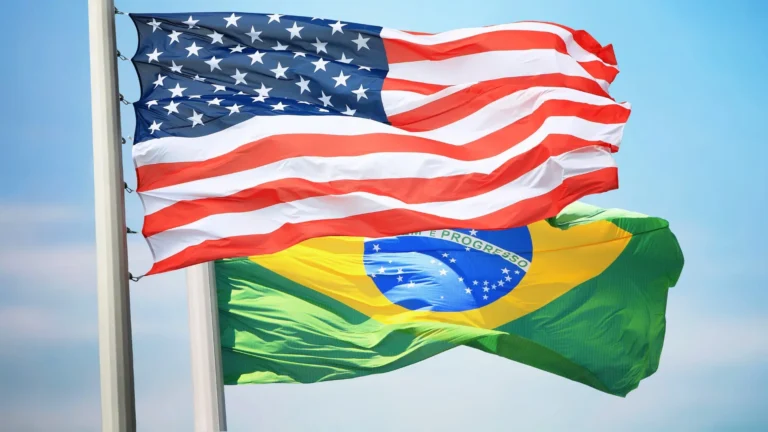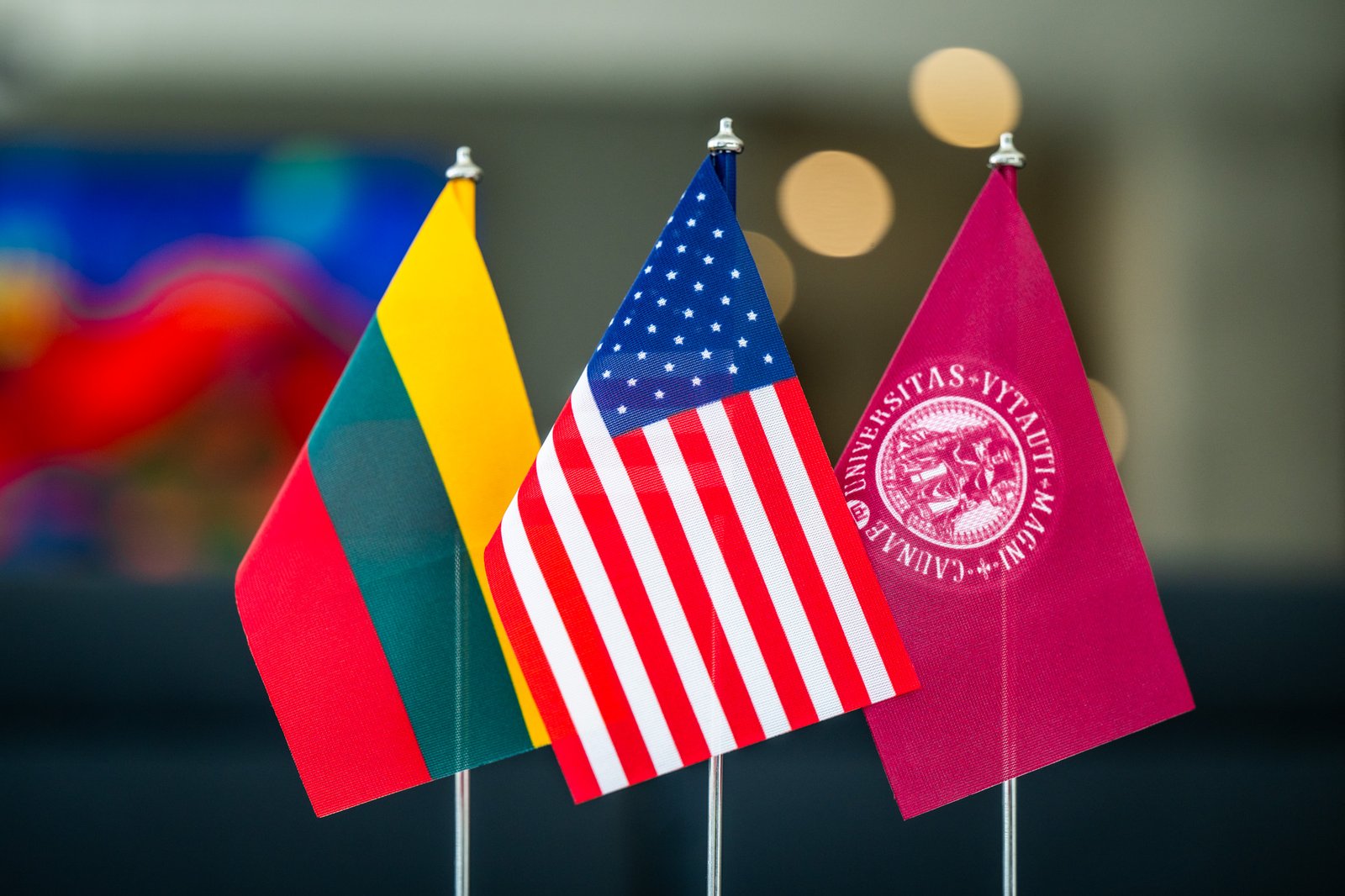
On the 4th of July, the United States of America marks its historic 250th anniversary of Independence. This date is not only a major milestone in world history but also an occasion to appreciate the intellectual and academic bonds between Lithuania and the USA. For Vytautas Magnus University (VMU), this anniversary holds special significance, as the very idea of the university’s re-establishment and its contemporary global partnerships are inseparable from the concept of freedom—a value that has inspired creation, experimentation, and the breaking of geographical distances for two and a half centuries.
From Harvard to Kaunas
When VMU was being re-established in 1989, its initiators looked across the Atlantic in search of a model that would allow them to break free from the shackles of the Soviet system and open paths for the comprehensive development of the individual.
Prof. Algirdas Avižienis, who became the first rector of the re-established VMU—a long-time professor at the University of California, Los Angeles (UCLA) and a world-renowned computer scientist—brought the experience of a prestigious US higher education institution, Harvard University, to Lithuania.
It was following the US model that VMU became the first university in the country to apply the principles of artes liberales (liberal arts): granting students the freedom to choose their study subjects and design their own schedules without being restricted solely to their major, to learn foreign languages, and to optionally study subjects across a wide range of fields, from philosophy or biology to psychology or media arts.
“Let us try to establish a university in Lithuania whose primary task is to nurture thinking, independent people who understand the world, while one specific major or another is not as important. After all, those professions will change, and people live longer now. So, I decided to bring over such a program. My other decision was to find young, talented scientists in Lithuania who had not yet been conditioned by the Soviet system,” Prof. A. Avižienis recalled of his steps in re-establishing VMU in an interview.
According to the UCLA and VMU professor, the understanding of the liberal arts has shifted over two millennia, but the essence remains the same—such an education helps one learn what is most vital to humanity at that time, regardless of a specific specialization, ensuring that an individual is prepared for future challenges and professions that perhaps do not even exist today.
Academic Diplomacy Against Intellectual Loneliness
Today, the traditions of freedom and globality are carried forward at a new level. The collaboration between the Lithuanian Science and Business Consortium, coordinated by VMU, and the Massachusetts Institute of Technology (MIT) demonstrates that Lithuania is no longer merely an importer of ideas—it aims to become an equal partner in global science.
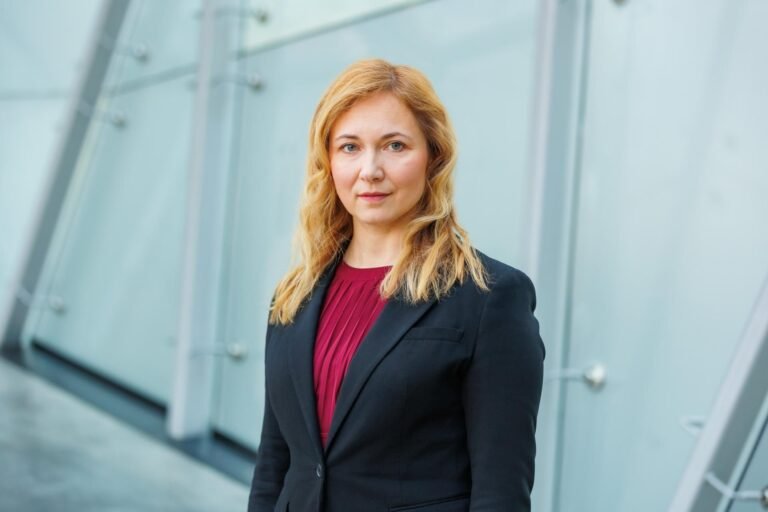
“This consortium, which unites Lithuanian universities, research centers, and business leaders, is a platform that allows us to speak to the world in the global language of science. Lithuania is no longer just a consumer of technology. We are equal partners creating sustainable, ethical, and inclusive solutions for the future,” says VMU Rector Prof. Ineta Dabašinskienė.
Assessing this partnership, the Rector emphasizes that the consortium opens up a unique space for a mutual exchange of talent and ideas, which helps Lithuania implement MIT’s best practices in interdisciplinary work and rapid experimentation. According to her, successfully bridging engineering innovations with the social sciences, humanities, and arts allows for solving real-world problems.
Seven “Global Seed Fund” projects initiated in the very first year, along with the “Rethinking Energy” module launching this autumn—to be implemented by six Lithuanian universities together with the MIT community—testify to an intensive flow of knowledge exchange. By encouraging direct dialogue between students, researchers, and MIT, Lithuanian academics notice that on both sides of the Atlantic—despite the geographical distance—people face the same existential anxieties, search for the same anchors of meaning, and address challenges felt by everyone.
According to Ina Žurkuvienė, the coordinator of the Lithuanian consortium for collaboration with MIT, this is precisely how academic diplomacy acquires an exceptionally sensitive ear and, ultimately, reduces the intellectual loneliness created by distances.
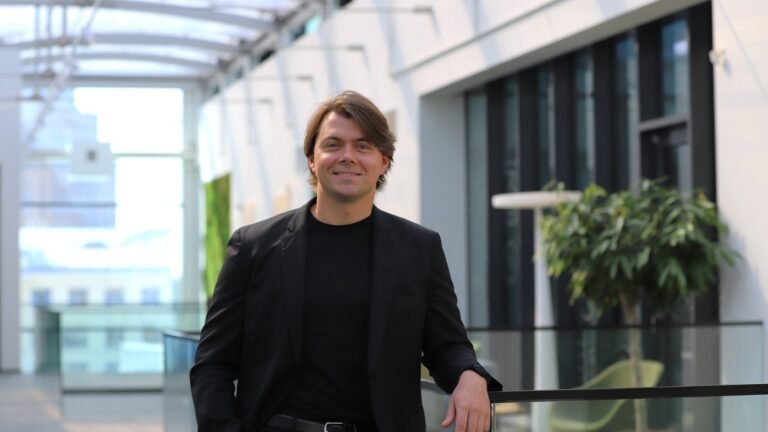
“Today, as the US commemorates its 250th anniversary of Independence, we are celebrating not a historical date, but the very idea of freedom that brought us together. In the current geopolitical reality, which often becomes surreal and frightening, freedom ceases to be a comfortable abstraction. It demands constant vigilance and a shared environment where universities, the state, and business act together,” says I. Žurkuvienė.
According to her, progress indicators, ranking positions, or pure technologies are not comforting in themselves if they do not serve humanity, society, and the planet: “Only by together creating an environment where free thought can experiment, take risks, and make mistakes do we allow ideas to turn into a reality that safeguards our own freedom. We accept it as a responsibility to actively shape history and its lessons, rather than being its bystanders.”
The consortium consists of 14 partners: Mykolas Romeris University, Kauno Kolegija / Higher Education Institution, Klaipėda University, Vilnius University, Vilnius TECH, Vilnius Academy of Arts, Lithuanian Research Centre for Agriculture and Forestry, Lithuanian Energy Institute, Ignitis Group, Lithuanian Railways (Lietuvos geležinkeliai), Northway Biotech, Euromonitor International, and Novian. The coordinator is Vytautas Magnus University.