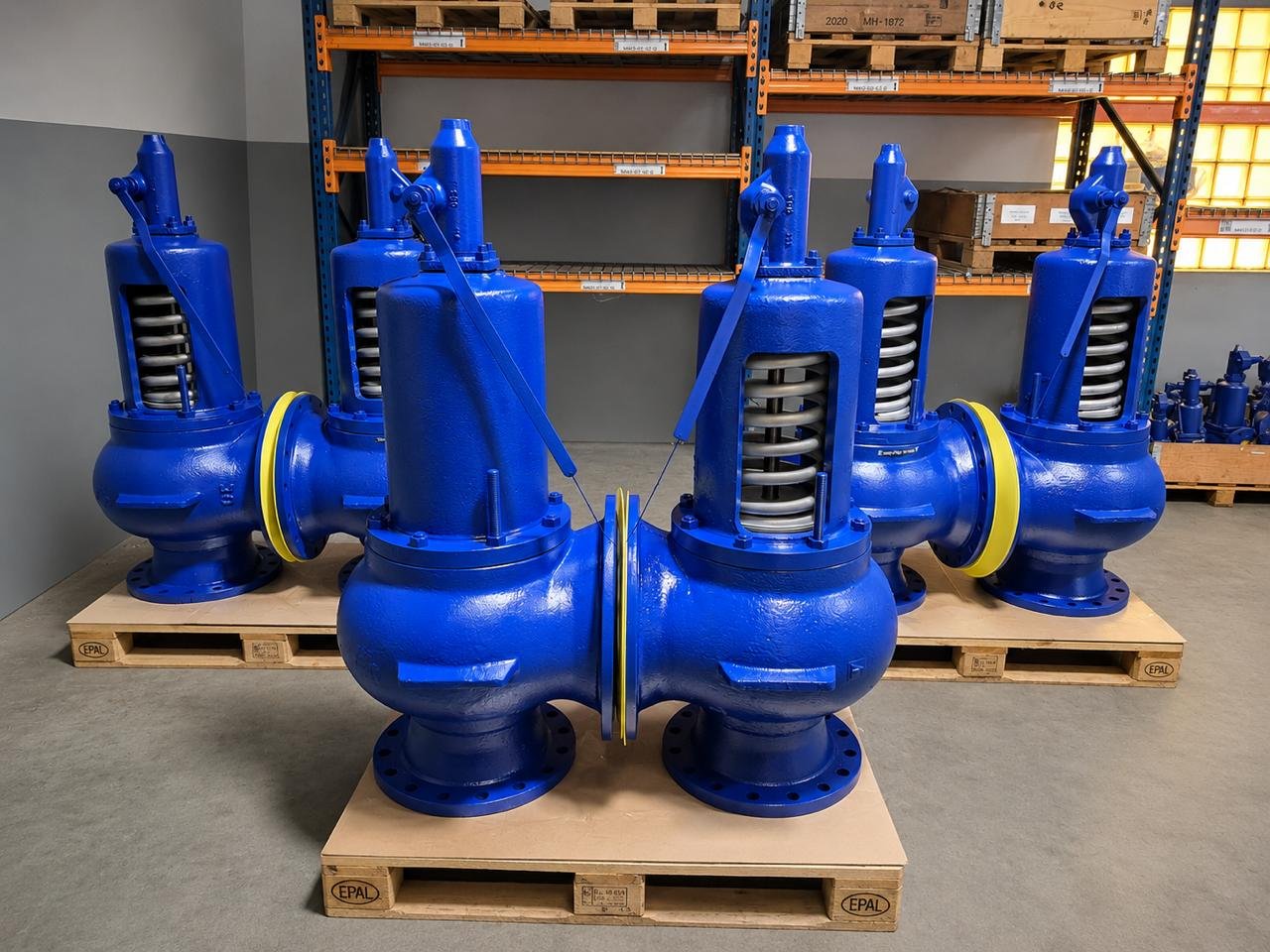
Thousands of replaced and modernized valves, millions in cost savings, and uninterrupted production – this is the briefest summary of the Valve Service division launched by ZETKAMA in 2024.
Continuous monitoring of industrial installations is not only about minimizing the risk of failures through comprehensive diagnostics and preventive maintenance. It also helps optimize operational efficiency by improving system performance and adapting installations to the specific requirements of each user.
When it comes to industrial valves, maintenance and inspections are often only considered after a failure occurs. This reflects the still-common belief that if something is working, it is better not to touch it. Unfortunately, this approach creates the perfect conditions for costly breakdowns, production downtime, and financial losses.
“In most cases, we are called in only after something has already stopped working. There is often no repair plan, no ongoing control of the system, and only a vague awareness of how expensive downtime can be—or that not every risk is worth taking,” says Robert Wojtynek, Strategy and Development Director at ZETKAMA.
In many cases, valve-related problems originate from several different causes. The valve may have been incorrectly selected during the design phase. Improper installation may affect its performance. In other situations, valves operate under conditions that differ significantly from the original design assumptions.
“On top of that, regular inspections are often neglected, opening the door to unexpected failures,” Wojtynek adds.
Problems Do Not Appear Out of Nowhere
Most failures are the result of several contributing factors, each of which eventually affects production quality and continuity.
The first and most common issue is selecting the wrong valve type for the process medium and operating conditions.
“This is often the result of insufficient technical knowledge, missing engineering calculations, and the risky assumption that everything will somehow work out,” explains Robert Wojtynek. “The vast majority of problems stem from failing to account for the actual operating parameters of the installation, including pressure, temperature, and flow variations. Once the initial assumptions are wrong, the consequences inevitably begin to accumulate.”
Even if the correct valve has been selected, operational problems may still arise due to installation errors. Incorrect valve positioning or mechanical stresses transferred from improperly aligned pipelines can negatively affect valve performance.
“We should also mention poor installation cleanliness, incorrectly selected sealing materials, improperly tightened connections, operation outside the specified pressure or temperature range, and contaminated process media that damage sealing surfaces and valve seats,” says Piotr Mazur, Head of ZETKAMA’s Valve Service.
It is equally important to remember that inspections are not always required because something has gone wrong. Even correctly selected and properly installed valves are subject to normal wear during operation. Service life, the characteristics of the process medium—particularly if it is corrosive or contaminated—high temperatures, and fluctuating pressure conditions gradually degrade valve seats, seals, and working surfaces.
Regular inspections make it possible to identify wear before it develops into equipment failure, unplanned downtime, or safety risks for the installation.
Valves and Predictive Maintenance
For decades, oil analysis has been an integral part of maintenance strategies in manufacturing plants, power stations, mining operations, and gas transmission facilities. The importance of monitoring lubricants in industrial systems is widely recognized.
“This is a good example of how maintenance strategies have evolved across industry. Valve monitoring is only beginning to follow the same path, and we are still working to convince companies how important systematic valve inspections really are. The cost of preventive maintenance is always lower than the cost of failure. From our experience, thousands of companies still prefer to wait until problems occur rather than prevent them. Unfortunately, only when downtime costs reach tens of thousands of złoty per hour do they begin to react,” says Piotr Mazur.
ZETKAMA’s Valve Service provides maintenance not only for the company’s own products but also for valves manufactured by other suppliers whose technical requirements are largely comparable. Every industrial valve contains sealing surfaces that can be regenerated, while fasteners and sealing components comply with standardized specifications and can be replaced.
“We are fully prepared to work both in long-established industrial facilities and in newly commissioned production plants. The same applies to transmission infrastructure—we carry out work on both existing and newly built pipeline systems,” says Piotr Mazur.
Today, ZETKAMA’s Valve Service supports customers across the chemical industry in Poland, Germany, the Czech Republic, Hungary, and Slovakia.
ZETKAMA is part of the Mangata Holding.