Biomass is becoming one of the key sources of renewable thermal energy in Poland. Analyses published last year indicate that Poland’s demand for biomass will reach 6 million tonnes annually by 2035. Consequently, imports from Ukraine, Latvia and Lithuania are becoming increasingly important. Laude Smart Intermodal S.A. provides comprehensive biomass logistics services that extend far beyond transportation alone.
“We transport a wide range of imported biomass, including sunflower husk pellets from Ukraine, wood pellets sourced from the Baltic States or imported by sea, as well as wood chips,” says Krzysztof Orkwiszewski, Commercial Director at Laude Smart Intermodal S.A.
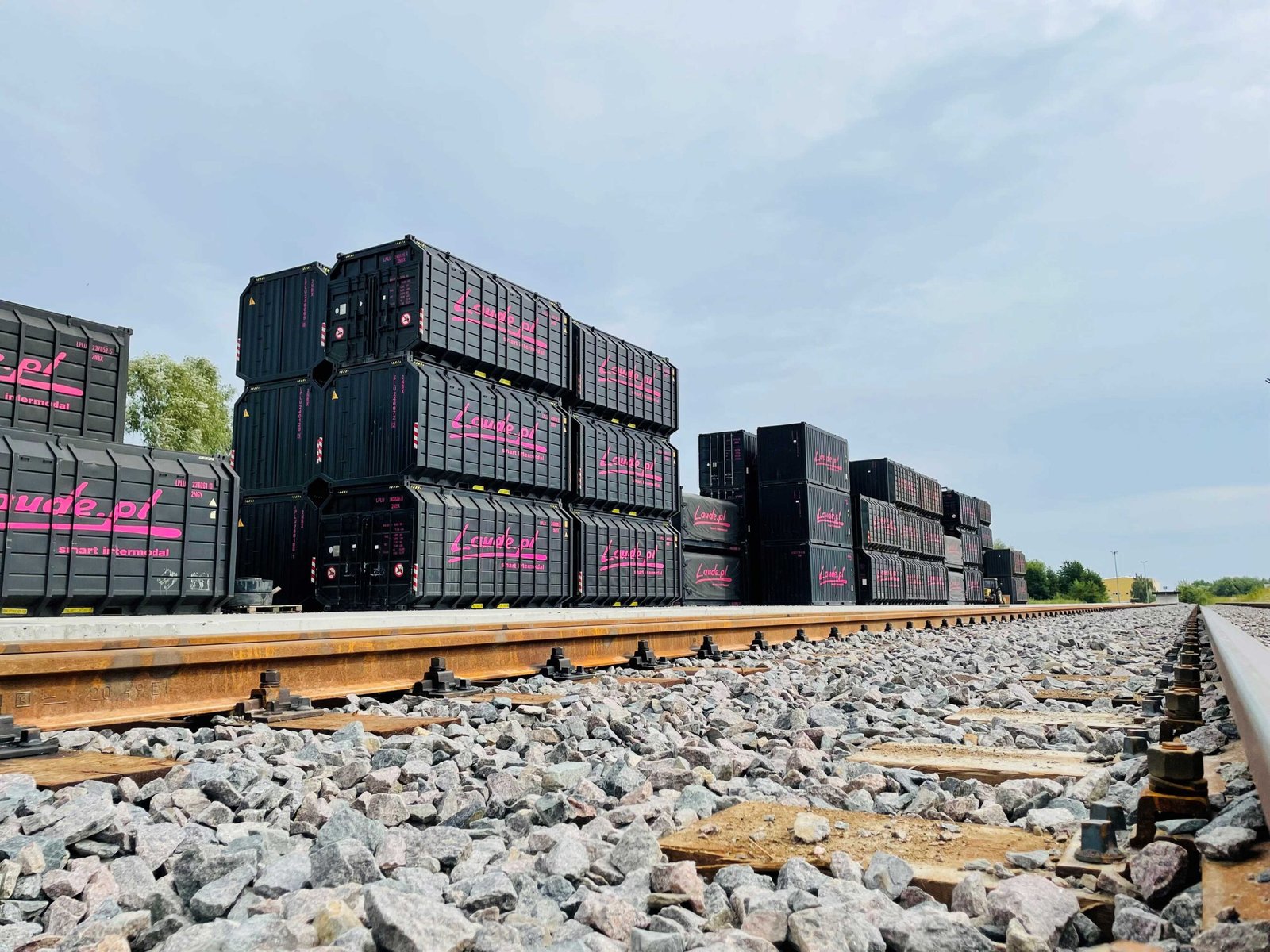
Due to its characteristics as a low-density, high-volume cargo, biomass requires dedicated rolling stock. Transporting biomass in open wagons covered with tarpaulins is highly debatable, as – unlike containers – it does not provide adequate protection for the
cargo. For this reason, for more than five years Laude has been transporting wood chips using its own specially designed containers.
A single train consisting of sixty 30-foot containers can transport 4,500 cubic metres of biomass, significantly improving transport efficiency compared with conventional open-top coal wagons, which can carry only around 3,000 cubic metres in a train of the same length.
“Intermodal transport using containers is another key element of biomass logistics, particularly where conventional rail transport is hindered by factors such as broader track gauge or limited transshipment infrastructure, as is the case in Lithuania and Latvia,” explains Krzysztof Orkwiszewski.
According to various estimates, up to three million single-family homes in Poland already use biomass-fired central heating boilers fuelled by pellets, firewood or wood chips. This exceeds the combined number of households using heat pumps, solar thermal collectors and photovoltaic installations. Meanwhile, combined heat and power plants generating electricity and district heating rely on installations burning wood chips and industrial-grade pellets.
“Over recent years we have observed that growing demand for biomass in Poland has significantly increased imports. Consequently, demand for transportation services has also risen. This was particularly evident during last winter, when demand exceeded the availability of domestic raw materials, leading to higher import volumes from both EU and non-EU countries,” says Marcin Witczak, President of the Management Board of Laude Smart Intermodal.
He adds:
“Laude Smart Intermodal’s container system enables us to quickly and flexibly convert trainsets carrying steel, grain, fertilizers or general cargo into biomass services and dispatch as many trains as the market requires.”
The number of Polish households using pellet boilers has already reached approximately 400,000, while domestic pellet production is no longer sufficient to meet growing demand. As a result, the need for logistics services from seaports and border crossings with Lithuania and Ukraine continues to increase. These locations involve transshipment between 1,520 mm and 1,435 mm rail gauges, as well as further inland transport.
The diversity of biomass types, combined with fluctuations in domestic production and availability, is creating growing demand for efficient logistics solutions. Delivery to end users through Laude’s intermodal transport system, supported by specially adapted tractor units, is becoming increasingly important thanks to the ability to transport higher-capacity containers – an essential advantage where fast and efficient logistics are required.
“This allows us to transport containers with payloads of up to 30 tonnes, which is 25% more than conventional road transport,” Marcin Witczak points out.
Global pellet consumption has also reached a record 51.5 million tonnes, with Europe remaining the world’s largest market. More than 6.5 million households across Europe now use pellets for heating. Residential consumption alone increased to 15.3 million tonnes, representing a 5% increase compared with 2024.
Europe is also the world’s largest pellet producer. Despite the exclusion of Russia and Belarus from the European market, pellet production reached 24.1 million tonnes in 2025, representing a 10% year-on-year increase.
“Laude Smart Intermodal has built its market position on flexible transport solutions and a strong presence in both Poland and Ukraine. We are prepared to meet virtually any transport challenge. Growing biomass demand requires expanding import capacity. Transport costs clearly demonstrate that our solutions offer the most competitive conditions, and our customers are eager to take advantage of them,” concludes Marcin Witczak.