EU defence ministers approved eight collaborative capability opportunities at the European Defence Agency Steering Board on 17 November 2026, ranging from cruise missiles to a secure defence cloud, while also raising the agency’s 2027 budget by 8.7 percent to €78 million.
The European Defence Agency (EDA) Steering Board meeting in November 2026 produced three major outcomes: ministerial endorsement of the 2026 Coordinated Annual Review on Defence (CARD), a joint statement on defence security of supply, and approval of a higher agency budget for 2027.
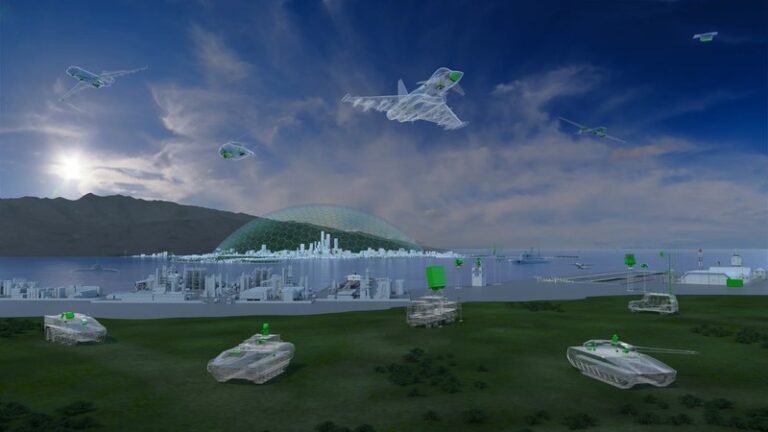
The eight collaborative opportunities identified in the CARD report cover a family of cruise missiles, long-range artillery including multiple launch rocket systems, modular and interoperable unmanned ground vehicles, layered counter-drone systems for critical infrastructure, a family of long-range air defence interceptors, and three strategic enablers: space-based early warning, detection and tracking; a European secure defence cloud; and a European approach to strategic air mobility. EDA Chief Executive André Denk underlined that the three strategic enablers are essential to Europe’s deterrence and defence capabilities, noting they exceed what any single country can develop alone.
The CARD report, prepared by EDA together with the European External Action Service and the EU Military Staff, recommends that member states consider cooperation from the capability planning stage rather than after national procurement decisions are already taken. It also calls for sustained attention to medium- and long-term needs beyond 2030, warning that underinvestment in that horizon would be costly and slow to reverse.
The joint statement on security of supply sets out three priorities: defence requirements should be systematically reflected in relevant EU initiatives; industry must take greater responsibility for supply chain resilience; and investment needs greater predictability so that production capacity can be expanded. Secure access to critical materials is described as a prerequisite for meeting the EU’s 2030 defence readiness goal.
The approved 2027 EDA budget of €78 million represents an 8.7 percent increase over 2026. The agency noted that more systematic cooperation would give industry clearer and more predictable demand, supporting production at scale and reducing supply chain dependencies.
Source: eda.europa.eu