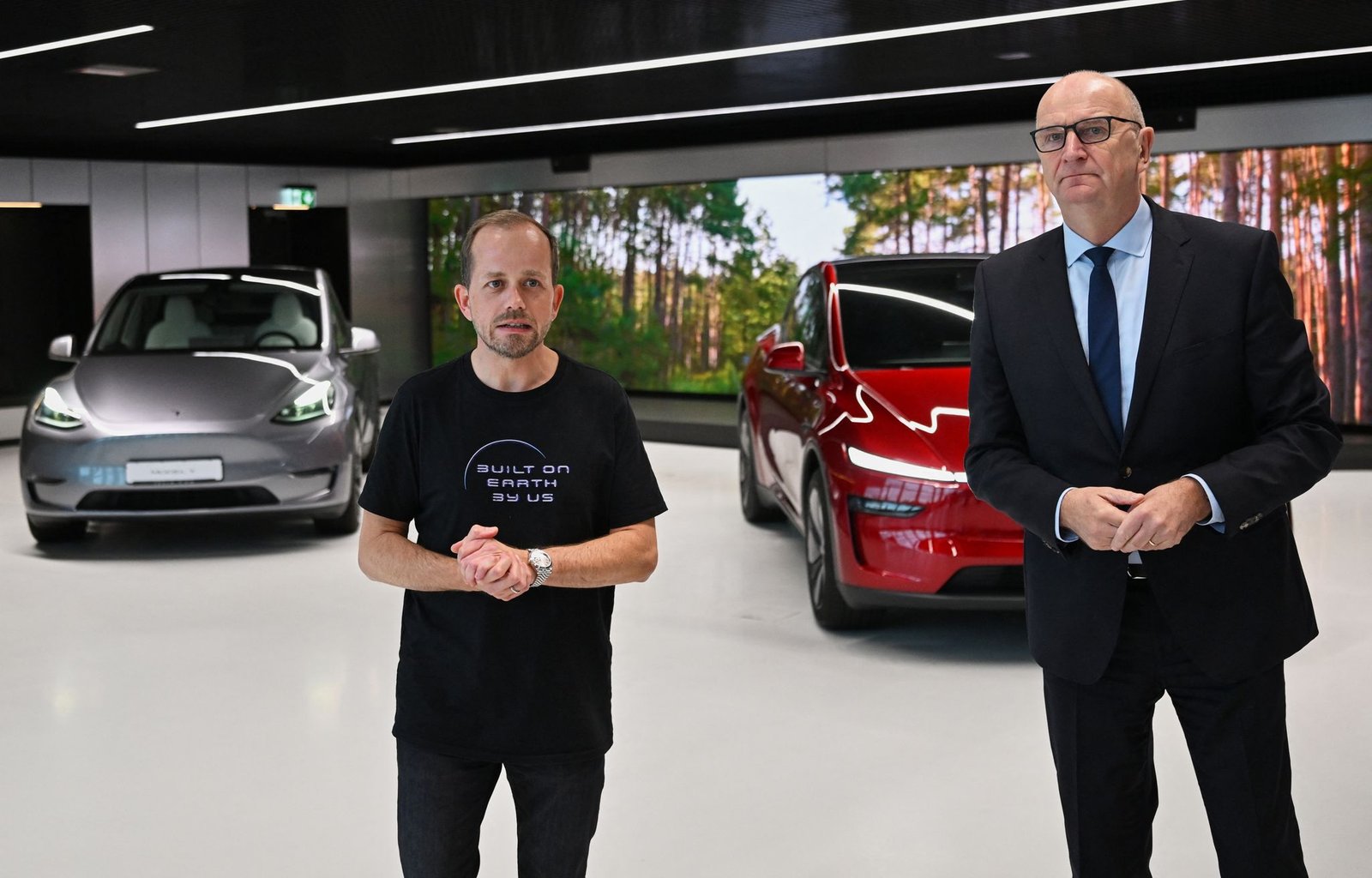
US electric carmaker Tesla plans to invest €3 billion ($3.3 billion) in expanding its factory near Berlin, including a new production building for its driverless taxis, the company said on Monday.
“With this, we are laying the foundations for the world’s most technologically advanced Tesla factory here in Grünheide,” the Elon Musk-led company said, referring to the community where the plant is located.
Construction is scheduled to begin in the first half of 2027, with production due to start in 2029. Tesla said it was recruiting several hundred additional staff in construction and production planning for the expansion.
Tesla plans to submit a permit application for the new building before the end of this year, based on an application filed in 2023 for the overall expansion project.
The €3 billion investment will also cover ancillary buildings and an additional wastewater treatment plant.
Demand picks up after sales slump
Tesla had put expansion plans on hold during a sales slump. But demand has since picked up, and the company has bucked the broader trend in Germany’s automotive industry by adding staff.
The factory, which opened in March 2022, employed 12,600 people in October, according to Tesla, after its workforce had temporarily fallen below 11,000.
A company spokeswoman said 2,000 additional employees had been hired in recent months.
Tesla recently announced plans to raise production at the plant to 7,500 vehicles a week, equivalent to around 375,000 a year. It also plans to expand battery cell production at the factory.
Source: dpa.com