Although Riga’s Soviet-era apartment market remains active, price growth has been relatively modest, with transaction prices rising by up to 7%, according to estimates by real estate agency Latio. In neighbouring Lithuania, however, housing prices are strikingly higher. In Vilnius residential districts, the average price of Soviet-era apartments has reached nearly EUR 3,000 per square metre – two and a half times the price of comparable properties in Riga and roughly equivalent to prices in Riga’s new residential developments. Experts from Lithuanian real estate company Inreal explain that the price gap between Riga and Vilnius is particularly pronounced in the Soviet-era apartment segment, driven by population growth and rising demand, a shortage of new housing and greater purchasing power.
“The Vilnius scenario will most likely reach Riga as well. We should remember that our housing is currently the cheapest in the Baltics, and these prices will not last forever. However, the pace at which prices will change is difficult to predict accurately. Much will depend on the housing policy decisions made by the new government, including the availability of funding for building renovations and whether the capital succeeds in attracting investment,” says Latio market analyst Ksenija Ijevleva.

Chronic Shortage of New Housing Drives Up Prices in Vilnius
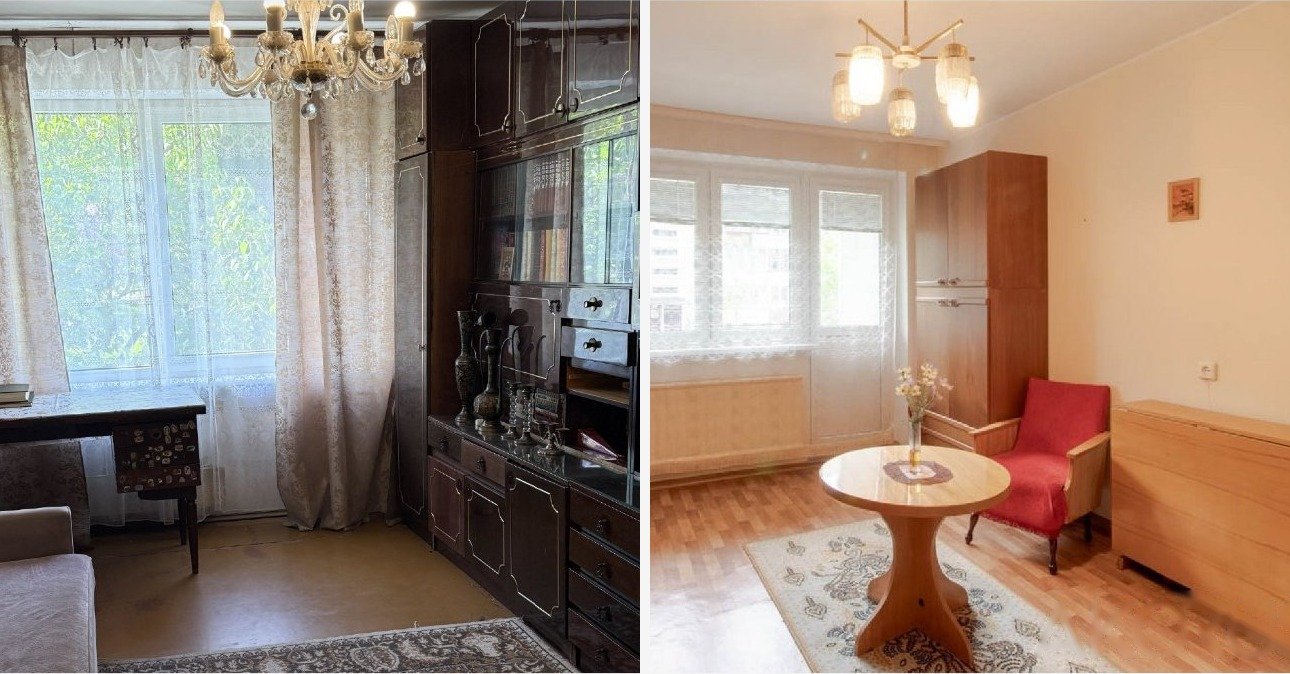
The price gap is illustrated by a property listing in the Žirmūnai district, which is comparable to Riga’s Purvciems in terms of Soviet-era residential development. A 44-square-metre, two-room apartment in a prefabricated panel building constructed 60 years ago is listed for EUR 145,000. By comparison, an apartment of similar size and quality in Riga can be purchased for approximately EUR 52,000.
According to data from Lithuanian real estate company Inreal, the average price of a one- to three-room apartment in a Soviet-era residential building in Vilnius was just under EUR 3,000 per square metre in the third quarter of this year, compared with approximately EUR 1,200 per square metre for transactions involving comparable apartments in Riga.
Meanwhile, prices in the primary market for new residential developments outside city centres differ by around EUR 1,000 per square metre. In Vilnius, an apartment in a new development costs approximately EUR 3,800 per square metre, compared with an average of EUR 2,800 in Riga. Importantly, new apartments at this price level in Vilnius are generally sold with partial finishing, while those in Riga typically come fully finished.
Over the past year, transaction prices for two- and three-room apartments in Soviet-era buildings in Vilnius’s most sought-after residential districts have increased by approximately 20%. One-room apartments have experienced even sharper price growth, rising by 28% compared with the third quarter of last year.
However, the Vilnius market is not moving uniformly in one direction. The number of available apartments in new developments has increased by approximately one-fifth over the past year, while sales volumes in the primary apartment market remain below their 2025 levels. In the third quarter of this year, 1,085 apartments were sold in the primary market, approximately 14% fewer than during the corresponding period last year.
Tomas Sovijus Kvainickas, Head of Investment and Market Analysis at Inreal, explains that Vilnius’s growing population creates a continuous need for additional housing. In previous years, the supply of apartments in new developments was insufficient to meet strong demand, putting upward pressure on prices in the secondary market, including Soviet-era apartment buildings.
Purchasing power has also influenced prices. Between 2022 and 2024, housing demand was weak and prices remained relatively stable. This improved affordability, and buyer activity began recovering in mid-2024, eventually contributing to price increases last year.
“Vilnius’s population is growing, which means the city constantly needs new housing. In the past, this challenge was partly addressed through larger residential developments, where individual phases contained approximately twice as many apartments as usual. However, developers implement these projects by adapting to demand and optimising costs, which has led to new housing supply becoming increasingly concentrated on the outskirts of the city. As a result, market conditions vary across Vilnius: there is a slight oversupply of housing in peripheral areas, while the market in central districts is relatively balanced,” explains Kvainickas.
He adds that the Vilnius real estate market is far from uniform. While many residents struggle to afford either older or newly built housing, recent years have also seen record sales volumes in both the primary and secondary markets.
Rents Rise Faster in Riga, but Sustained Demand Is Needed to Drive Property Prices Higher
At present, Riga outperforms its southern neighbour only in terms of rental yields. In Vilnius, rental prices have not kept pace with property purchase prices, resulting in lower gross rental yields. For apartments in Soviet-era residential buildings in Vilnius districts, gross rental yields are estimated at approximately 5.4% annually, compared with around 8.4% in Riga.
The difference is primarily driven by lower property purchase prices in Riga. Rents in Vilnius are approximately one and a half times higher, while purchasing an apartment costs roughly two and a half times as much. Consequently, annual rental income in Riga represents a larger proportion of the property’s purchase price.
This relationship may attract investor interest, although actual profitability will also depend on taxes, investment in property improvements, maintenance and management costs, and periods when apartments remain vacant.
Ksenija Ijevleva predicts that Riga’s relatively low housing prices and higher potential rental yields could attract not only local investors but also investors from Lithuania.
However, expectations of rapid price growth in the coming years should be treated cautiously, taking into account changes in household incomes, demand for rental housing and access to financing for building renovations.
A key factor will be Riga’s ability to attract new investment, create well-paid jobs and stimulate housing demand. Decisions by the new government and local authorities will also have a significant impact on the market, particularly if support is provided for renovating older residential buildings and bureaucratic obstacles to new construction are reduced.
“Faster price growth in Riga could occur if several pieces of the puzzle fall into place simultaneously: household incomes increase, access to mortgage financing improves, and the number of people wanting to live and work in Riga grows. If demand and purchasing power rise while the supply of apartments in new developments fails to keep pace, upward pressure on prices will most likely increase in the Soviet-era housing segment as well,” Ijevleva explains.
She adds that price increases could also affect unrenovated buildings in Riga’s most desirable neighbourhoods. Increasingly, buyers will consider not only an apartment’s location but also the renovation prospects of the building itself.