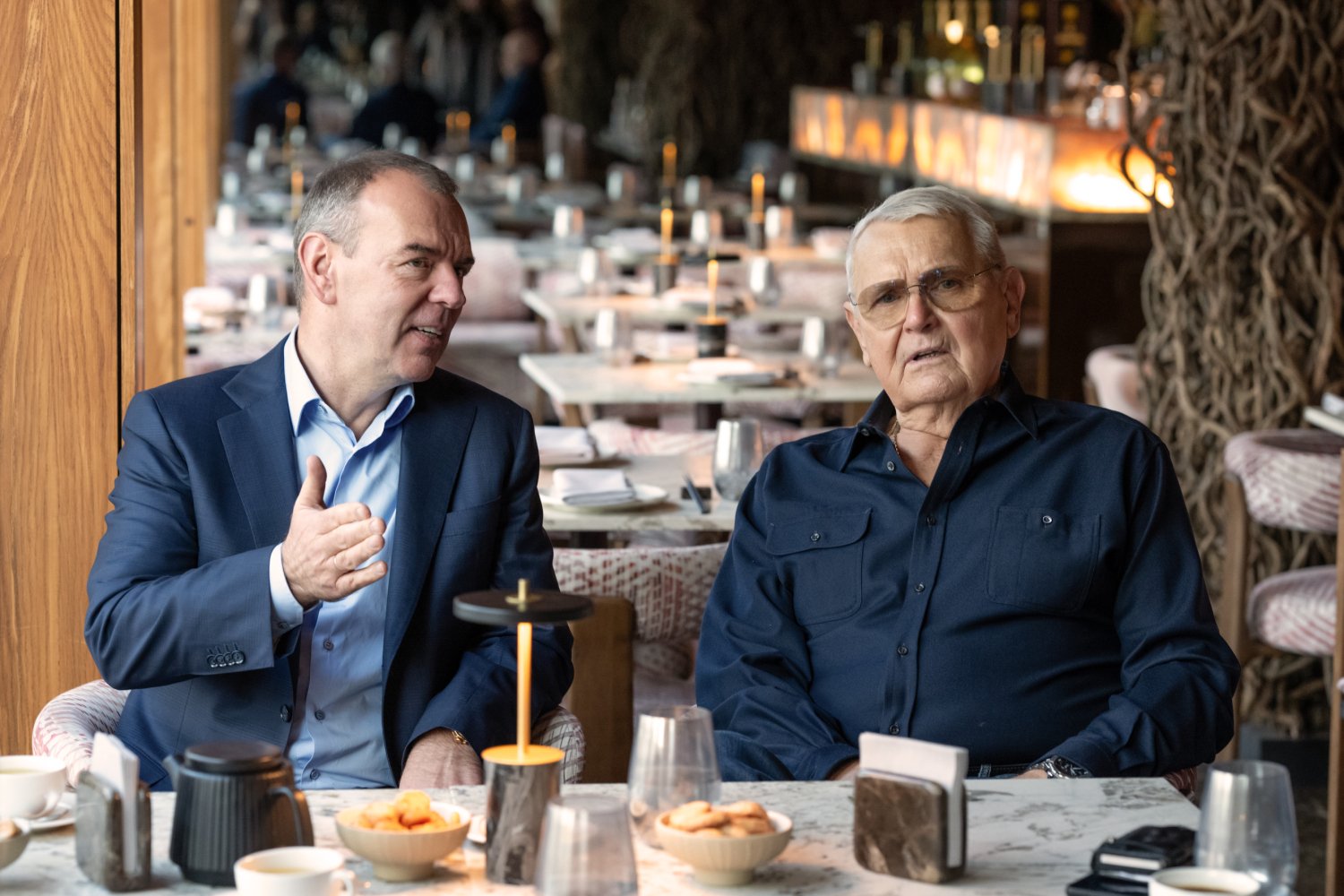
Latvia has no shortage of political promises, but it lacks a long-term strategy, the courage to make unpopular decisions, and the ability to create a business-friendly environment. This is how entrepreneur Māris Martinsons assesses the situation in Latvia in a conversation with former Foreign Minister Jānis Jurkāns and the news portal mmnews.eu. Jurkāns, meanwhile, draws attention to the constant calls for austerity: “The Russians are coming, the Russians will attack, so we must tighten our belts,” while enormous sums are allocated to security. Whether that money is being wasted or spent effectively is another question. The discussion covers government formation, the electoral success of the United List, the risks of a minority government, national debt, public passivity, bureaucracy, challenges facing the construction industry, the future of airBaltic, partnerships in big business, investment attraction, and Latvia’s economic development prospects.
The Country Waits While Politicians Celebrate
Jānis Jurkāns: The country is not exactly in danger, but it is waiting. Elections have taken place, a new government needs to be formed, yet political uncertainty continues. Surely politicians should be thinking about the country.
Māris Martinsons: I get the impression that the winners are so euphoric about the election results that the country has become a secondary concern. It’s quite simple: they announce that government formation talks are being postponed for a week. That means forming a government is not a priority. They feel so good about themselves that it is no longer their main concern.
Jānis Jurkāns: I watched how Kulbergs behaved in Brussels. He was extremely self-confident. Today, all that success has probably gone to his head, because the number is enormous: 41 seats. Latvia has never seen a result like that before. The question is how they feel internally.
Māris Martinsons: In my opinion, they feel far too comfortable. My impression is that wherever there are two Latvians, there are two political parties. The United List consists of four different groups, and that will become one of the main issues. Disagreements will begin, followed by disputes over positions.
Some MPs have never even met one another. Perhaps their first joint meeting will be the first time they all see each other.
My prediction is that ambitions will grow over time. The Prime Minister will most likely establish a new party. And that, so to speak, will be the beginning of the end.
Jānis Jurkāns: And who forms the core of the party?
Māris Martinsons: The core is already clear. But internally, people are manoeuvring against one another. Initially, they tried to attract people from other parties who might be willing to become independents. Now the reshuffling is happening within their own ranks, with people deciding who belongs to which faction.
“That alone suggests there is unlikely to be much unity within the party.”
A Minority Government: A Solution or a Dead End?
Jānis Jurkāns: What do you think about Kulbergs potentially forming a minority government and relying on Šlesers’ goodwill?
Māris Martinsons: Šlesers has indicated that he would be prepared to support a government on the condition that Unity is not part of it. Perhaps a minority government would not be the worst option in this situation. But I cannot see how they would manage to work together and deliver results with a minority government.
Jānis Jurkāns: I have never seen a minority government function successfully in Latvia.
“A minority government in Latvia is essentially a dead end, because there is always the possibility of political blackmail.”
We will see how the situation develops. But I assume that, at this point, he cannot afford to join forces with Unity.
 Māris Martinsons: If they join forces with Unity, they will have betrayed their own principles. They have always declared that their partner is the National Alliance. Most likely, that is how it will turn out. And 51 votes still constitute a majority.
Jānis Jurkāns: The demands have already begun. People are openly discussing how positions will be divided, including who wants the Foreign Minister’s seat. They will start fighting among themselves, and then we will see what happens.
Māris Martinsons: I think there will be a great deal of internal disagreement. They are already acting independently of one another: each has their own political base, interests, and priorities. For now, this is not yet so apparent. But as soon as they start working on the budget and distributing ministerial portfolios, everyone will pull in their own direction.
I have never seen a government or political party from which nobody eventually broke away.
Jānis Jurkāns: That depends on whether the party is in power. In the past, nobody left Latvia’s Way because it was in power, distributing positions, and people stayed together. Even today, it is difficult for an independent MP to act against the mandate given to them by voters. So, in my opinion, the United List could function quite well for a while. What do you think?
Māris Martinsons: Everyone looks after their own interests first. That is how it has always been, and how it will remain. Kulbergs was Prime Minister for a few months, but that was merely a warm-up.
“The real test will come when they have to prepare a budget, make promises to everyone, and then actually deliver on them.”
And that is far from simple, because the country is facing a more serious crisis than many people realise. Latvia’s external debt continues to grow, and we are planning to borrow even more.
Debt Keeps Growing, While We Strive to Be Model Europeans
Jānis Jurkāns: Why have neither finance ministers nor prime ministers so far attempted to discuss postponing debt repayments or restructuring the debt?
Māris Martinsons: We are too rigid in our decision-making. We are among the most exemplary countries when it comes to complying with European Union requirements.
“We want to meet every criterion, and sometimes it seems that this matters more to us than the well-being of our own people and the interests of our country.”
Latvia can, in a sense, be compared to one large company. If we cannot manage it properly, even in terms of ensuring people’s well-being, that is a major problem.
Jānis Jurkāns: Let’s assume the money is available and the government borrows it. Where should it be invested? Which sectors should be developed?
Māris Martinsons: That is precisely the biggest problem: we have no strategy. First and foremost, we need to improve people’s standard of living. Secondly, healthcare and education reforms. So far, these have largely been empty words.
Unpopular decisions must be made, for example, regarding health insurance. A system had been developed, but because people did not like it and elections were approaching, nothing was done.
It will be interesting to see how the Prime Minister reacts when he comes under pressure from his own party and ministries demanding more budget funding, and he has to say no.
“Right now, we are spending more than we earn. And we are covering the difference through borrowing.”
Why Latvians Do Not Take to the Streets
Jānis Jurkāns: How much patience do people have? There are problems in healthcare, education, and elsewhere, yet nobody takes to the streets in sufficient numbers to force the government to listen. Look at what happens in France. How long will Latvians simply keep tightening their belts and accepting everything?
Māris Martinsons: Historically, Latvians have been an extremely resilient people. They wait and keep hoping that something will change.
In Italy or France, people express their dissatisfaction much more actively. In France, there is a strike almost every week. Society actively voices its dissatisfaction and demands change.
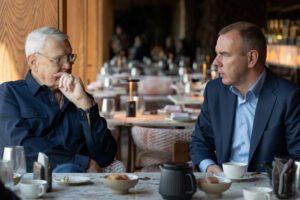
Jānis Jurkāns: France has a different political culture. They have trade unions. Do we have trade unions?
Māris Martinsons: In theory, yes. But you hardly ever hear anything about them. And that is a problem.
In Construction, Everyone Fights for Themselves
Jānis Jurkāns: Construction is one of your businesses. Do construction workers have a trade union?
Māris Martinsons: Historically, the largest construction companies came together and reached a sector-wide collective agreement on wages. That was a significant achievement.
But today, businesses are largely fighting for themselves. Industry organisations are gradually losing influence. That is one of our biggest problems. And that is also why we do not really have functioning trade unions.
Jānis Jurkāns: Every industry should also play a role in improving legislation. Who are the construction industry lobbyists who go to Parliament and say: this law doesn’t work, this one needs to be changed?
Māris Martinsons: Historically, the largest construction companies were members of the Latvian Construction Contractors’ Partnership (renamed the Latvian Construction Contractors’ Association in 2022 — Ed.). Over time, however, the major construction companies have withdrawn from the organisation.
Communication with government institutions continues, but in my opinion, the industry’s representation of its interests is very weak.
“In Latvia, lobbying is often perceived as corruption or a violation of competition rules.”
I get the impression that Latvia’s large construction companies have lost the role they once played. Today, medium-sized companies dominate, and sometimes it seems as though the country no longer needs large businesses at all.
Jānis Jurkāns: What about skilled workers in the industry? Is there a shortage of welders?
Māris Martinsons: That is a very serious problem. If we look at the volume of construction activity in Latvia, we can no longer meet demand using only the domestic workforce.
We have to accept that recruiting foreign workers is necessary if we want projects to be completed to a high standard and on schedule. That is a reality we cannot ignore.
The Kulbergs Phenomenon
Jānis Jurkāns: What do you think explains the success of Andris Kulbergs and the United List?
Māris Martinsons: A new face emerged: someone who made people believe that change was possible in this country. Many factors and coincidences contributed to that.
Even today, a large proportion of voters cannot distinguish between the Union of Greens and Farmers (ZZS) and the United List. When they go to the polls, they see the name Kulbergs and tick the box.
Secondly, voter turnout was very low. People do not believe that anything will change, and they do not want to waste their time.
It is difficult to assess Kulbergs after just a few months as Prime Minister. Compared with his predecessors, he stood out, and people liked that. Looking at the people involved, some new faces have emerged, and perhaps that is a good thing.
“But fundamentally, nothing has changed. Essentially, they are the same people, just in different roles.”
Security: A Slogan Used to Justify Everything?
mmnews.eu: In your opinion, what should be the main priorities in the new government’s policy declaration, apart from national security?
Jānis Jurkāns: Security is the moment when people are told to tighten their belts. The Russians are coming, the Russians will attack, so we must tighten our belts, and enormous amounts of money are allocated to security. Whether that money is being wasted or spent effectively is another question.
“Security is a very convenient slogan for any government to justify financial problems.”
Māris Martinsons: I agree with Jānis. Who is going to vote against the defence budget? Security is a priority today, and that is why many people exploit the issue. But we sometimes include expenditure under the security budget that has no direct connection to security. Meanwhile, there is not enough money for healthcare and education.
We are exemplary in our commitments to NATO and the European Union, yet education reforms are lacking and healthcare is struggling. It cannot be right that we find money for one area while others remain underfunded.
I believe everything needs to be balanced. And most importantly, it is not enough for the state simply to spend money. The state must also think about how to generate revenue.
We Could Cut the Number of Civil Servants by Half
Jānis Jurkāns: This is something I keep coming back to: how are we going to make money in Latvia?
Māris Martinsons: First, we need to put our own public administration in order. Ministries and various government agencies have overlapping functions. We have an enormous administrative apparatus. Has anyone genuinely assessed how much of it is actually necessary?
“I believe we could cut the number of civil servants by as much as half, and nothing significant would change in how the state operates.”
We live in an age when technology and artificial intelligence make it possible to automate a great many processes. For example, if someone submits all the required documents and they comply with the regulations, why should the decision depend on the subjective judgement of an individual civil servant?
The more such subjective decisions there are, the greater the risk of bureaucracy and potential corruption.
Jānis Jurkāns: But civil servants need jobs too.
Māris Martinsons: That raises an interesting question about artificial intelligence and its impact on employment.
There is even a philosophical theory that, in the future, artificial intelligence could generate such enormous economic value that it might be more beneficial for society to provide benefits to some people rather than employ them.
I am not saying that is what we should do. It is simply one possible scenario worth discussing.
Jānis Jurkāns: Nevertheless, every normal person wants to be employed. Whether they work from home or in an office, people want to have a job.
Corruption: Years Without Progress
Jānis Jurkāns: Kulbergs has spoken about fighting corruption. Latvia’s position in international rankings has been disappointing for years, and everyone knows it. So I would like to understand what he has actually done about it.
Māris Martinsons: That really is an interesting question. Year after year, those rankings show us standing still. We appear to be fighting everything at once, yet at the same time, achieving nothing.
airBaltic: It Must Be Saved, but First We Need to Define the Goal
mmnews.eu: Turning to airBaltic, how do you assess the government’s handling of the company?
Māris Martinsons: First, we need to clearly define the objective. What do we, as a country, want from this airline? What role do we expect it to play in the economy, tourism, and international connectivity? Has anyone actually assessed tourist flows?
We keep talking about losses, but nobody has clearly explained why airBaltic continues to lose money.
Jānis Jurkāns: There is another aspect: the political one. I know two Latvian brands that are recognised internationally: airBaltic and Latvijas balzams. I’m not joking. That is why airBaltic should be saved, if only as a national brand. I don’t know exactly what should be done, but we must not let it go under.
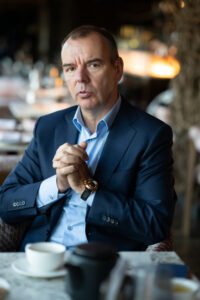 Māris Martinsons: I completely agree. It is one of the things Latvia can be proud of. Neither Estonia nor Lithuania has anything quite like it.
I believe we should keep airBaltic alive for as long as possible. A former business partner of mine once said: don’t just think about spending money; think about how to earn more. In my opinion, that applies perfectly to airBaltic as well.
Perhaps it would be worth considering turning it into a kind of people’s airline.
“I think many people would be willing to get involved, offer support, and even donate money to keep airBaltic alive.”
But first, we need to understand why the company is making losses and how to eliminate them. If we can afford to pay the head of an organisation a substantial salary, we can just as easily bring in world-class experts to identify the causes and recommend solutions.
And one more thing: no politician wants to deliver bad news before an election. That is why I believe airBaltic will soon become one of the main issues on the political agenda.
The situation with Latvijas balzams is very similar. But that is another story.
Šķēle, Shefler, and Partnerships in Big Business
Jānis Jurkāns: Have you been following the relationship between Shefler and Šķēle? They used to be close friends, but now there is a conflict between them. I haven’t looked closely into what caused it. But I’ve noticed that in big business partnerships, one partner often eventually tries to get rid of the other. It’s better to be on your own than to have someone constantly breathing down your neck. Is that how it works?
Māris Martinsons: I actually think the opposite. A partnership is about sharing risks while also bringing additional value. The question is whether responsibilities are properly divided. That is a matter of corporate governance.
When it comes to Shefler, he essentially wants to do everything himself. He owns one of the world’s largest vodka brands and runs it himself, without bringing in world-class specialists.
“If someone wants to manage everything personally, they cannot be an expert in every field.”
Jānis Jurkāns: He is impulsive. He likes to show off.
Māris Martinsons: He is capable of organising any event on a grand scale. But at the same time, he can make one decision today, change his mind tomorrow, and come up with a third decision the day after. That is his biggest mistake. There was no shortage of potential buyers, but in my opinion, it was precisely this inconsistency in decision-making that made reaching an agreement difficult.
Why Should Investors Choose Latvia?
mmnews.eu: Judging by the headlines, a great deal seems to be happening in investment attraction: business missions to Germany and the United States involving dozens of Latvian companies. But compared with neighbouring countries, the question arises whether Latvia is competing successfully enough for major investors. What should the government do differently?
Māris Martinsons: First and foremost, we need to create an environment where investors actually want to come and do business.
We must not forget that there is a war taking place close to our borders. Many investors from Europe and Scandinavia are cautious about this region. They have adopted a wait-and-see approach and do not believe they should take unnecessary risks.
That is why Latvia must be able to offer something that outweighs those risks: faster decision-making and less bureaucracy. There are countries where governments can respond to a crisis within a few months, whereas our bureaucratic system is so cumbersome that even a simple decision takes an extremely long time.
We need to ask ourselves a simple question: why should an investor choose Latvia over another European country?
Can we name even one reason why we are better than other countries in Europe?
“The only thing we have going for us is that we are members of the European Union and NATO. Beyond that, there is nothing.”
Jānis Jurkāns: We also pride ourselves on having an educated workforce.
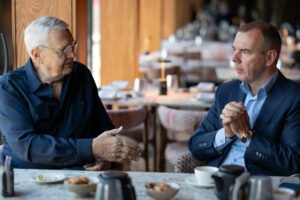
Prohibit or Regulate?
mmnews.eu: You have also criticised Latvia’s approach to business regulation. What do you think should change?
“We have a tendency to prohibit things rather than create opportunities.”
Māris Martinsons: For example, we talk about banning casinos or introducing various restrictions on electronic cigarettes. But a ban does not necessarily mean that people stop using a particular product or service.
They simply find other ways to obtain it. As a result, we may end up encouraging the illegal market and losing tax revenue.
I believe that in many cases, we should focus on sensible regulation and tax policy rather than automatic bans.
For example, if someone wants to buy cigarettes, the government can impose a high tax and use the revenue for public needs. But bans alone will not solve the problem.
Why do we keep making the same mistakes over and over again?