By Christof Rührmair, dpa.
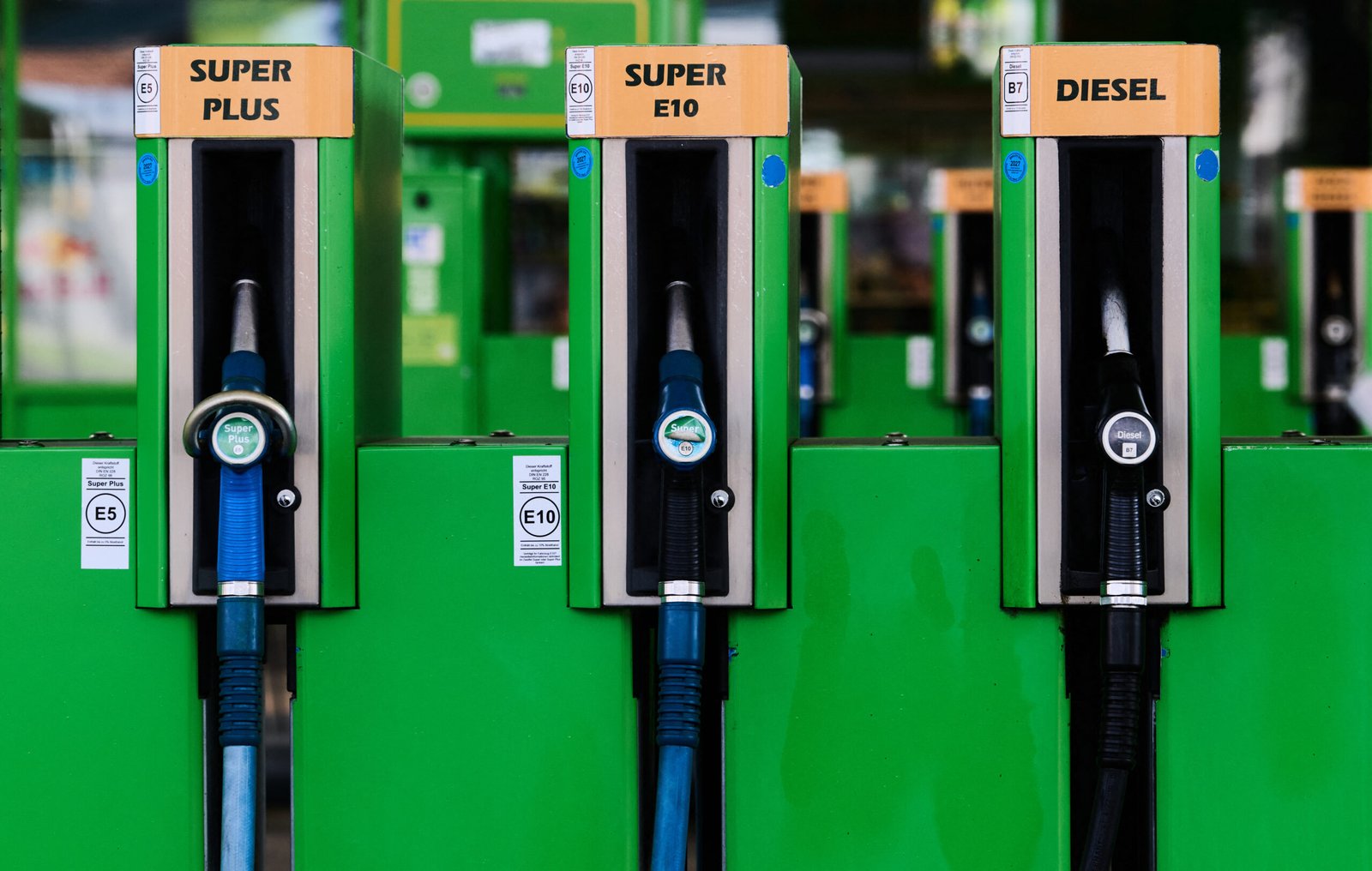
Munich (dpa) – German diesel prices surged to a new record, reaching €2.453 ($2.81) per litre in the nationwide average on Wednesday, figures from the ADAC motoring organization showed on Thursday, increasing pressure on the government to come up with a plan to ease the burden on motorists.
Fuel prices in Germany have surged since the start of the Iran war and the disruption to shipping through the Strait of Hormuz, with petrol costs also reaching another nationwide record high of €2.314 ($2.65) per litre on average on Wednesday, according to ADAC.
German Chancellor Friedrich Merz announced on Tuesday that the government would “react to price gouging,” but he is yet to reveal any concrete measures.
The persistently high fuel price are adding to Merz’s woes, whose leadership has come under intense pressure due to his party’s poor showing in state elections in Saxony-Anhalt, where the far-right Alternative for Germany secured a landslide win with nearly 44%.
Two more state elections scheduled for Sunday could turn out to be the final straw for the beleaguered chancellor, with his CDU projected to post its worst ever state election result since World War II in Mecklenburg-Vorpommern.
SPD wants ‘quick decision’
The chancellor’s conservatives and their junior coalition partner, the Social Democrats (SPD), differ on how best to tackle the issue. While the SPD has called for a windfall tax on oil companies, Merz has rejected the idea.
But calls have been growing on the chancellor to act swiftly, including from within conservative ranks.
Thorsten Frei, a senior figure of Merz’s CDU, has said planned measures to tackle record-breaking fuel prices should be implemented by October 1.
“People don’t need the prospect of relief; they need relief,” he said.
Finance Minister Lars Kingbeil, who also serves as SPD co-leader, on Thursday also called for a “quick decision.”
“Fuel prices must come down, and commuters in particular need some relief.”
The government was currently weighing solutions, he added, asking motorists for patience and reiterating that he was in favour of imposing a windfall tax on oil companies.
Average motorist paying €34 more a month
Earlier this year, Berlin introduced a two-month fuel tax cut to relieve motorists that expired at the end of June. However, experts have warned against reintroducing a universal rebate, instead calling for targeted measures to support those with lower incomes.
Energy prices worldwide have surged worldwide after the US and Israel began attacking Iran on February 28, to which Tehran responded by disrupting shipping through the Strait of Hormuz, a key maritime route for the global oil and gas trade.
Despite repeated attempts at negotiating a settlement, there is currently no end to the war in sight, and fighting for control of the strait has escalated again recently.
Diesel prices in Germany reached their previous record high in April, which has now been exceeded by €0.06, according to ADAC.
A litre of diesel is currently some €0.71 more expensive than it was before the start of the war, while petrol costs some €0.54 more.
This means the average motorist driving a vehicle with average fuel consumption for some 800 kilometres per month spends around €34 more on petrol than they did before the war.
Those driving a diesel-fuelled vehicle for 1,400 kilometres a month with average consumption have to pay around €69 more.
Transport sector up in arms
But the price surges aren’t only affecting private consumers.
The longer energy prices stay high, the greater the risk that other prices will also rise because transport and refrigeration of food, among other things, become more expensive. Companies will, according to economists, be forced to pass the cost surge in energy on to their customers.
In an open letter to Merz, German hauliers on Thursday stressed that the situation in the transport sector – which is dominated by small and medium-sized enterprises – has worsened dramatically due to the rise in fuel costs, and called on the government to provide relief.
Since the start of the conflict in the Middle East, the price of diesel has risen by a net total of around €0.6 per litre, the BGL hauliers’ association said.
With a monthly mileage of 10,000 km, this results in additional costs of €1,800 per lorry, meaning additional costs of over €1 million a year for a fleet of 50 lorries, it said.
“These cost increases can hardly be borne by the companies alone any longer,” BGL board spokesman Dirk Engelhardt wrote
“The high diesel prices are jeopardizing numerous small and medium-sized enterprises and weakening the competitiveness of the German economy.”
Transport companies reject VAT cut
The hauliers rejected a proposal by Economy Minister Katherina Reiche, of Merz’s CDU, to temporarily cut VAT on fuels, arguing that this would not result in any immediate relief for transport companies who are entitled to claim back VAT.
Instead, the association called for the removal of the double CO₂ burden on the German transport sector resulting from the national emissions trading scheme and the CO₂ surcharge on the lorry toll.
Hauliers also called for the introduction of a commercial diesel price, based on the example of other EU member states such as France, Spain and Italy, where the energy tax on diesel used for commercial purposes is reduced to the EU minimum.
Source: dpa.com