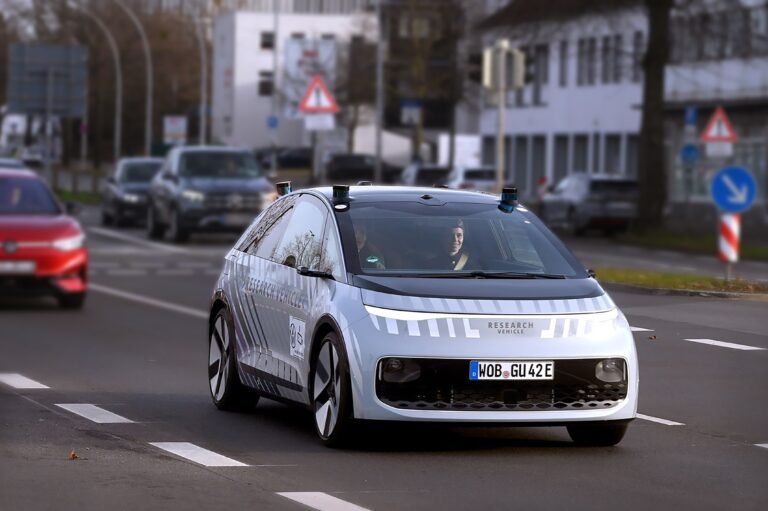
Munich (dpa) – Ailing German carmarker Volkswagen is hoping that four newly unveiled entry-level electric models will help it achieve a market share of 20% in the sector in Europe, company boss Oliver Blume said ahead of the IAA automotive industry show on Monday.
“We have a clear goal: a leading position in the entry-level segment in our home market of Europe,” chief executive Blume said.
With the IAA Mobility show in Munich – one of the largest industry gatherings worldwide – set to kick off on Tuesday, Volkswagen has showcased four new electric models set to hit the market in 2026.
They include the ID Polo, which is expected to launch at prices starting just under €25,000 ($29,300) as Volkswagen aims to boost electric vehicle (EV) sales.
The group needs a high electric share to meet the EU’s stricter CO2 fleet targets, otherwise it faces hefty fines.
All four sister models will be built in Spain for cost reasons, the company has said.
In 2027, an even cheaper model with the working title ID Every1 is expected to follow for about €20,000, as a successor to the VW Up, which was discontinued in 2023.
“With this new family of vehicles, we are attacking one of the highest-volume vehicle classes in electric mobility, which has great growth potential,” said Blume, adding that the entry-level segment had enormous potential.
Volkswagen says it is the clear market leader for electric cars in Europe with a 28% market share. Globally, the group sold nearly 466,000 electric cars from January to July, out of a total of 4.41 million.
However, Europe’s largest carmaker, like the German automotive sector as a whole, has been mired in sector-wide struggles for several years, as it faces increased competition from abroad, a drop in sales in the Chinese market and new US tariffs.
The company said in June it had agreed on 20,000 job cuts in Germany by 2030 as part of cost-cutting efforts.
Source: dpa.com