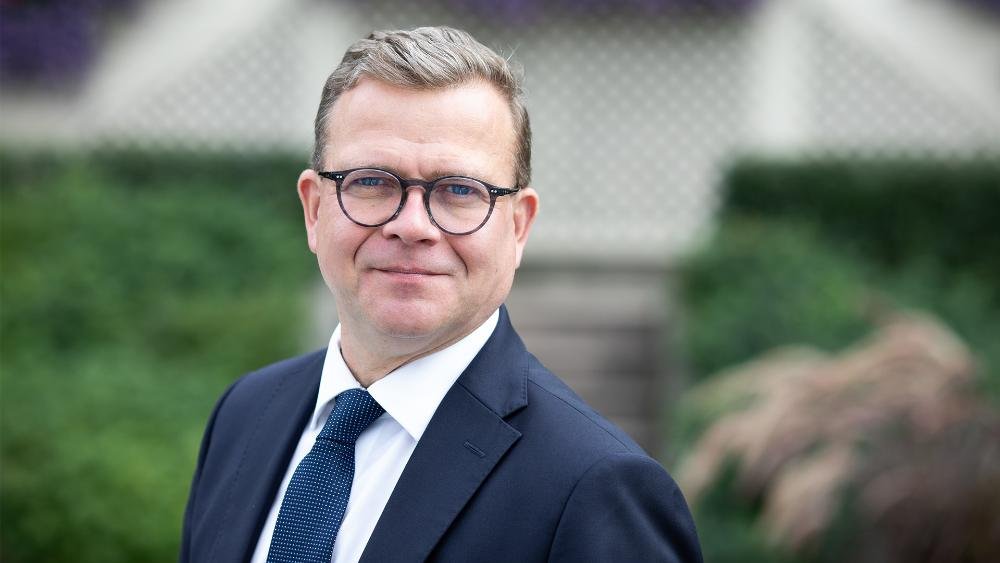
The Government of Prime Minister Petteri Orpo reached a decision on its budget proposal for 2027 and is steadily implementing the agenda it agreed at the spending limits session. The agenda includes EUR 100 million of investment in construction and numerous transport infrastructure projects. The Government’s targeted measures will support economic growth.
“Economic growth increases confidence in the future. We hope that it will already have an impact this year and help more people in Finland find work. During this parliamentary term, we have made a significant number of decisions that strengthen Finland’s competitiveness and improve the conditions for entrepreneurship, investment and growth. In the spring, we drew up a new agenda for ourselves, and we are now delivering on it,” says Prime Minister Petteri Orpo.
Finland’s economy and output are growing, and the outlook for businesses and households has brightened.
People in Finland have seen their purchasing power increase throughout this parliamentary term. Domestic demand will receive a boost next year from a EUR 230 million reduction in taxes on labour. The tax cut is aimed mainly at low and middle income earners.
The increase in the tax credit for household expenses agreed in the spring spending limits session, which will take effect retroactively this year, will continue in 2027. It will encourage people to purchase services that make everyday life easier, such as cleaning and care services.
The reduction in the corporate tax rate to 18 per cent, which supports self-employment and growth, will enter into force at the beginning of next year. The ability of start-ups and high-growth enterprises to attract and retain talent will improve when the taxation of employee stock options changes from the beginning of next year. The period for deducting business losses will be extended from the current 10 years to 25 years.
The Government plans to submit an urgent proposal to Parliament on reforming the Self-Employed Persons’ Pensions Act. The reform would be based on a freedom of choice model as agreed in the spending limits session. The reform will improve the conditions for self-employment and particularly benefit low and middle income self-employed people and sole entrepreneurs.
Following the reform of the Self-Employed Persons’ Pensions Act, the Government will launch a project to bring all self-employed people into the scope of the National Incomes Register and the Positive Credit Register. This will improve equality between self-employed people and make it possible to monitor incomes in real time in the pension system for self-employed people.
Stable and predictable economic policy supports growth
The Government is carrying on with previously agreed savings measures. In the 2027 budget, direct spending cuts will rise to EUR 4.8 billion. Decisions to curb indebtedness will be implemented to the tune of nearly EUR 1 billion next year. Savings will be targeted, among other areas, at central government administration.
The central government is expected to run a deficit of EUR 12.4 billion in 2027. The deficit is being widened particularly by debt interest payments and necessary investments in defence and security.
The government budget session included a discussion on the African swine fever situation in south-eastern Finland. The Government is prepared to combat the disease through new measures and additional financing in the supplementary budget.
Previously decided fiscal consolidation measures to be included in the national budget
In its spring spending limits session, the Government decided on savings totalling approximately EUR 540 million by the year 2030. These savings will replace individual previously decided savings from social and healthcare services, and measures that affected revenue. Public sector austerity measures will also finance investment and growth measures that were decided in the spending limits session. The savings decided in the spending limits session will total some EUR 390 million in 2027.
EUR 60 million of the savings decided in the spring will be additional savings on central government operating expenses in 2027. These savings have now been fully allocated in line with draft budgets of the ministries and Government policies. Additional savings of EUR 25 million that were decided in autumn 2025 have also been allocated. The total savings in operating expenditure will amount to some EUR 593 million in 2027.
Several other fiscal consolidation measures that were decided in autumn 2025 will be included in the national budget with a view to reducing the accumulation of public debt. For example, the authority to approve interest-subsidised loans for state-subsidised housing construction will be reduced by EUR 365 million, and environmentally and health-motivated taxation increased by a total of EUR 50 million in excise duties on tobacco and alcohol. The transfer from the State Pension Fund to cover pension expenditure will also be increased by some EUR 100 million.
Important transport infrastructure projects to be financed under the investment programme
In its spring spending limits discussion, the Government agreed on increasing the total amount of its fixed-term investment programme by EUR 0.2 billion to around EUR 4.7 billion. The Government also agreed on additional or new funding for several projects.
The budget proposal includes funding for a number of projects under the investment programme, most of which were already outlined during the spring spending limits session. Funding for the development of the Karelian railway would be increased by EUR 59 million, raising the project authority from EUR 90 million to EUR 149 million, alongside an appropriation of EUR 17 million.
The proposal also allocates EUR 8 million for improvements to main road 2 in Humppila. For the widening of main road 8 between Bäckliden and Brännbacken, a budget authority of EUR 19 million and an appropriation of EUR 1 million are proposed, while EUR 49 million in budget authority would be provided for improvements to main road 9 at Ylämylly. In addition, EUR 7.3 million would be allocated for junction arrangements on main road 9 in the centre of Suonenjoki.
The widening of main road 13 between Savitaipale and Lemi would receive a budget authority of EUR 14.5 million and an appropriation of EUR 1 million. A further EUR 6 million is proposed for improving the junction in Teppo and the Penttilä bridge on main road 19, while EUR 4 million would be directed to intersections and a railway underpass in Muhos on main road 22. The Heinävesi project on main road 23 between Rantala and Lajunlahti would receive an appropriation of EUR 4.8 million, and EUR 6 million would be allocated to the Kela junction project on main road 51. An additional EUR 1 million is proposed for improvements to highway 506 at the Karjalankatu junction in Juuka.
For public transport infrastructure, the Kupittaa public transport deck project would receive a budget authority of EUR 6.75 million and an appropriation of EUR 0.9 million. The renovation of railway and metro stations in Helsinki would be supported with a budget authority of EUR 14.3 million and an appropriation of EUR 8 million.
The budget proposal also includes a budget authority of EUR 18 million and an appropriation of EUR 6 million for deepening the Loviisa fairway. EUR 7.04 million would be allocated to the planning of military mobility projects, while a budget authority of EUR 46 million and an appropriation of EUR 0.5 million are proposed for expanding the planning of European track gauge rail links. The Norvajärvi emergency landing strip bypass project would receive an appropriation of EUR 3.6 million.
In addition, EUR 15 million is proposed to reduce the repair backlog of sports facilities and to promote equal opportunities for participation in sports in segregated residential areas. The Nousu and Helmi programmes would also receive an additional EUR 2 million for measures aimed at removing obstacles to migratory fish.
Investment programme appropriations for 2027 total EUR 878 million.
The expenditure under the investment programme over the coming years will not increase central government indebtedness after the end of the parliamentary term.
Taxation policy will encourage work and self-employment
The Government has boosted incentives for work and productivity by easing taxation of labour and reducing the highest marginal tax rates. The Government has also strengthened public finances in particular by increasing consumption taxes and shifting the focus away from taxation of labour towards consumption taxation.
The 2027 budget proposal includes a number of tax measures aimed particularly at low- and middle-income earners. Their tax burden would be reduced by a total of EUR 230 million, while earned income tax criteria would be adjusted in line with index changes across all income levels. The proposal would also change the taxation of employee stock options involving shares in unlisted companies, shifting the taxation date from the exercise of the option to the transfer of the underlying asset. In addition, the tax deduction for donations would be expanded and increased, while entrepreneurs would benefit from a higher tax deduction.
Several changes taking effect retroactively from the beginning of 2026 will also have an impact on taxation and tax revenues in 2027. The tax credit for household expenses will be increased for both 2026 and 2027, while the scope of sports and cultural vouchers will be expanded and the maximum value of the benefit raised from 2026. In addition, the higher commuting expenses deduction threshold for the 2026 tax year will reduce tax revenue accruals in 2027.
The corporate tax rate will be lowered by two percentage points to 18 per cent. Tax revenue will also be reduced by the exemption from the interest deduction limit granted to infrastructure projects critical that are to security of supply.
The carbon dioxide component of the tax on transport fuels and the basic motor vehicle tax will also be lowered.
Gradual increases to the excise duty on tobacco products were agreed in the Government Programme, and the indexation of the excise duty on alcohol products was decided in the Government’s mid-term policy review session. The abolition of the corporate tax exemption for Veikkaus Oy and the increase of the lottery tax in connection with the gambling system reform and will also boost tax revenue.
The Government has decided not to pursue the tax expenditure envisioned for data centres.
The Government will not implement the planned expansion of the waste tax. Insufficient uses were found for most of the waste fractions produced by the individual companies that had been proposed to be covered by the tax.
The Government will continue to look into a reform of real estate taxation but will not implement the reform this parliamentary term. The timetable would not give property owners sufficient time to study and prepare for the impact of changes. The results of the Government’s work on the reform will be available to the next government.
Additional investment in defence and security
Russia’s war of aggression against Ukraine has fundamentally changed the security environment of Finland. NATO membership is also affecting the needs of defence enhancement.
An increase of EUR 618 million over the Budget for 2026 is proposed in appropriations of the Ministry of Defence’s branch of government. The budget proposal also includes EUR 1.3 billion in budget authorities for procurement of defence materiel. A procurement authority of EUR 186 million is proposed for the operational expenses of the Finnish Defence Forces.
To support Ukraine, an additional allocation of EUR 200 million is proposed for the Ministry of Defence’s branch of government. In addition, EUR 3 million is proposed for the Ministry of the Interior’s branch of government for Ukraine-related transport costs and procurement.
Approximately EUR 67 million is proposed for wellbeing services counties, the City of Helsinki and the HUS Group for investing in and maintaining the healthcare preparedness and readiness of the Finnish Defence Forces.
EUR 10 million is proposed for the Finnish Border Guard’s UXV30 project, set up for the procurement and introduction of unmanned surveillance systems. The project is being funded almost entirely by the European Union.
Central government funding for research and development
The Government maintains its commitment to raising R&D funding to 1.2 per cent of GDP by the year 2030. Based on a decision made in autumn 2025, the R&D Funding Act will nevertheless be amended so that the increase in central government funding required to achieve this target is updated annually to match the latest forecast.
Under the budget proposal, total R&D funding will be approximately EUR 3.40 billion in 2027. This represents an increase of some EUR 230 million compared to 2026. The largest increases will concern Business Finland’s R&D budget authority and the Research Council of Finland’s research project budget authority.
Highlights from the budget proposal
Finland’s economic outlook has improved, with output growing faster than expected for three consecutive quarters. Investment in the energy transition, artificial intelligence and defence is expected to support growth, while improving consumer confidence, moderate wage growth and tax cuts should gradually strengthen household consumption.
The Government’s 2027 budget proposal totals EUR 92.5 billion, EUR 0.8 billion more than budgeted for 2026. The deficit is projected at EUR 12.4 billion, EUR 0.9 billion lower than in 2026, while central government debt interest expenditure is expected to rise to EUR 4.4 billion. Higher-than-expected tax revenues have improved the fiscal outlook compared with the Government’s spring estimates.
Among the main new allocations, EUR 50 million is proposed to improve the energy efficiency of residential buildings. Health and social services would receive EUR 40 million for projects improving continuity of care, informal care, personal doctor models and services for children, young people and long-term homeless people, while another EUR 25 million would support cooperation between regional authorities and health and social services organisations. Additional funding is also proposed for courts, prosecutors, police, immigration services and prisons.
The budget proposes EUR 27.6 billion in universal funding for wellbeing services counties, around EUR 360 million more than in 2026. At the same time, central government transfers to municipalities for basic public services would fall by around EUR 110 million to EUR 3.4 billion, although the Government estimates that decisions taken during its term will strengthen municipal finances by approximately EUR 50 million in 2027.
The budget proposal is due to be submitted to Parliament on 21 September. It will also include the Government’s assessment of Finland’s compliance with EU and national fiscal rules as the country works to address its excessive deficit.
Source: valtioneuvosto.fi