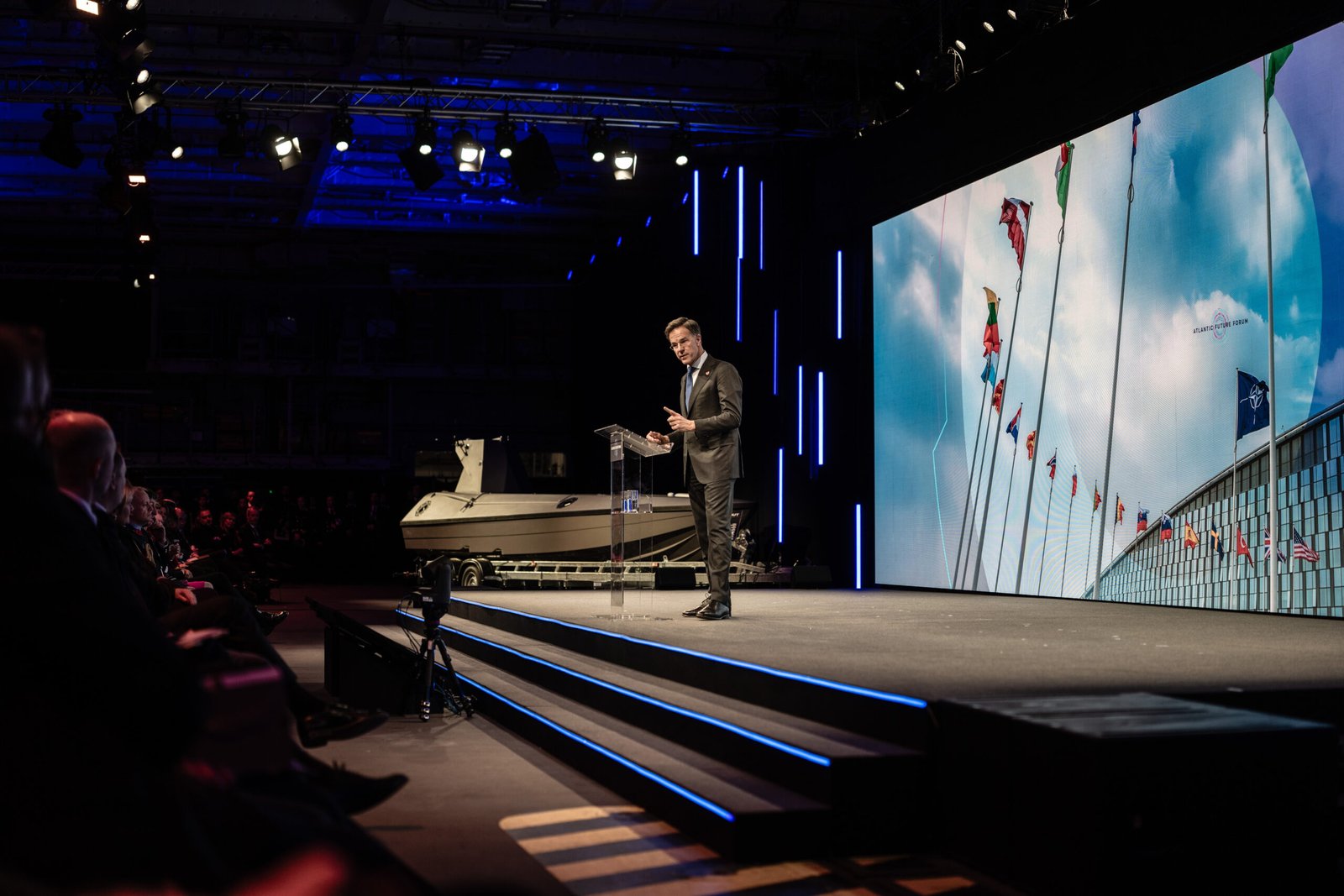
Norwegian defence and technology group Kongsberg used the Atlantic Future Forum in Oslo to press for closer collaboration between governments, industry and operational users to convert defence spending into deployable maritime capabilities in the North Atlantic and High North.
Representatives from 29 countries gathered in Oslo on 11 and 12 November for the Atlantic Future Forum, hosted aboard the Royal Navy aircraft carrier HMS Prince of Wales at the invitation of Norway and the United Kingdom. The event brought together more than 50 political, military and industry leaders to discuss international security, technology and industrial partnerships. NATO Secretary General Mark Rutte stressed the strategic importance of maritime security for trade, energy supplies and communications, and called on the defence industry to raise production and accelerate innovation.
Kongsberg President and CEO Eirik Lie took part in a panel on Northern Europe and the Arctic, arguing that early industry involvement is essential to combining expertise, developing technology and building the capacity needed to deliver on defence commitments. Camilla Kiss, Executive Vice President and President of Discovery at Kongsberg, spoke at the International Sea Power Conference held alongside the forum, pointing to the need for governments, users and industry to work more closely to turn investment into operational capability at sea.
Kiss outlined a joint High North Proposal developed by Kongsberg and BAE Systems, submitted to relevant Norwegian and British authorities, to explore closer cooperation on maritime security and the protection of critical underwater infrastructure. She also referenced the EU-funded HiAOOS research project, in which Kongsberg contributes ocean observation technology supported by the Norwegian Coast Guard to improve understanding of Arctic conditions.
A concrete example of Anglo-Norwegian industrial cooperation emerged at the forum when UK Defence Secretary Wes Streeting announced that the United Kingdom would procure three Norwegian standardised offshore support vessels, with an option for three more, under the Lunna House Agreement. The vessels are intended to support Royal Navy mine-hunting operations using autonomous and uncrewed systems. Norway’s separate decision to acquire British Type 26 frigates was also cited as a foundation for long-term joint technology development, maintenance and support between the two countries.
Kongsberg already supplies Naval Strike Missiles to the Royal Navy and works with British industrial partners across several areas. The forum’s concluding statement called for faster integration of new technology into operational use, including through the involvement of smaller companies alongside established defence manufacturers. Lie said industrial cooperation should create lasting value in both countries by combining strengths across companies of different sizes to expand industrial capacity and build more resilient supply chains.
Source: kongsberg.com