Danish and Greenlandic authorities have firmly rejected renewed statements by former U.S. President Donald Trump suggesting that the United States should seek control over Greenland, stressing that the Arctic territory is not for sale and that its future can only be decided by its own people.
The Danish Ministry of Foreign Affairs said Greenland is an integral part of the Kingdom of Denmark and enjoys extensive self-rule, adding that any discussion of transferring sovereignty is unacceptable. Denmark and Greenland remain committed allies of the United States through NATO, but sovereignty and territorial integrity must be respected, the ministry has emphasized in its public communications.
The Government of Greenland (Naalakkersuisut) has been even more explicit. In an official statement published on its government website, the Greenlandic authorities said that “Greenland is not for sale and will never be for sale,” underlining that Greenland belongs to the Greenlandic people and that decisions about its future cannot be made by foreign powers.
Danish Prime Minister Mette Frederiksen has also dismissed Trump’s comments, saying publicly that the idea of acquiring Greenland “makes no sense” and warning that such rhetoric risks damaging relations between close allies. Her remarks were reported by international media following statements issued through Danish government channels.
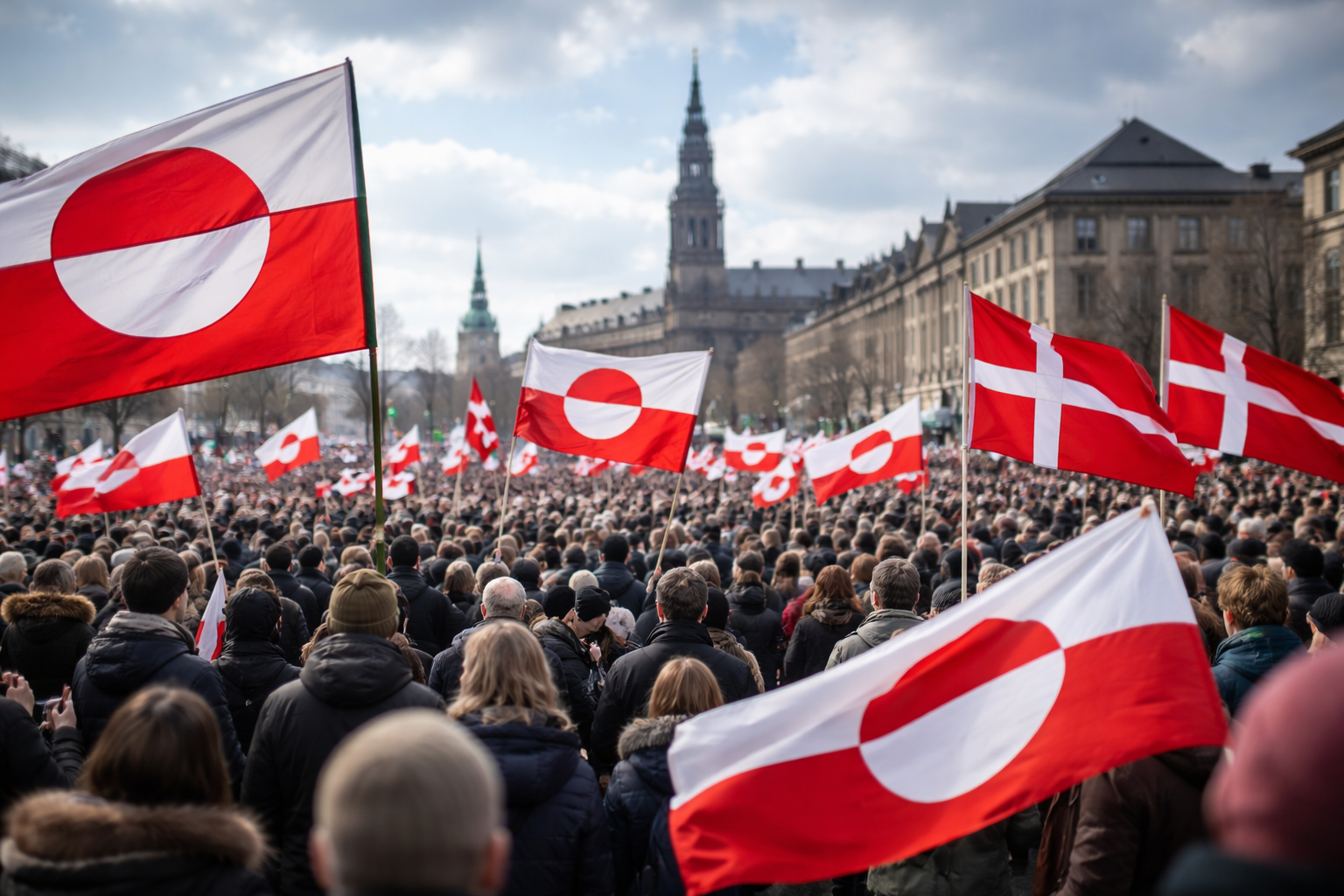
The issue has sparked public protests in Denmark, with demonstrators gathering in Copenhagen and other cities under slogans such as “Greenland is not for sale” and “Hands off Greenland.” According to Reuters, protesters expressed solidarity with Greenland and urged the United States to respect international law and the right of peoples to self-determination.
Greenland’s political leaders have repeatedly stated that while the island cooperates closely with both Denmark and the United States on security and economic matters, it does not seek to become part of the U.S. Greenland remains within the Kingdom of Denmark under a self-government arrangement that grants it control over most domestic affairs.
The renewed controversy highlights growing geopolitical interest in the Arctic, driven by climate change, security concerns, and access to natural resources. Danish and Greenlandic officials have warned, however, that strategic competition must not come at the expense of sovereignty or democratic choice.