The commercial real estate market continued its gradual stabilization during the first half of 2026. However, in the office segment, the balance of power has clearly shifted in favour of tenants. The market now offers such a large supply of new, energy-efficient Class A office space—and with more projects still under construction—that companies searching for premises can choose from numerous options and, in many cases, negotiate their own terms. These are the key findings of Latio’s latest Commercial Real Estate Market Report for the first half of 2026.
Overall, macroeconomic conditions have become more favourable for the commercial property market, with gradual signs of recovery. Private consumption is picking up, wages continue to rise, and lending activity is slowly gaining momentum. At the same time, investment activity remains constrained by geopolitical uncertainty and cautious business sentiment, meaning rapid growth is unlikely in the near future. Investors currently expect yields of around 7% in the office segment, while industrial and retail properties offer yields closer to 8%.
Tenants Are Setting the Rules
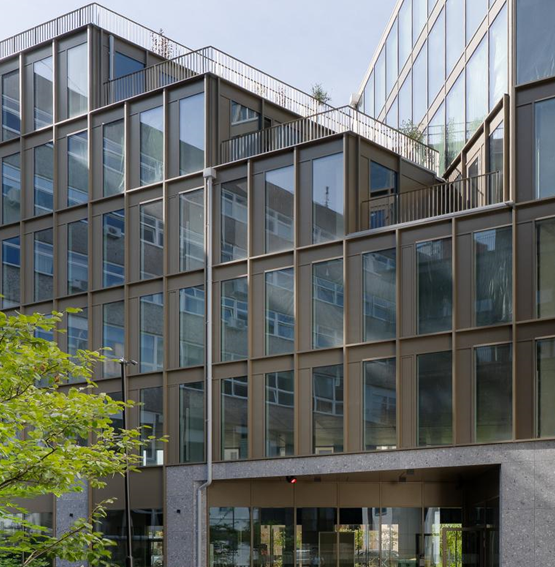
Over the past few years, a significant amount of high-quality office space has been delivered to the Riga market. At the same time, Latvia has a relatively limited number of large, financially strong tenants seeking substantial premium office space. Additional pressure comes from the widespread adoption of hybrid working models, which has reduced companies’ need for large office footprints. As a result, many tenants are simply relocating—from older buildings to newer ones, or from larger premises to smaller, more efficient spaces.
This has created a market where tenants can afford to be more demanding. Developers increasingly have to offer more attractive lease terms, flexible layouts, and invest more heavily in interior fit-outs to secure occupants.
“Given the abundant supply, today’s office market can undoubtedly be described as a tenant’s market. There is a wide range of available options, allowing businesses to choose premises that best match their needs and preferred conditions,” says Anda Locāne, Head of Commercial Real Estate Transactions at Latio.
According to the report, tenants are increasingly expecting rent discounts and additional incentives from landlords. Property owners who are willing to adapt their premises to individual tenant needs and show greater flexibility are ultimately rewarded with more loyal, long-term clients.
The market is responding in several ways. Large office floors are being divided into smaller units, as premises between 50 and 130 square metres are leased much faster than spaces ranging from 400 to 800 square metres. Some buildings are being reclassified for healthcare or educational use to accelerate leasing, while harder-to-let office premises are being converted into residential apartments.
Several major tenants relocating to new office buildings are leaving behind large spaces that are difficult to lease to similarly sized occupiers. Over time, this trend is reshaping the way commercial properties are developed and managed.
“The most successful commercial property owners today are those who remain open to new ideas and are willing to look for unconventional solutions,” emphasizes Anda Locāne.
As highlighted in the report, the traditional understanding of an office as simply a workplace has fundamentally changed, creating both opportunities and challenges. One promising source of future demand is international companies entering Latvia and selecting a Baltic headquarters location among the three Baltic states. Latvia remains highly competitive in terms of both pricing and quality.
Under these market conditions, the role of an experienced real estate advisor becomes increasingly important. Latio supports both sides of the market—helping tenants secure the most suitable lease conditions while assisting property owners and developers in attracting tenants and filling newly developed office space.
Significant Price Differences Across the Market
The new report also provides an overview of current rental and sale prices across all commercial property segments.
Monthly rents for Class A offices in central Riga reach EUR 22 per square metre, while Class C premises in less sought-after locations can be leased from as little as EUR 5 per square metre. In other words, a property’s location and quality can increase rental values by as much as four times.
However, low rents alone are not always enough to attract tenants in the long term.
“Buildings with relatively high maintenance or utility costs will struggle to compete, even if they offer low rental rates. Tenants carefully evaluate the total occupancy cost to avoid unexpected expenses in the future,” says Anda Locāne.
For investors, industrial and retail properties currently offer stronger returns than offices, with expected annual yields of approximately 8%, compared to around 7% for office buildings. Today, office properties compete with warehouses for investor attention.
The latest report covers the full commercial real estate market, including offices, industrial properties, apartment buildings, hotels, forests, and agricultural land. It also reviews the largest transactions completed in each segment and features commentary from leading industry experts.