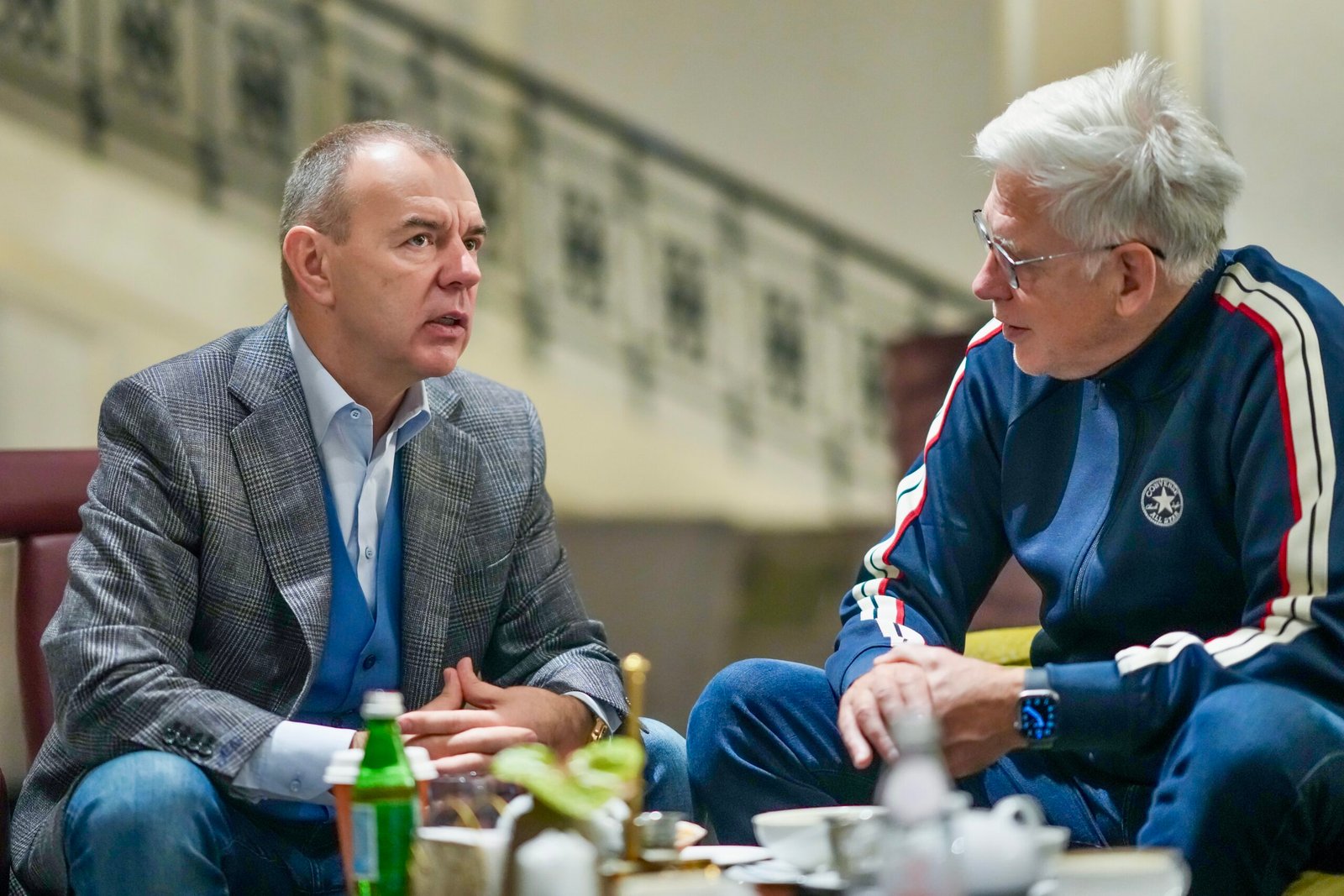
When VEF Rīga was revived, one of the original aims was to give young basketball players an opportunity. Later, the professional team’s results took centre stage. How can clubs nurture young players while competing for titles? Businessman and sports supporter Māris Martinsons and basketball legend Valdis Valters discuss VEF’s experience, parents’ contribution to children’s sport and what sports organisations need to operate for the long term.
VEF’s original vision
Valdis Valters: VEF Rīga was revived in 2007. At the time, Latvian basketball had both ASK Rīga and Barons. What attracted you to the VEF project?
Māris Martinsons: First and foremost, it was the idea of building a youth team. Edgars Jaunups and Mārtiņš Lauva approached me with the proposal. You would be the coach, the team would consist of young basketball players, and the aim would be to compete with the wealthier clubs of the time. I was drawn both to the idea of developing young players and to the people who were ready to make it happen. I think the project succeeded in a way, even though it later developed differently.
Valters: Why basketball in particular?
Martinsons: Basketball has always been one of my favourite sports. As a child, I played from morning till night—in the courtyard and anywhere else I could. I wanted to be a basketball player, but my height meant that wasn’t the path for me. Later, I took up boxing, but basketball remained close to my heart.
Valters: I remember board meetings where we started talking about winning the championship and moving away from the original strategy. I was against that change of direction. How do you see it now?
Martinsons: I don’t regret a single day I spent at VEF. It was an interesting time. But my original interest was in helping develop young players and giving them a chance to join the senior team.
“I was against that change of direction” — VALDIS VALTERS
Running a professional team with private funds is a different challenge. It is difficult to compete with major European clubs that have far greater resources.
Valters: Could you have done more to help the club stay true to its original direction?
Martinsons: Probably. It also depends on how involved I wanted to be, because responsibilities at the club were divided. Jaunups and I discussed our ideas and were able to reach agreement. Our differences were mainly about how money was spent and how players were recruited. I felt there should have been greater transparency on those issues.
When I was also on the board of the Latvian Basketball Association, I proposed that Latvian clubs should disclose their budgets.
Valters: What gives you a sense of achievement when you look back at your contribution to sport?
Martinsons: I’m pleased with what we accomplished. People come up to me in the street and say thank you, including older people. I would like people to remember those who built and supported the clubs. Today, VEF is a well-known club, but its creation was the result of the work of specific people.
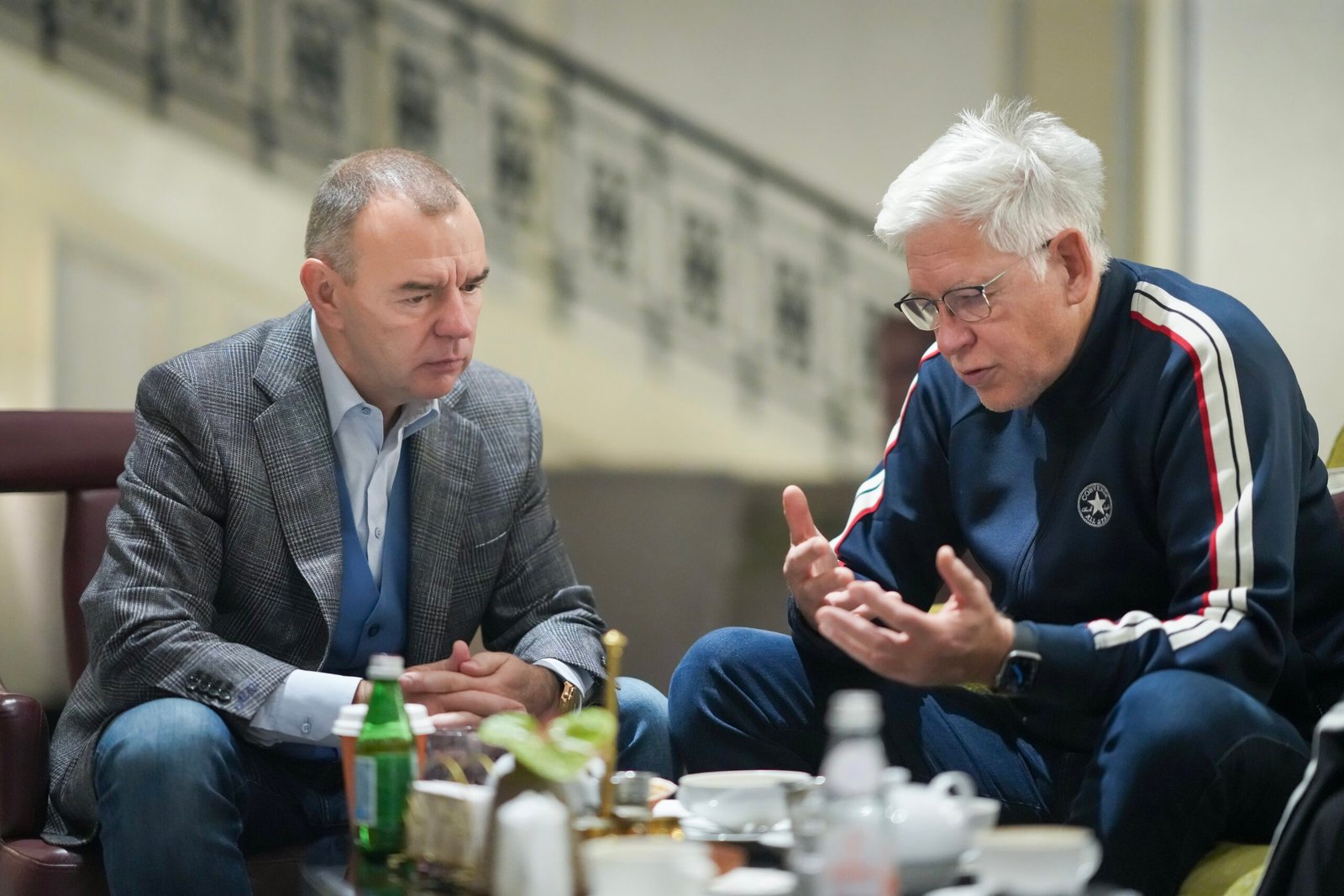
Sport and national recognition
Valters: VEF once competed on equal terms with Žalgiris Kaunas, but the clubs’ opportunities are now very different. How do you explain the gap?
Martinsons: Basketball holds a different place in Lithuanian society. There, it is much more natural to approach businesses and ask them to support the sport.
I think we underestimate how much sport contributes to Latvia’s visibility. In the United States, people know Kristaps Porziņģis; hockey fans know Sandis Ozoliņš and Artūrs Irbe. Athletes are among the people who connect Latvia with the rest of the world. That matters for a small country.
“Athletes are among the people who connect Latvia with the rest of the world. That matters for a small country” — MĀRIS MARTINSONS
Valters: You have experience working with politicians. How interested have they been in sport?
Martinsons: I think back positively to the time when ministers and local government leaders served on the Latvian Basketball Association’s board. They were informed about what was happening in sport, heard about the problems and could get involved in addressing them.
I think there is not enough dialogue today between public officials and businesspeople. If the two sides do not meet and discuss what needs to be done, it is difficult to develop anything.
Valters: But is talking enough? Why is progress in children’s and youth sport so slow?
Martinsons: There needs to be a driving force—people who bring forward a concrete idea and take responsibility for the work. We also need to agree on priorities. We should start by asking what outcome we want and how we are going to achieve it.
Children’s health and physical development must be part of that discussion. It is not enough to keep saying there is no money.
“It is not enough to keep saying there is no money” — MĀRIS MARTINSONS
From first practice to the senior team
Valters: You have been involved in both basketball and hockey. What differences do you see in children’s and youth sport?
Martinsons: First, I want to thank the parents. Hockey is one of the most expensive sports, but children’s basketball also relies heavily on parents’ payments and involvement. They take their children to practices and games, travel with them and support them. That is a huge contribution.
Private clubs play an important role in hockey. Their founders are involved not only in running the team but also in developing facilities and recruiting coaches. A private club can actively seek out a coach and provide a salary. A sports school, in turn, has its own budget and limitations. I think basketball should also have more discussion about the respective roles of private clubs and sports schools.
Valters: How did you go from founding Mogo to setting up the Falcons hockey school?
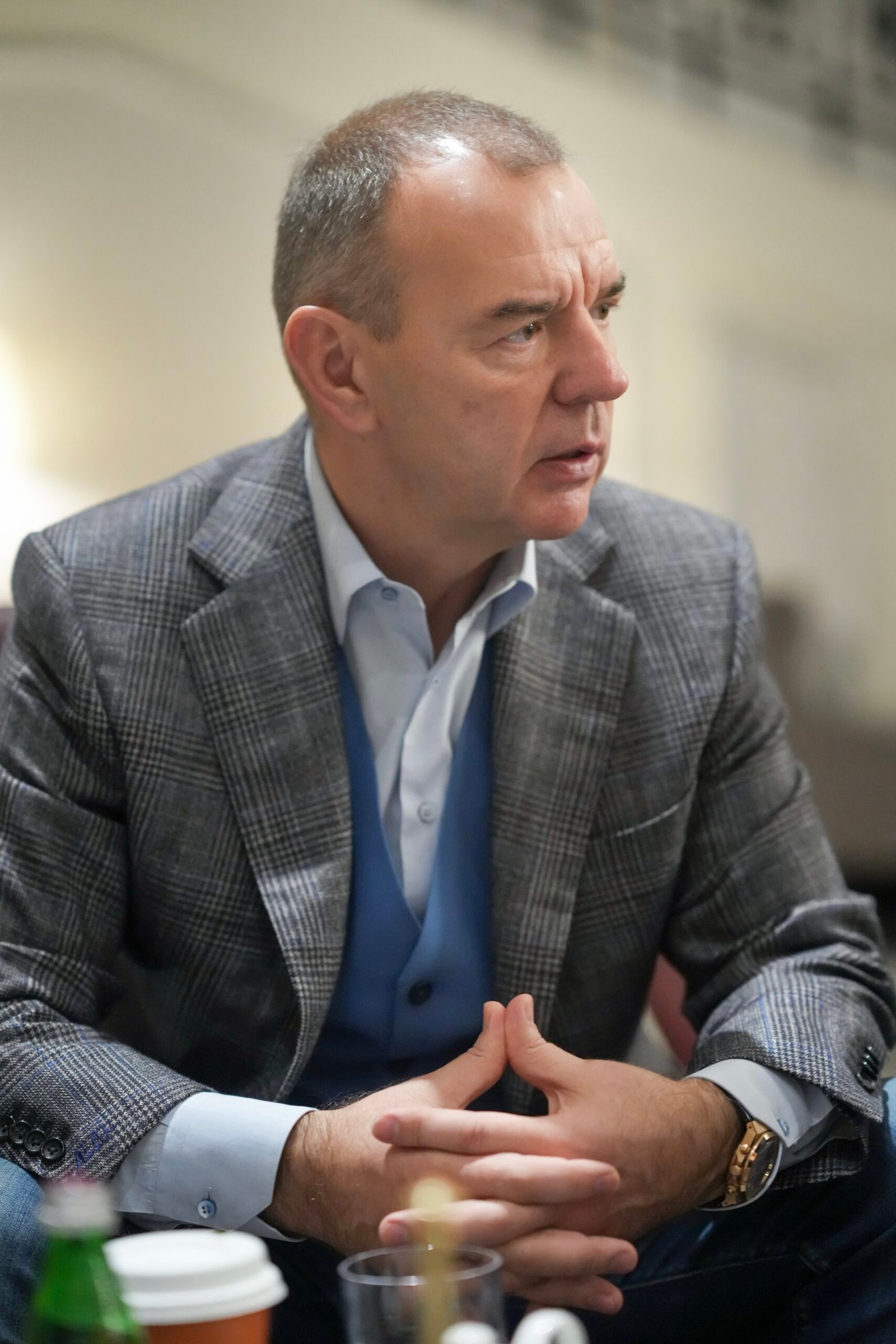 Martinsons: At first, there was a senior team. After we acquired the arena, the next goal was to build a complete development pathway—from the youngest children all the way to a senior team.
We started Falcons with a U9 age group and took in the next group of children in that age category each year. The other age groups developed gradually. The idea was to develop our own players rather than initially fill the teams by bringing in children from other clubs.
As players grow older, you have to look for the next stage of development: where they can play, how to provide an appropriate level of competition and how to secure funding for it. The system does not end when a child turns up for their first practice.
“The idea was to develop our own players rather than initially fill the teams by bringing in children from other clubs” — MĀRIS MARTINSONS
Editor’s note. In an earlier mmnews.eu conversation with Viesturs Koziols, Martinsons said that 15-year-old Olivers Mūrnieks had already been given the opportunity to play for the Mogo/RSU senior team. He stressed the importance of coach Ģirts Ankipāns’s confidence in the player at that stage of his development.
Valters: In hockey, we see former professionals working with children after their careers end. What helps keep them in the game, and what could basketball learn from that?
Martinsons: In hockey, I see a strong sense of belonging. Former players want to give back to the sport and to the people who helped them along the way. The environment matters too—the chance to return and keep working in the game.
Valters: What sustains that environment?
Martinsons: It is not down to one person. There are people in the Latvian Hockey Federation, the clubs and the wider hockey community who love the sport and are ready to put in the work. The federation organises coaching seminars and training, and brings in young referees. Club representatives take part in resolving shared issues.
Coaches from other countries, including Canada and the United States, also work in Latvia. They bring different experience with them. It matters that people are willing to share that experience and that there is an environment where their knowledge can be put to use.
A child’s development should not be subordinated to winning
Valters: I’m concerned about children specialising too early and being overloaded. Parents and coaches want quick results, but is that good for the child?
Martinsons: The coach’s role is very important. Sometimes parents think they know better and arrange extra practices for their child. That is why we need knowledge and cooperation, rather than simply wanting to achieve results as quickly as possible. This is another reason why coach training and the exchange of experience are important.
Valters: I believe coaches need data about each child—their physical condition and development. They cannot rely on observation alone. What is your view on the use of sports science?
Martinsons: Sports science is not my area of expertise. But I believe that, as a small country, Latvia should draw on knowledge developed elsewhere and bring in good specialists.
“They cannot rely on observation alone” — VALDIS VALTERS
When building a youth hockey team, I brought in not only a coach but also other specialists, including doctors and physiotherapists, to make sure the training was properly organised.
At the same time, you cannot simply take another country’s model and apply it to everyone in the same way. There are few children, and each one needs an individual approach.
“There are few children, and each one needs an individual approach” — MĀRIS MARTINSONS
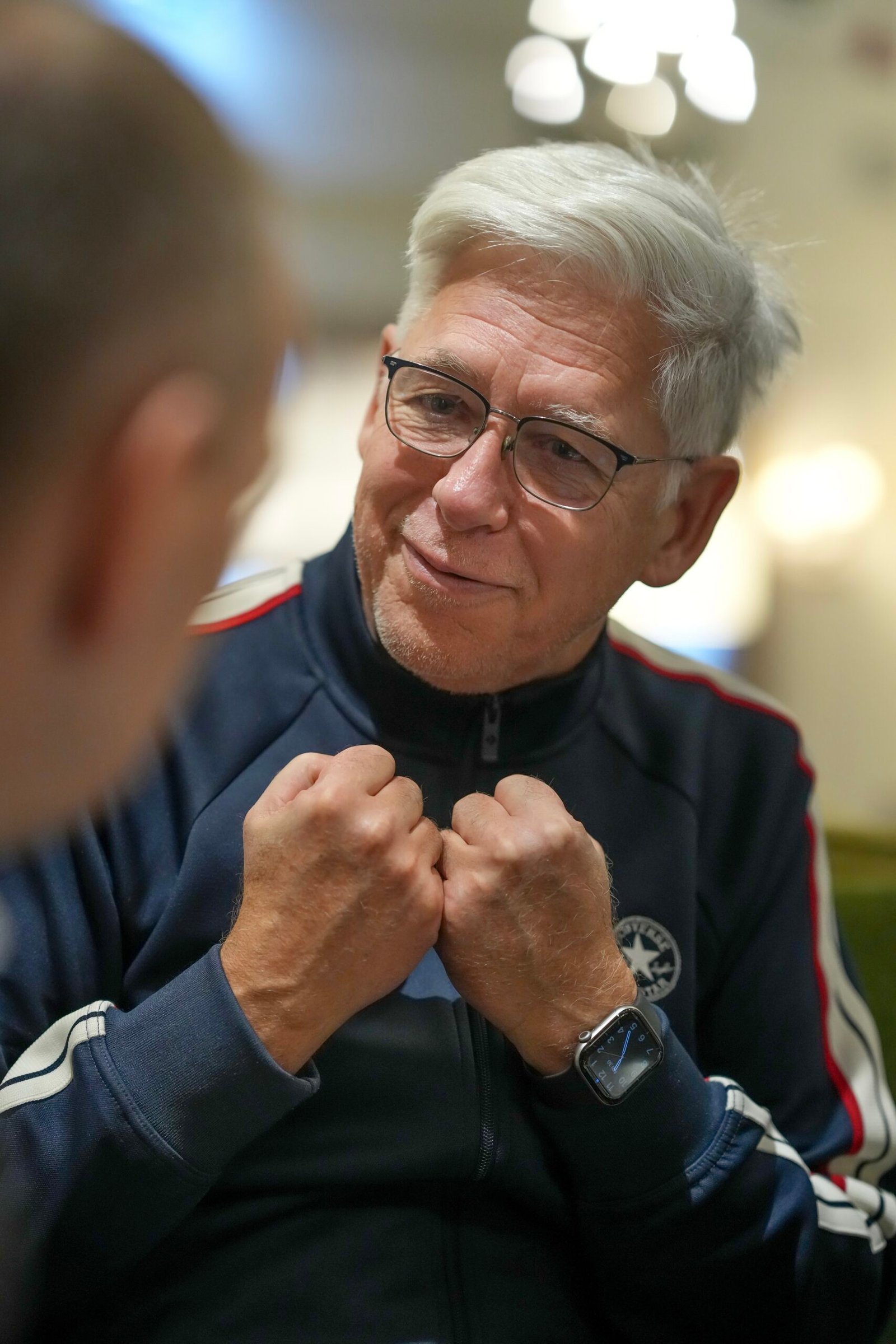 Valters: That is exactly what I have always said: every athlete should be trained individually until the age of 18. If you push a child for results at 12, they may leave sport by the age of 14. The body needs to be developed in a well-rounded and balanced way. In our day, we did a lot of individual work in training and focused on physical conditioning, while games were played at weekends. Now, children train in basketball five days a week.
Martinsons: In hockey too, it is important to adapt the work to children so that they are not overloaded. You should not make everything depend on the result at that particular moment.
“If you push a child for results at 12, they may leave sport by the age of 14” — VALDIS VALTERS
Boxing needs to put the athlete at the centre
Valters: You have also practised boxing and have experience leading a kickboxing organisation. How did you become more involved in developing boxing?
Martinsons: Boxing is close to my heart. I practised it for 11 years and later led the Kickboxing Association for 13 years. I also supported individual athletes. When I was invited to become more involved in the organisational side of boxing, it was not unfamiliar territory: I had both personal experience and knowledge gained in basketball and hockey.
I could see that there were athletes and coaches who wanted to work, but a lot needed to change organisationally. Supporting an individual athlete is not enough if the work around them is not properly organised.
“Supporting an individual athlete is not enough if the work around them is not properly organised” — MĀRIS MARTINSONS
Valters: What needed to change?
Martinsons: We needed to build an organisation capable of getting things done. Titles alone are not enough—we need people who want to work and are able to do it.
The board of the Latvian Boxing Federation includes heads of Olympic centres and representatives of sports schools. Daugavpils is a good example: there are coaches working with young people, and the municipality also provides support. We need to bring these people’s experience together.
Editor’s note. In an earlier mmnews.eu interview about the development of boxing in Latvia, Martinsons pointed to a shortage of coaches and qualified referees. He also spoke about new regulations for coaches and referees, as well as training and seminars.
Valters: Are the changes already showing in sporting results?
Martinsons: There have been successes at European youth championships. But behind those results are athletes, coaches and organisational work. It is important to provide the conditions they need to prepare and travel to competitions.
International competition is very strong. Our opponents include countries with powerful boxing traditions and greater resources.
Editor’s note. At the 2026 European U15 Championships, Prohors Grišuņins won gold in the under-63 kg category. At the European U19 Championships, Markuss Reke won bronze in the under-90 kg category. These results are confirmed by the Latvian Boxing Federation’s reports on Grišuņins’s victory and Reke’s bronze medal.
Valters: You also mentioned the revival of Riga Open. Tell us about the tournament.
Martinsons: It is a historic tournament that we are now bringing back. It was once known as the Knīša Cup—one of the strongest boxing tournaments in the Soviet Union.
Editor’s note. The tournament was still upcoming when the interview was recorded. After a seven-year break, the revived Riga Open took place at the Riga National Sports Arena from 30 October to 1 November 2026. According to the Latvian Boxing Federation’s historical overview and tournament programme, the competition began in 1950 as the Arnold Knīš Cup. The Federation’s tournament summary reports that more than 80 boxers from seven countries took part and eight Latvian athletes won their finals.
Funding and personal involvement
Valters: You have also been involved in motocross. What drew you to it?
Martinsons: Motocross has a tradition in Latvia, with athletes and a venue for high-level competition in Ķegums. I was once involved in building the MX Moduls team. The support helped athletes continue developing and eventually join factory teams. I’m drawn to projects that I believe in and that excite me.
Valters: When the Valters Basketball School was operating, I raised sponsorship and parents did not have to pay for their children’s practices. Parents now have a much greater role in funding. I also find it harder to ask for money than to organise practices.
Martinsons: Support does not just mean giving money. I’m ready to take part in working groups and contribute my experience. The important thing is for people to come together and agree on a shared goal.
“Support does not just mean giving money” — MĀRIS MARTINSONS
Valters: You should also approach a businessperson with a project—with an idea and a clear explanation of how it will work. Then they can say, ‘I like it. I’m ready to get involved.’ You should not simply ask: ‘Give me money.’
Martinsons: The work in hockey was not down to one person either. People came together, each with their own point of view, and agreed on what to do. There are enough people in Latvia who could build a system like that. We need to be able to sit down around the same table.
In boxing too, it was important to create an effective board made up of people who are committed and willing to work. My experience in hockey and basketball has helped me understand how to organise that work.
Source: mmnews.eu