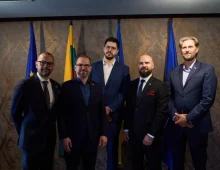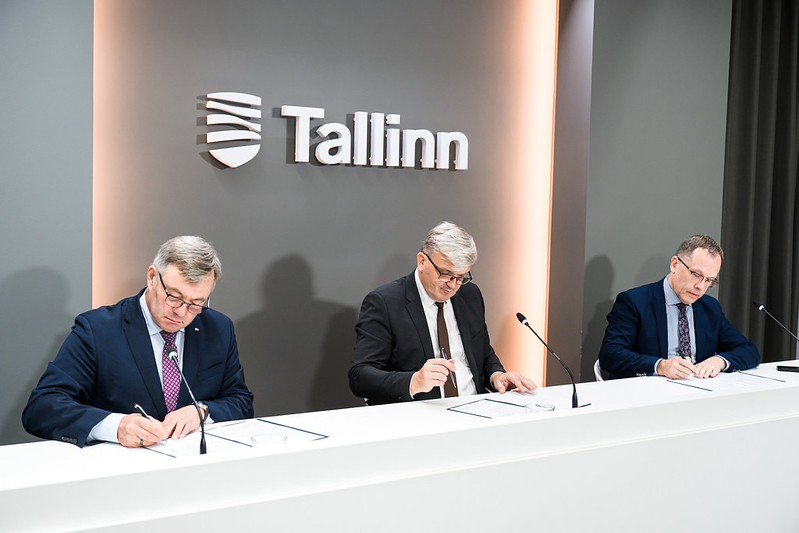
Tallinn, Tartu and Pärnu believe that greater consideration must be given to the needs of urban regions when planning the European Union’s next funding period. To this end, the three cities will submit a joint appeal to Estonia’s Ministry of Finance, emphasising that cities’ practical experience must be reflected in decision-making before priorities and funding measures are finalised.
At a joint press conference held today in Tallinn, the mayors of the three cities stressed that funding in the next period must enable interconnected challenges to be addressed comprehensively. They also called for more flexible funding opportunities and a reduced administrative burden.
According to Tallinn Mayor Peeter Raudsepp, the issue is not only how much EU funding Estonia receives, but also how effectively it can be used.
“Cities have practical experience of which investments are genuinely needed and where they can have the greatest impact. This knowledge must be taken into account when defining the objectives and measures for the next funding period, rather than only when the funds are being distributed,” Raudsepp said.
Tartu Mayor Urmas Klaas emphasised the need for investments with a long-term impact.
“For Tartu, this primarily means comprehensive renovation of educational buildings, the development of sustainable mobility, and investment in urban infrastructure, including connections across the Emajõgi River. The needs of Estonia’s larger cities must be clearly reflected in the national plan for the next EU budget period, and cities should be partners to the state in shaping that plan.”
Pärnu Mayor Siim Suursild said that cities must be involved as partners from the very beginning of the funding planning process.
“Pärnu serves a much wider area than its administrative boundaries alone, and this must also be taken into account when designing support measures. Projects need to be considered as a whole. Currently, funding often covers only one narrow component, while everything else required must be financed entirely from the city’s own budget,” Suursild said.
The influence of larger cities extends well beyond their administrative boundaries. Jobs, schools, services and infrastructure in Tallinn, Tartu and Pärnu are also used daily by residents of neighbouring municipalities. Therefore, the actual role of urban regions must be taken into account when planning funding for the next period.
In their joint appeal, Tallinn, Tartu and Pärnu identify several priorities: the development of a knowledge-based economy and entrepreneurship, crisis resilience and security, energy efficiency and climate change adaptation, digital development, and sustainable mobility.
The three cities also propose making funding more flexible, reducing administrative burdens, and improving municipalities’ ability to prepare and implement projects.
The needs of larger cities and urban regions must be clearly reflected in the national partnership plan, while interconnected investments should be planned and implemented as integrated projects.
Earlier involvement of cities would help improve funding decisions and direct investments to where they can deliver the greatest benefits for Estonia.
Source: tallinn.ee