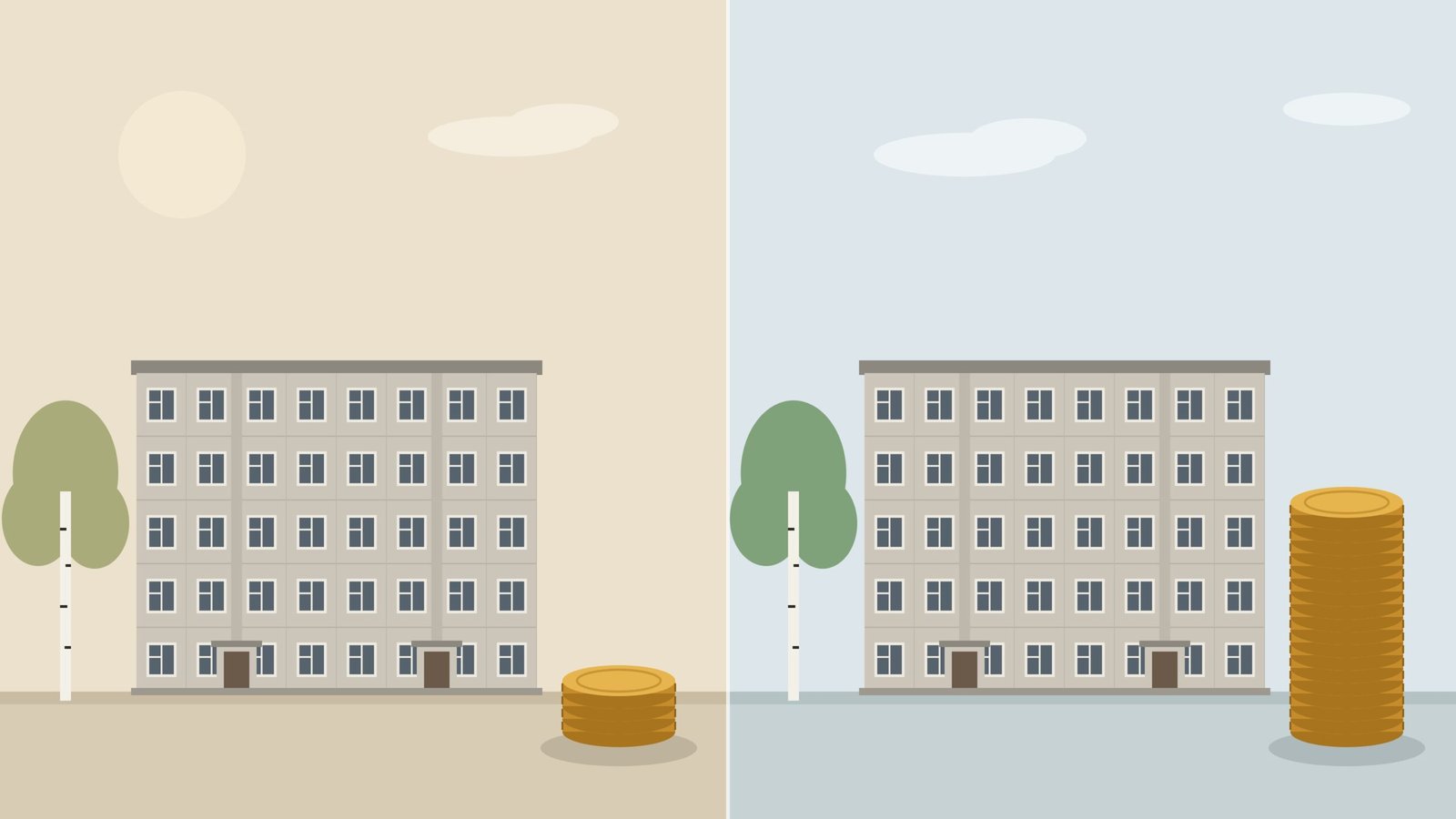
Apartments in Soviet-era residential buildings still account for nearly half of all housing transactions in Riga, with 3,626 transactions registered in the city by October this year. Although transaction prices in some neighbourhoods have increased by 5–7% since the beginning of the year, the current price per square metre in these apartment buildings is comparable to levels recorded back in 2006. At the same time, today’s buyers are in a very different financial position: average wages have increased 4.5 times, while monthly mortgage payments have remained almost unchanged.
Real estate agency Latio has observed that, alongside the basic need for housing, strong demand for apartments in Soviet-era buildings is also driven by investment interest and rising property prices in neighbouring countries, a trend that could eventually affect Latvia as well.
“If we look at the Vilnius market, where property prices, including apartments in Soviet-era residential buildings, have at least doubled, buying a home in Riga seems like a logical decision. We will not escape rising property prices in the coming years either,” says Ksenija Ijevleva.
Low Mortgage Payments Also Encourage Purchases
Despite the growing market for newly built residential developments and buyers’ preference for modern, high-quality renovated homes, apartments in Soviet-era buildings remain the most affordable option for many households.
Looking at housing prices over a longer period, Latio concludes that an apartment in a Soviet-era residential building in Riga’s neighbourhoods costs approximately the same as it did 20 years ago — an average of just under EUR 1,200 per square metre.
However, this does not mean prices have remained static. The market has experienced periods of growth, a sharp decline following the financial crisis, and a prolonged recovery. Even today, price growth for apartments in Soviet-era buildings remains moderate.
For example, in the third quarter of this year, the average price per square metre of internal apartment space in neighbourhoods on the left bank of the Daugava River increased by just under 7% compared with the beginning of the year. In neighbourhoods on the right bank, prices rose by approximately 4%, while apartments in Soviet-era buildings in the city centre recorded an increase of around 2%.
Much more significant changes have occurred in average net wages, which have increased more than 4.5 times since 2006 — from EUR 308 to EUR 1,400.
Twenty years ago, a mortgage payment would have accounted for approximately 90% of an average monthly salary. Today, the equivalent figure is less than 20%.
For example, the estimated monthly mortgage payment for a 55-square-metre apartment in a Riga neighbourhood, financed with an 85% mortgage over 30 years, would have been EUR 285 in 2006, compared with EUR 270 in 2026.
According to Ijevleva, buyers planning to purchase property with a mortgage primarily assess their ability to cover the monthly repayments. Apartments in Soviet-era buildings offer some of the most manageable mortgage payments, making affordability one of the main drivers of demand.
“Buyers first want to understand how much they will have to pay the bank each month. For someone earning EUR 1,500 net per month, a longer mortgage term with a monthly payment of EUR 300 is a more affordable option, while an apartment in a new development may exceed their financial means.
“If their income continues to grow over time, they become more confident in their ability to maintain these payments in the long term. This is precisely why practical considerations determine the choice of an apartment in a Soviet-era building — above all, the opportunity to buy a home now,” Ijevleva explains.
She adds that high prices in new residential developments are redirecting some demand towards older apartment buildings, particularly among buyers willing to compromise on the building’s condition, location, and overall housing quality to stay within their budgets.
At the same time, the supply of apartments available for sale is gradually declining, creating conditions for further price increases.
Buyers Expect Prices to Move Closer to Neighbouring Countries
Another motivation for purchasing apartments in Soviet-era residential buildings is the desire to protect savings against inflation.
For many buyers, a small apartment in a Lithuanian-type prefabricated building or a Khrushchev-era apartment block represents a straightforward investment. Such properties can be rented out to generate regular income, potentially covering monthly mortgage payments, and sold at a later date.
This gives buyers the prospect of both rental income and long-term capital appreciation.
The largest share of apartments currently available for sale in Soviet-era buildings consists of so-called Lithuanian-type residential projects, both older and newer versions, which account for more than 20% of the market.
Approximately 17% of available properties are located in brick and prefabricated concrete-panel Khrushchev-era buildings, while a similar share consists of apartments in Series 602 buildings.
Apartments in Series 103 and Series 119 buildings, as well as Czech-type residential projects, appear considerably less frequently in property listings.
Although many buyers are concerned about the remaining service life of Soviet-era residential buildings, Ijevleva emphasises that purchasing an apartment also means investing in its location and the opportunities to use the property for different purposes.
“As long as there is demand for rental housing in a particular neighbourhood and apartments in new developments remain too expensive, the market for Soviet-era apartments will remain active.
“The logic is simple: buy while prices still seem low, rent out the property, and wait until selling prices rise.”
Examples can be found just across the border.
In Vilnius’s most sought-after residential districts, transaction prices for two-room apartments in Soviet-era buildings have increased by 18% over the past year.
Furthermore, the price gap between Vilnius and Riga is substantial.
For example, a two-room apartment in a Lithuanian-type residential building in the densely populated and popular Žirmūnai district of Vilnius is advertised at EUR 3,200 per square metre.
By comparison, an apartment of similar size and condition in Riga’s nearby Purvciems neighbourhood can be purchased for approximately EUR 1,200 per square metre.
“When you see how much an almost identical property costs in Vilnius, it is easy to feel that real estate in Riga is still relatively inexpensive. Taking inflation into account, this encourages buyers not to postpone their purchases.
“However, higher property prices in neighbouring countries do not automatically mean that prices will rise in Latvia at the same pace.
“Prices will certainly increase, but the question is whether this will happen in three, five, or ten years.
“Vilnius and Tallinn have different economic conditions and investment dynamics, which also contribute to property price growth.
“An apartment in a Soviet-era residential building can certainly be a good investment in Riga as well, but investors need to be patient,” Ijevleva concludes.