Over the past few years, Latvian hockey has experienced the most rapid development in its history. The country has won its first-ever IIHF World Championship bronze medal, successfully hosted world championships, strengthened its international influence, and developed ambitious plans for the future. Behind these sporting achievements, however, lies years of strategic planning, international diplomacy, legal work, and long-term vision.
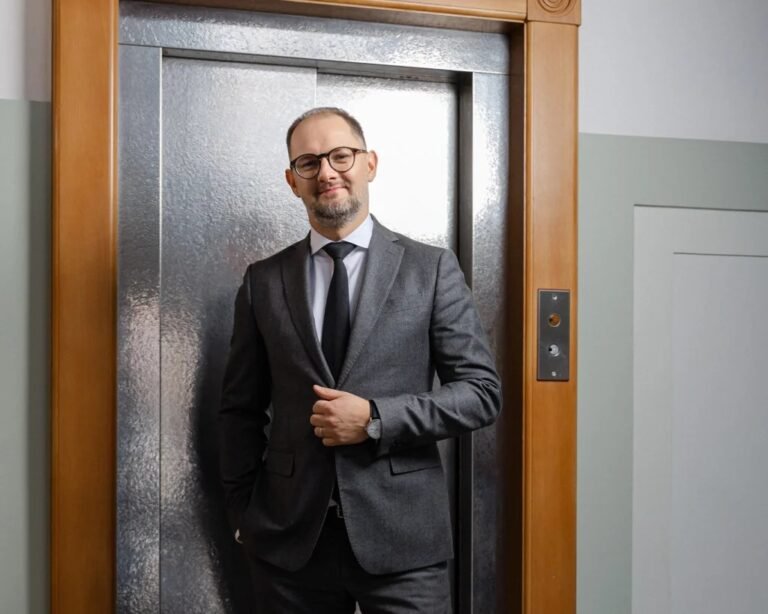
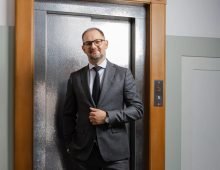
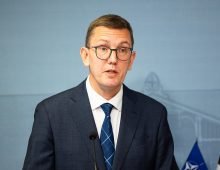
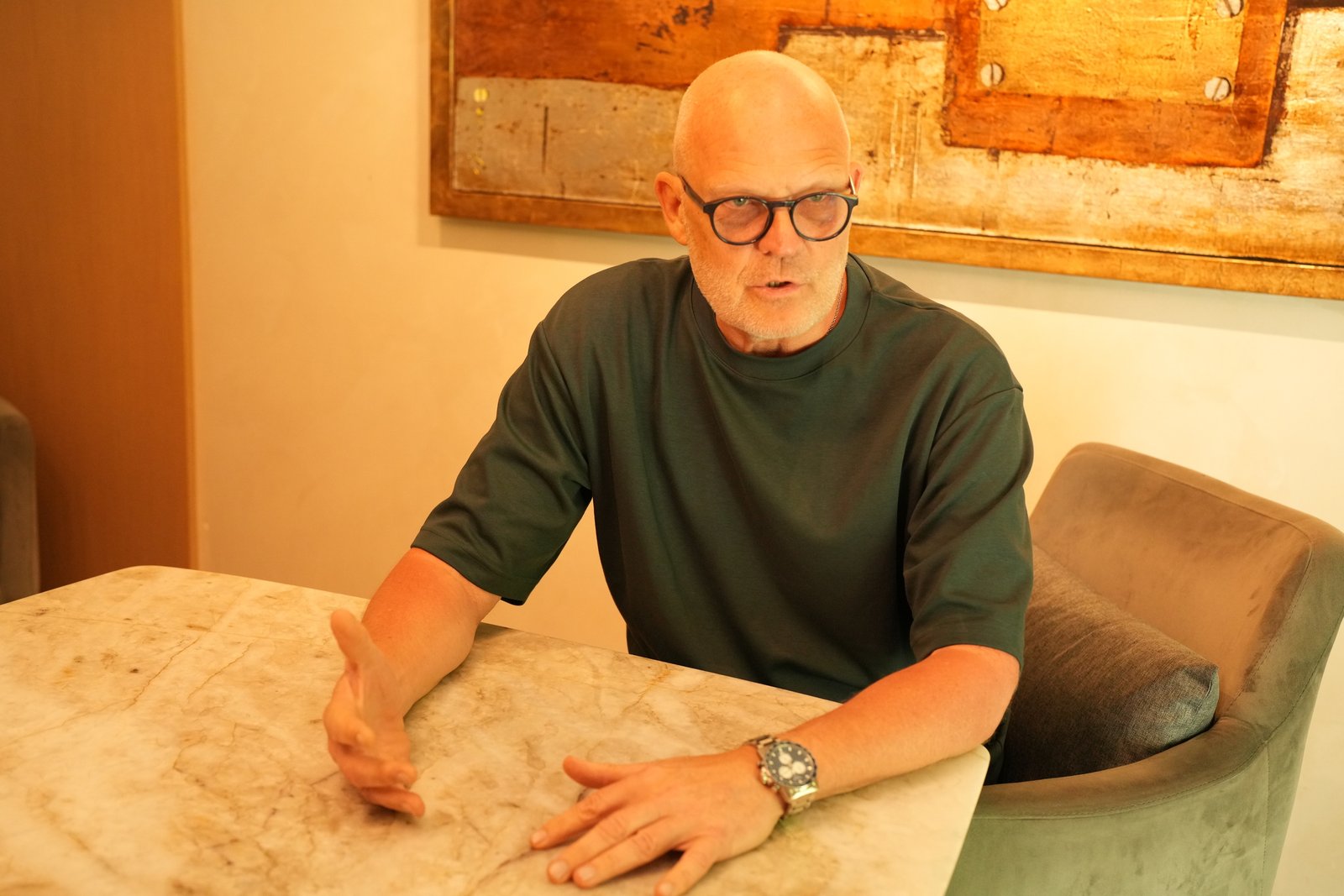
Today, Viesturs Koziols is one of Latvia’s most influential figures in international hockey. He has served as a member of the Council of the International Ice Hockey Federation (IIHF) since 2021, and at the IIHF Semi-Annual Congress in Tenerife, Spain, on October 2 this year, he will stand for election as IIHF Senior Vice President while simultaneously seeking re-election to the IIHF Council.
In this interview, we discuss his motivation to continue working in the leadership of world hockey, the issue of Russia and Belarus, the development of Latvian hockey, the future of 3×3 hockey, and why, in his view, Latvia’s greatest achievement is not simply its bronze medal.
“Latvia Had to Prove That We Could Be Trusted”
– Viesturs, it was recently announced that you will run for the position of IIHF Senior Vice President while also seeking re-election to the Council. What is your main motivation for continuing your work at the international level?
I think it all started several years ago. When the leadership of the Latvian Ice Hockey Federation changed in 2016, with Aigars Kalvītis becoming President and myself taking on the role of Secretary General, we had a very clear objective. We wanted Latvia to be recognised internationally as a reliable and trustworthy partner.
That meant much more than achieving good sporting results. We wanted to demonstrate that Latvia could organise world-class tournaments, honour its commitments, field competitive national teams, and be a country that others could rely on.
Within just a few years, we succeeded in building a strong reputation for Latvian hockey internationally. People saw that whenever Latvia accepted responsibility, it delivered professionally and to a high standard.
That reputation is precisely why I was nominated for election to the IIHF Council. In my view, it was not only a personal achievement but a success for the entire Latvian hockey community.
– Your election was far from a formality. The competition was exceptionally strong.
Indeed. In the final round of voting there were three candidates. Among them were legendary Slovak hockey player Miroslav Šatan and one of the Vice Presidents of USA Hockey.
I was fortunate to win the election. I believe it sent a very important message that Latvia is taken seriously within the international hockey community.
– Was Latvia’s hosting of the World Championship during the COVID-19 pandemic one of the key factors?
Without any doubt.
The 2020 World Championship in Switzerland was cancelled. Many people did not believe it would even be possible to stage a championship in 2021.
Even within the International Ice Hockey Federation, there were those who doubted that Latvia could deliver such an event.
Nevertheless, we did. And we did far more than simply organise a championship—we effectively helped save international hockey at that particular moment. Credit goes to an outstanding team led by Edgars Buncis, the Latvian government, and everyone who contributed to making it happen.
It is achievements like these that build trust on the international stage.
– What do you hope to accomplish on the IIHF Council in the coming years?
After five years on the Council, I see just how much more can still be improved.
The Council documentation often runs to 500, sometimes well over 1,000 pages—budgets, regulations, legal documents, competition rules. I read them carefully, ask questions, and I’m often critical.
I believe that if you accept this level of responsibility, it is your duty to carry it out conscientiously. That mindset probably comes from my family, my school years, and my time at the University of Latvia: if you undertake a job, you do it thoroughly. And if you achieve results, you should continue moving forward and be prepared to take on even greater responsibility.

“You Can’t Bang Your Shoe on the Table — You Need Legal Arguments”
– Recently, there has been considerable debate about the possible return of Russia and Belarus to international competitions. In Latvia, this issue evokes very strong emotions. How does the situation look from the IIHF Council’s perspective?
It is a complex issue because the public often sees only the final decision, but not the process behind it.
The Council cannot make decisions based solely on emotions or political sympathies. Every decision must rest on legal, commercial, sporting, security, and other considerations. In practice, however, the legal foundation often comes first—especially considering that many of these matters may be referred to the IIHF Disciplinary Board and, potentially, to the Court of Arbitration for Sport (CAS).
When it comes to Russia, the situation is quite clear. There is an ongoing war in the heart of Europe, and under such circumstances it is entirely understandable that the return of the Russian national team to international competition is not possible. Innocent people are dying, including children, and countless families are suffering.
There are also practical and security considerations. In many countries, it would be difficult—or even impossible—for Russian supporters to obtain visas. For example, the next IIHF World Championship will take place in Germany, where security authorities have indicated that certain decisions could significantly increase security risks and the likelihood of public disorder. World Championships have always been celebrations of hockey, where fans from different countries gather to enjoy the sport together. If such tournaments required a substantially increased police and security presence, the atmosphere would change completely—we would move away from a hockey festival to something entirely different.
For these reasons, earlier this year the IIHF Council unanimously decided that it would not be safe to allow Russia and Belarus to return for the 2026/2027 season.
However, the Belarus issue later became considerably more complicated.
– Why did the Belarus case become more complicated?
Because it entered a legal process.
The matter was referred to the IIHF Disciplinary Board, which examined not political considerations but concrete facts. The Board requested information from World Championship organisers to determine whether the participation of the Belarusian national team would pose security risks.
The responses were not uniform. For example, organisers in the United States stated that they saw no security concerns and would be prepared to host the Belarusian team. Bulgaria expressed a similar position.
Once those responses had been received, the legal situation changed significantly.
– Does that mean the Council could no longer rely solely on its previous assessment?
Exactly.
If our own Disciplinary Board concludes that there are no legal obstacles and recommends the reintegration of the Belarusian national team into specific tournaments, that becomes a very significant legal argument for the Council.
Had we ignored such a recommendation and the matter proceeded to the Court of Arbitration for Sport, there would have been a strong possibility that we would lose.
That is why the issue was ultimately referred to the IIHF Congress, where the representatives of the member federations made the final decision.
– In Latvia, many people believe that decisions like these should be guided by political principles rather than legal considerations.
I understand those emotions very well.
I have my own very clear personal opinion about the Lukashenko regime and Belarus’s involvement in Russia’s aggression against Ukraine.
However, as a member of the IIHF Council, I cannot make decisions based solely on my personal convictions. I must be able to justify every decision on legal grounds, and my own responsibility could also be assessed under Swiss law, since the IIHF is incorporated in Switzerland.
It’s easy to bang your shoe on the table or the podium. That changes nothing. If we want to achieve results within international organisations, we need legal arguments—not loud slogans.
– Has this approach created tensions with Latvian politicians, some of whom would perhaps prefer a tougher stance?
Yes. Latvian politicians have told me exactly that—they don’t like it.
Frankly, neither do I. I have my own personal views, and they are certainly not flattering towards some of Latvia’s neighbouring countries. But as a Council member, I cannot act on the basis of personal sympathies or antipathies. Every decision must be legally defensible, because in the end that is the only thing that matters if a case reaches court.
– Is this also a reflection of a broader European challenge?
Absolutely.
There is no single, unified position across Europe. Different countries have different political and public attitudes towards Russia and Belarus, and these differences inevitably influence sports organisations as well.
That is precisely why international federations strive to rely on legal procedures. It is not a perfect system, but it is the only way to ensure that decisions can withstand legal scrutiny if they are challenged in court.
“The Bronze Medal Wasn’t a Miracle. It Was the Sum of Many Good Decisions.”
– Latvia’s bronze medal at the 2023 IIHF World Championship remains the greatest achievement in the country’s hockey history. Many people describe it as a miracle. Do you agree?
No, I wouldn’t call it a miracle.
I’ve thought about this a great deal. Of course, it was an outstanding team, with exceptional players, coaches and support staff. The federation had also done its job. But the bronze medal was not the achievement of one individual or the result of one fortunate game. It was the outcome of many different factors coming together.
One of the most important was that one of the World Championship groups was played in Riga. The atmosphere we managed to create was truly special. The fan zone around the arena was packed, the entire city lived and breathed hockey, and supporters travelled from Slovakia, Switzerland and many other countries. It was a genuine hockey festival.
I believe the players felt that energy every single day. Recreating that kind of emotional atmosphere anywhere outside Latvia would have been extremely difficult.
– But emotions alone don’t win medals.
Of course not.
That’s exactly why I say it was the combination of many factors. Remove just one of them, and the outcome might have been completely different.
Everything came together at precisely the right moment. And, as in all sports, a certain amount of luck always plays its part.
– Including Finland’s quarter-final defeat?
Yes.
I remember that moment very clearly. I was already travelling from Riga to an IIHF Council meeting and was listening to the game on the plane.
When Finland lost, there was genuine concern in Tampere. The organisers feared the semi-finals would be played in front of half-empty stands. I told them not to worry—Latvians would come. To be honest, I expected perhaps two or three thousand supporters.
Instead, around seven thousand arrived. It was unbelievable.
I was personally involved in that process. I remember calling airBaltic late at night and asking them to organise two additional charter flights. In the end, seven or eight extra flights were arranged, while many fans also travelled by ferry. Tampere turned red and white. It showed what Latvian supporters are capable of.
– So the bronze medal was no accident?
No.
I have always believed that Latvia is capable of competing for medals.
When we began implementing changes within the federation in 2016, I travelled across Latvia telling people that our goal was to win medals. Many laughed.
I remember one event where the organiser came up to me before my speech and said, “Whatever you do, don’t tell people we’re aiming for medals.”
I asked, “Why not?”
He replied, “Because nobody will believe you.”
But I believed it. If you don’t believe in ambitious goals yourself, you’ll never achieve them.
“Latvia’s Greatest Achievement Is Not the Bronze Medal. It’s the Mindset.”
– Can Latvia repeat such success in the coming years?
I believe we can.
It won’t happen every year, and we shouldn’t create that illusion.
But even this year we came very close to reaching the semi-finals. And once you’re in the semi-finals, you never know how things might end.
I believe Latvian hockey now rests on a very solid foundation. We have enough talented and competitive players. Of course, we’ll never match the United States or Canada in terms of the total number of hockey players. But only twenty skaters and two goaltenders are on the ice at any one time. Latvia is capable of producing that number of top-level players.
– What has been the biggest change in Latvian hockey over the past decade?
It isn’t the bronze medal.
The biggest change is the mindset.
It all began when Bob Hartley became head coach of the national team. Every day he repeated the same message: we go out to win every game—not to lose with dignity or to put in a respectable performance, but to win.
That mentality proved contagious and quickly spread throughout Latvian hockey. Today you can already see it in the U18 and U20 national teams, youth programmes and even women’s hockey.
Players no longer look at whether they are facing Austria, Hungary, Sweden or Canada. They step onto the ice expecting to win.
In my opinion, that is the greatest achievement Latvian hockey has experienced over the past decade. It is far more important than a single bronze medal.
“Latvian Hockey Is Not Built by the Federation. It Is Built by Strong Clubs.”
– Speaking about Latvian hockey as a whole, how important is the domestic league today? Does it make a meaningful contribution to the national team?
I wouldn’t limit the discussion to the domestic league alone. I’d rather talk about the entire Latvian hockey system. And the foundation of that system is its clubs. The stronger the clubs become, the stronger Latvian hockey will be overall.
That is precisely why I’m pleased to see clubs such as Mogo/RSU, Jelgava, Liepāja, Hockey School Riga, Prizma and others. Each of them is building its own development pyramid—from youth hockey all the way to the senior team. Without these kinds of structures, you simply cannot build a strong national team.
There is often debate about whether the Latvian championship is strong enough. Of course, we can always strive for a higher standard. But what really matters is not whether two or three foreign players arrive in a given season. What matters is that clubs are building sustainable systems.
A good example was Zemgale, when several Finnish players joined the team. Many people expected them to dominate, but once the playoffs began, the experienced Mogo squad still came out on top. It once again demonstrated that success depends on the entire organisation, not just on individual names. And the playoffs are a unique challenge in themselves.
“Sometimes I Don’t Understand How Māris Manages to Keep It All Going”
– You’ve mentioned Mogo several times during this interview. Why?
Because it is an excellent example of how a hockey club should be built.
Sometimes I honestly don’t understand how Māris Martinsons manages to keep the whole organisation running. I’ve told him that myself.
People often see only the top-level team competing in the league. In reality, it is an entire ecosystem—an ice arena, youth teams, coaches, physiotherapists, equipment managers, administrators and supporters.
There is also cooperation with Riga Stradiņš University, allowing young athletes to pursue higher education alongside their hockey careers. Together, all of this creates an environment where players can truly develop.
The partnerships that Jelgava—and now Prizma as well—have established with universities are also steps in the right direction, and I believe this model should continue to grow.
– Why do you consider education so important?
Because a hockey career is relatively short.
I recently spoke with several players who are 35 or 36 years old. They told me themselves: one or two more years, and it’s over. Then what?
Without an education, becoming a coach is not nearly as straightforward as many people imagine. Some think that if they played professionally yesterday, they can coach children tomorrow. It doesn’t work that way. Being a good coach also requires education and training.
That is why I strongly support a model where athletes pursue higher education while continuing their sporting careers. It gives them real opportunities once their playing days are over.
“One Club Creates Jobs for Hundreds of People”
– Sometimes people think a hockey club is simply a team that plays in the top division. Is it much more than that?
Very much so.
A strong hockey club creates employment not only for players but also for coaches, medical staff, physiotherapists, administrators, equipment specialists, logistics personnel, arena staff—and even cafés and other businesses operating within the arena.
It is an entire economic ecosystem.
People often see only a single game at the weekend, but behind it lies an enormous amount of work carried out every day. That is why strong clubs form the foundation of the entire hockey system.
“The State Should Support Children, Not Professional Sport”
– A frequent question is whether municipalities should provide greater financial support to professional hockey clubs.
I don’t believe they should.
In principle, municipalities should not finance professional sport—except in exceptional cases where it generates millions of euros in additional economic activity for a city or a country, as we have seen with clubs like RFS or Žalgiris.
If the City of Riga took its current sports budget and divided it equally among five or six clubs, none of them would receive enough funding to become stronger. Quite the opposite.
I believe the state’s role is much more important.
The state should support children’s and youth sport. The model could be very simple: if a club has 200 young players, the state provides funding for each registered child. In that way, the money follows the children—not political preferences. That is how you build a sustainable system.
“State Support for Sport Is Often Hypocritical”
– Does the state consistently follow that principle—that funding should follow children?
Unfortunately, not always.
Sometimes I see the opposite happening. Instead of allocating additional funding to youth sport, the state simply shifts that responsibility onto existing budgets.
For example, funding that was previously allocated specifically for national teams is now expected to be split, with half redirected to children’s and youth programmes—without providing any additional money.
– That sounds quite critical. Isn’t that simply shifting responsibility from the state to the sports federations?
That is exactly how I see it.
On the one hand, politicians speak about the right priorities. On the other hand, actual funding does not increase, and responsibility is simply transferred to the federations themselves.
At the same time, I believe the state also lacks clear priorities among different sports.
There are situations where a team cannot participate in an international competition because of a relatively small funding shortfall, while at the same time public money is distributed among dozens of federations—some of which, frankly, have neither deep traditions, nor infrastructure, nor realistic prospects of achieving international success.
That inevitably raises the question of whether public funding is really being directed where it can generate the greatest return, both in sporting and societal terms.
“The State Cannot Finance Everything. It Must Invest Where the Return Is Greatest.”
– Sports funding in Latvia is constantly debated. Some argue there isn’t enough money, while others believe it isn’t spent efficiently. What’s your view?
I think we first have to acknowledge one simple fact: the state budget is not unlimited.
We often speak as though it were possible to fund everything equally. It isn’t. Choices will always have to be made.
The key question is what we want to achieve with public funding.
If the goal is a healthier society, then children’s and youth sport should be the priority.
If the goal is international success, then we need to build a system capable of producing elite athletes.
Funding should be increased substantially where there are proven results, large numbers of participants and strong public engagement.
“Medals Are Never an Accident”
– People often assume that medals are simply the result of talent.
Talent is important, of course.
But talent alone is never enough.
Behind every medal are years of work by coaches, clubs, parents, medical professionals, infrastructure, and international competition experience. If any one of those elements is missing, the chances of achieving success are significantly reduced.
That is why sport cannot be viewed only one year at a time. If we stop investing in children today, we will see the consequences ten years from now.
If organisations have consistently demonstrated over many years that they can develop athletes, attract young people and achieve outstanding results, it is not right to penalise them simply in the name of equality.
I support a system where funding follows quality. That creates incentives to improve.
Competition in sport is not a bad thing—quite the opposite. It raises standards.
Prove that you are the best. Latvian hockey has been doing exactly that for many years.
“Professional Sport Cannot Survive on Public Funding Alone”
– To what extent should clubs be responsible for finding their own financial resources?
I believe that is perfectly normal.
Around the world, professional sport is financed through a combination of sponsorships, ticket sales, broadcasting rights, commercial partnerships and private investment.
Government or municipal support is important, but it cannot be the only source of funding.
If a club depends entirely on public money, any political or economic change immediately creates problems.
A much more sustainable model is one with multiple sources of income.
Of course, that becomes more difficult during periods of economic decline.
– Finally, if you had to name one thing that gives you the greatest hope for the future of Latvian sport, what would it be?
People.
Latvia has an extraordinary number of people who work not because of the money, but because they genuinely care about sport—coaches, club managers, volunteers and parents.
When you consider how much they accomplish with the resources available to them, it is truly remarkable.
Of course, we would all like to see greater funding.
But Latvia’s greatest asset is not its budget.
It is its people.

“3-on-3 Hockey Has the Potential to Become an Olympic Sport”
– Alongside traditional ice hockey, 3-on-3 hockey is receiving increasing attention. For many people, however, it is still a relatively unfamiliar format. How seriously is the International Ice Hockey Federation taking it?
Very seriously, I believe. In fact, Latvia is one of the countries that stood at the very beginning of this discipline.
In basketball, the evolution was much simpler because street basketball had already existed for many years. From that, 3×3 basketball developed quite naturally. Hockey didn’t have that foundation, so in Latvia we started experimenting ourselves.
Beginning in 2022, we organised several test tournaments, experimented with different game formats, analysed the optimal game duration, how line changes should work, whether icing should exist, and many other details. Many of the rules used in today’s 3-on-3 hockey were actually developed during those early tournaments.
– Does that mean Latvia is currently one of the leaders in developing this discipline?
Yes. We are certainly among the pioneers.
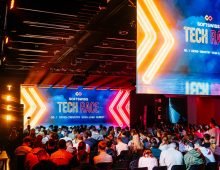
The IIHF is also taking this project very seriously. The Federation has entered into a partnership with a private organisation to help stage the first international tournaments. In many ways, it is a start-up project. We simply didn’t have sufficient human resources to organise all of the traditional World Championships while simultaneously building an entirely new international competition structure.
At the moment, the format is being tested. We are evaluating how the model works in practice, and based on those results, the next decisions will be made.
– Could 3-on-3 hockey eventually become an Olympic sport?
I am convinced that it can.
I’ve spoken with the leadership of the International Olympic Committee. There is genuine interest, and they clearly see the potential.
Of course, there is still a great deal of work to be done before that becomes reality, but I see no reason why it couldn’t happen. It’s an exciting and dynamic format—a smaller rink, fewer players, and a much faster pace of play. It fits perfectly with what modern audiences are looking for.
“Young People Consume Sport Very Differently”
– In your view, what makes this format so attractive?
We have to recognise that audiences are changing.
Look around the stands at a traditional hockey game. The majority of spectators are in their forties, fifties or sixties. There are noticeably fewer young people. That’s not a criticism—it’s simply today’s reality.
My own son plays hockey. He goes to games with his friends, watches the first period, and then starts wandering around the arena. He has grown up in a completely different media environment—TikTok, social media, short-form videos, constant stimulation. His attention span is very different from that of our generation. Sport has to adapt to that reality.
– Is that why you see the 3-on-3 format as particularly promising?
Exactly.
A game lasts about thirty minutes—two periods played at a very high intensity.
After the game, fans can visit the fan zone, grab something to eat, meet friends, enjoy other activities, and then return later to watch their team’s next game. It becomes an entertainment experience that lasts throughout the day.
– Could Latvia have a competitive advantage in this discipline?
I believe we have a very significant one.
Interestingly, the traditional hockey powerhouses—such as Sweden and Finland—have not yet become particularly active in this project. Their traditional hockey programmes are already extremely successful, so they are not in a hurry.
For countries like Latvia, Lithuania, Estonia, Poland, Hungary, Romania, Serbia, Great Britain and the Netherlands, however, this represents an opportunity to become highly competitive very quickly.
I am convinced that once the major hockey nations see how rapidly this format is developing, they will become involved as well. Until then, we have an opportunity to establish ourselves among the leaders.
“Our Ambitions Must Not End with One Bronze Medal”
– Finally, where do you see Latvian hockey ten years from now?
I would like to see Latvia become a nation that consistently competes for a place among the world’s top eight teams and, from time to time, genuinely challenges for medals.
Not because it sounds ambitious, but because I truly believe it is achievable.
Over the past several years, we have proved that we are capable of achieving far more than we once believed possible. Now the most important thing is not to stop.
The bronze medal was a historic achievement. But it would be a mistake to see it as our final destination. I hope it becomes a new benchmark—a starting point for what Latvian hockey can accomplish in the future.
– If there is one message you would like people to remember from this conversation, what would it be?
Latvia is no longer satisfied with simply taking part. Today, we step onto the ice expecting to win every game.
Source: mmnews.eu