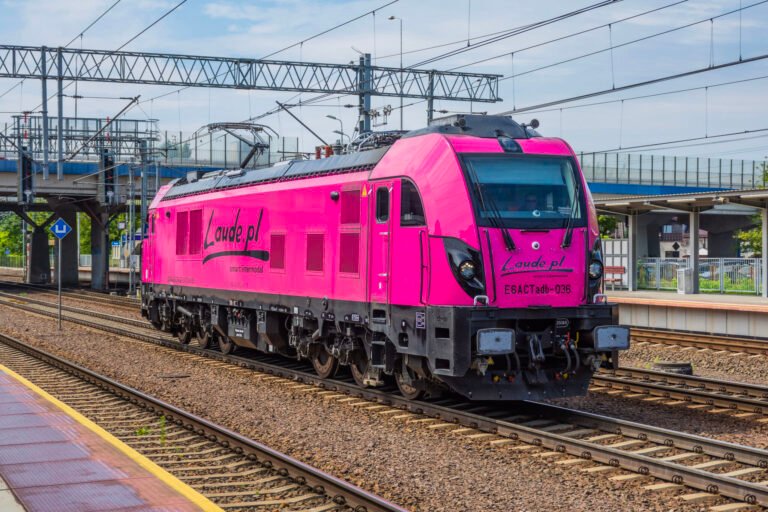
The cornerstone of modern Turkish transport policy is the Middle Corridor, integrated with China’s Belt and Road Initiative (BRI). The war unleashed by Russia against Ukraine has changed plans to rely exclusively on the Northern Corridor (the route running through Russia) for rail transport. As a result, Türkiye has emerged as a major beneficiary. Laude Smart Intermodal, a Polish operator responsible for approximately 70% of intermodal transport in Ukraine, sees this as an opportunity to further expand its transport operations linking Europe with Türkiye and Central Asia.
“Our trains already reach Türkiye through the Black Sea corridor, and this route will steadily gain importance. However, at Laude Smart Intermodal we are looking much further ahead. Bottlenecks in global logistics – whether the Suez Canal or the Persian Gulf – demonstrate how important stable supply chains and reliable suppliers are. This is increasing the significance of countries such as Kazakhstan, Uzbekistan and Azerbaijan. These Central Asian nations can offer the natural resources and products that Europe urgently needs, and exporting them on the required scale must rely on rail transport,” emphasizes Marcin Witczak, CEO of Laude Smart Intermodal.
Kazakhstan, with a railway network exceeding 17,000 kilometers, is a key component of the Trans-Caspian International Transport Route (TITR), also known as the Middle Corridor. With a current capacity of approximately 6 million tonnes annually and a projected increase to 10 million tonnes by 2030, TITR represents an efficient and cost-effective alternative to traditional trade routes.
Another important element is the Baku–Tbilisi–Kars railway line, commissioned in 2017. Connecting Azerbaijan, Georgia and Türkiye, it forms part of a broader rail logistics network enabling seamless freight transport between Europe and Kazakhstan.
“We are also closely monitoring the recently announced plans for the so-called Development Road – a rail and road corridor that could play a crucial role in bringing Europe closer to the Middle East and reducing dependence on strategic chokepoints such as the Strait of Hormuz,” recalls Marcin Witczak.
The Development Road is a transport corridor project beginning at the Grand Faw Port in Iraq’s Persian Gulf region. It runs north through Iraq, connects with Türkiye via the Ovaköy border crossing, and from there provides access to global markets through Mersin, Izmir and Istanbul.
Not long ago, AVİM, an independent non-profit think tank based in Ankara that provides in-depth analysis of political developments in Europe, the Balkans, the Black Sea region, the Caucasus and Central Asia, noted that the Development Road project, first discussed in the 1980s, remained dormant for decades without any concrete implementation steps. However, after 2020, geopolitical changes demonstrated the vulnerability of traditional maritime trade routes, bringing renewed interest to the project. Recent tensions in the Persian Gulf have once again highlighted the importance of such a connection.
The project, stretching from the Persian Gulf to Türkiye’s Mediterranean and European gateways through integrated rail and road networks, aims initially to handle between 20 and 25 million tonnes of cargo annually, with further capacity expansion possible in the future.
“With our container services we can accommodate both full-train loads and smaller shippers through our developing Time of Revolution project. Türkiye and Central Asia represent a major opportunity for expanding transport services to Ukraine, Poland and further into the European Union. Laude Smart Intermodal intends to become an important participant in rail logistics throughout this region,” says Marcin Witczak.
Once integrated with the existing Middle Corridor, the Development Road will shorten rail transit times between Asia and Europe and strengthen Türkiye’s position as a global logistics hub connecting approximately 67 countries within a four-hour flight radius. Integration with the Trans-Caspian East-West corridor could reduce transit times between Asia and Europe by 30–40% compared with traditional maritime routes through the Suez Canal.
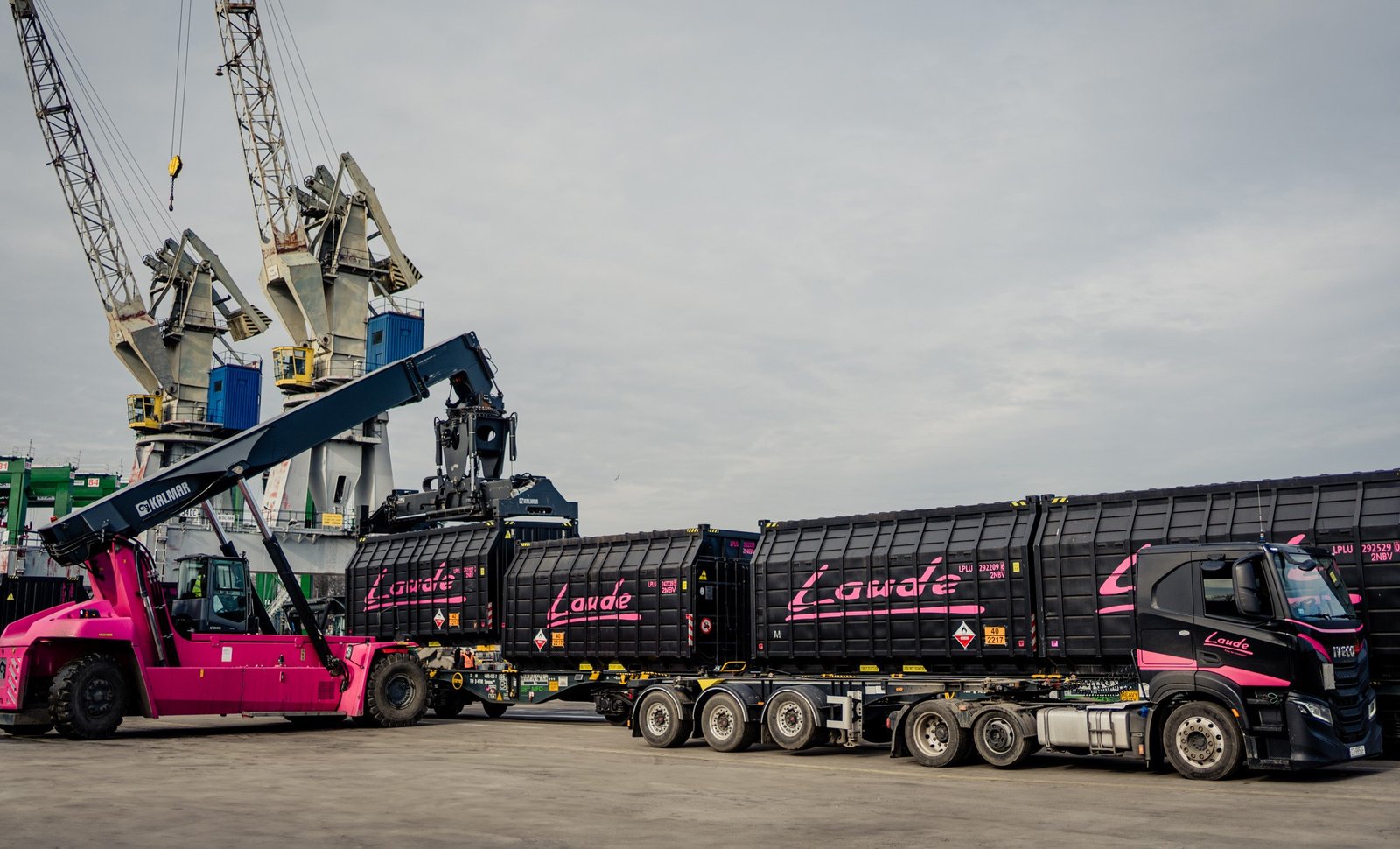
Laude Smart Intermodal operates regular container services through the Baltic Hub in Gdańsk, positioning the Baltic Sea as a key destination market for Ukrainian cargo. In Southern Europe, the company operates a route via Izmail to the Romanian port of Constanța. It also cooperates with the ports of Odesa and Chornomorsk on Black Sea transport services and maintains a rail-sea connection with Türkiye.
The Polish operator is also launching regular services between Duisburg and southern and central Poland. The next step will be an intermodal connection linking Warsaw and Silesia with northern Italy. The company additionally provides last-mile trucking services from its own rail terminals located in Zamość near the Ukrainian border and Sosnowiec in the Upper Silesian industrial region, as well as from partner terminals in Radomsko, Sławków and Duisburg.
From these terminals, steel coils are regularly distributed through transport corridors connecting Belgium, the Netherlands and Germany’s Ruhr region with northern Czechia and Poland. The Ruhr–Silesia corridor can easily be extended to include deliveries to Ukraine and Türkiye, and vice versa.
The views and opinions expressed in this article are those of the author and do not necessarily reflect the position of the Balticnews.com editorial team. The author bears sole responsibility for the content of this publication.