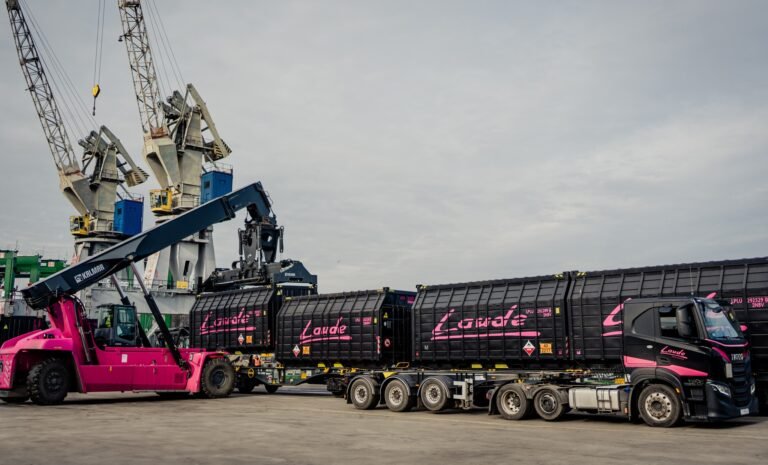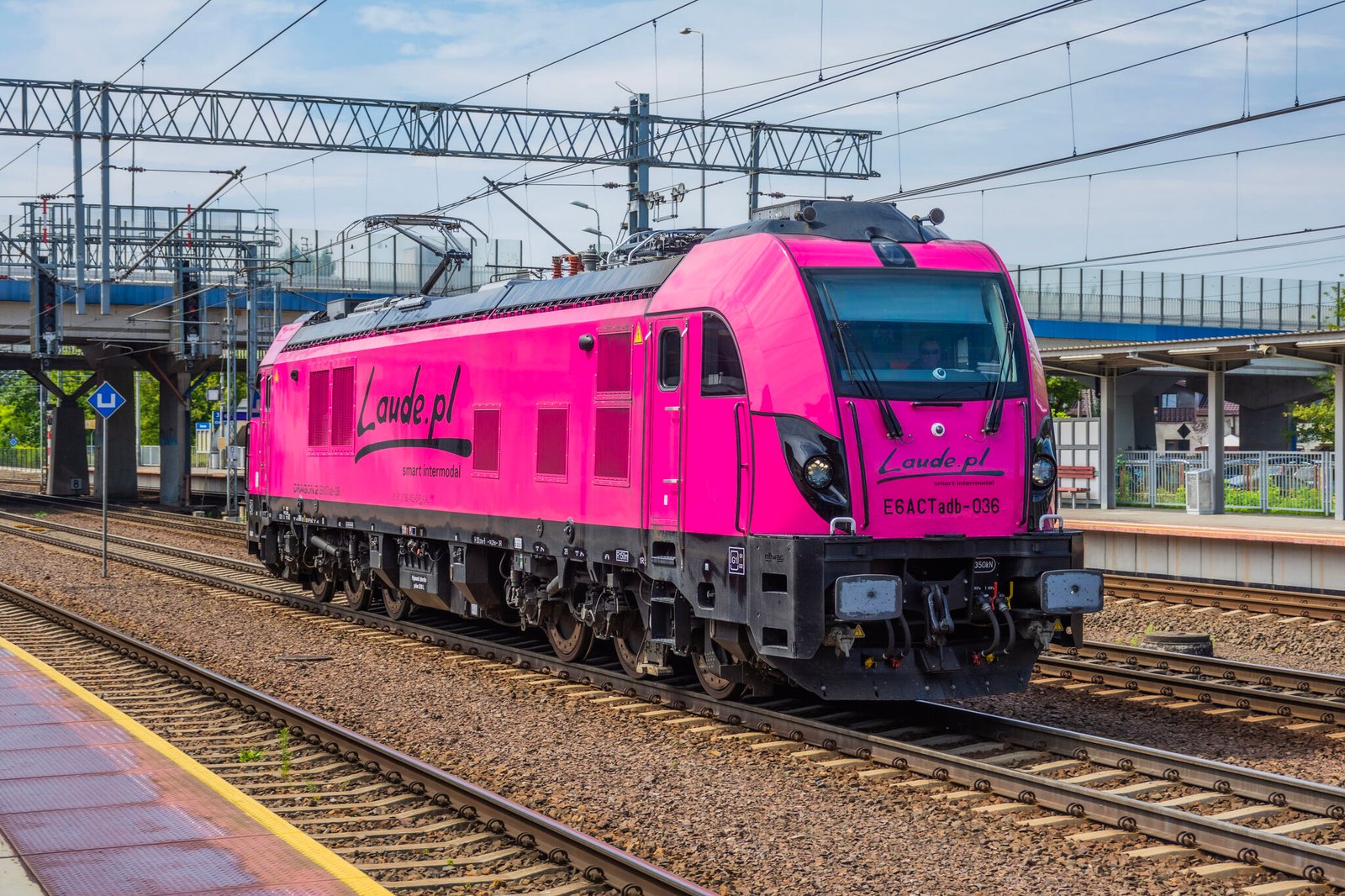
In 2026, Ukrainian grain, as well as vegetable oils, is transported in containers owned by the Polish carrier to the Greater Odesa port complex. The company also transports fertilizers from Poland, while meal and biomass are carried on return routes to customers in Poland and further across Europe. Steel and iron ore, in turn, are transported to Black Sea ports and customers within the European Union.
“Operating under the constant threat to the lives of our employees and our assets is an exceptional challenge. In another year of war, we continue to prove that we can manage and succeed. For years, Laude Smart Intermodal has maintained and developed intermodal corridors for Ukrainian exports and imports. No one doubts that without railways, the country’s defense and functioning would be practically impossible,” emphasizes Pavel Kalasko, Vice President for Eastern Markets at Laude Smart Intermodal SA.
From January to April 2026, Ukrainian seaports handled 29.5 million tonnes of cargo, exceeding the result from the corresponding period in 2025. Traditionally, agricultural products accounted for the majority of transshipment volumes. Grain handling reached 16 million tonnes, representing a 7% year-on-year increase.
The increase in cargo turnover indicates the gradual adaptation of the logistics sector to operating under continuous security threats. Ports remain a key component of Ukrainian exports, ensuring deliveries of agricultural products, metallurgical raw materials, and other cargoes to foreign markets.
Between January and March 2026, transport volumes in the iron and steel sector increased by 121,300 tonnes (to a total of 2 million tonnes), representing a 6.5% year-on-year increase. Growth was recorded across all categories: exports (65,300 tonnes), transit (43,800 tonnes), and domestic transport (17,000 tonnes).
Laude Smart Intermodal operates regular container connections via Baltic Hub in Gdańsk, positioning the Baltic Sea as a key destination market for Ukrainian cargoes. In Southern Europe, the company operates a route through Izmail to the Romanian port of Constanța. It also cooperates with ports in Odesa and Chornomorsk regarding Black Sea transport and maintains a rail-sea connection with Turkey.
Thanks to unique technological solutions used in its containers, Laude Smart Intermodal enables loading both from the side and from the top. This makes it possible to transport virtually any type of cargo.
“We have become a permanent part of the logistical landscape of the Ukrainian economy. We plan to expand our transport offering and strengthen our position as a leader in intermodal transport. We see opportunities for developing transport services from Ukraine to Turkey and Central Asian countries. Our intermodal model, using one container in rail, port, and maritime transport without reloading goods, has ensured greater flexibility in times of disruption,” says Marcin Witczak, CEO of Laude Smart Intermodal.
According to the State Statistics Service of Ukraine, freight transport volume in the country amounted to 322.2 million tonnes in 2025, representing a 9% decrease compared to 2024. Rail transport accounted for 161.3 million tonnes (–7.8%), road transport for 125.2 million tonnes (–2.8%), while the remainder was handled by other modes of transport.
When analyzing these figures, it is important to add that last year Russia attacked Ukrainian railway infrastructure nearly 1,200 times — more than in 2024 and 2023 combined. According to Ukrzaliznytsia, in 2025 and the first quarter of 2026, Russian shelling damaged 209 locomotives, 239 passenger cars, and 371 freight wagons, as well as 86 railway bridges and 50 stations.
“This does not stop our transport activity. We are expanding our offering, introducing new transport destinations such as Germany, Italy, and Lithuania, and we are already prepared to increase the scale of transport operations once the post-war reconstruction of the country begins,” concludes CEO Marcin Witczak.