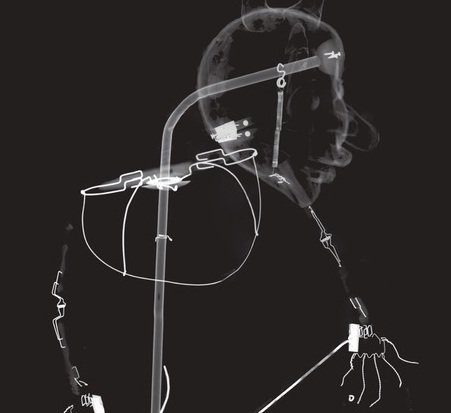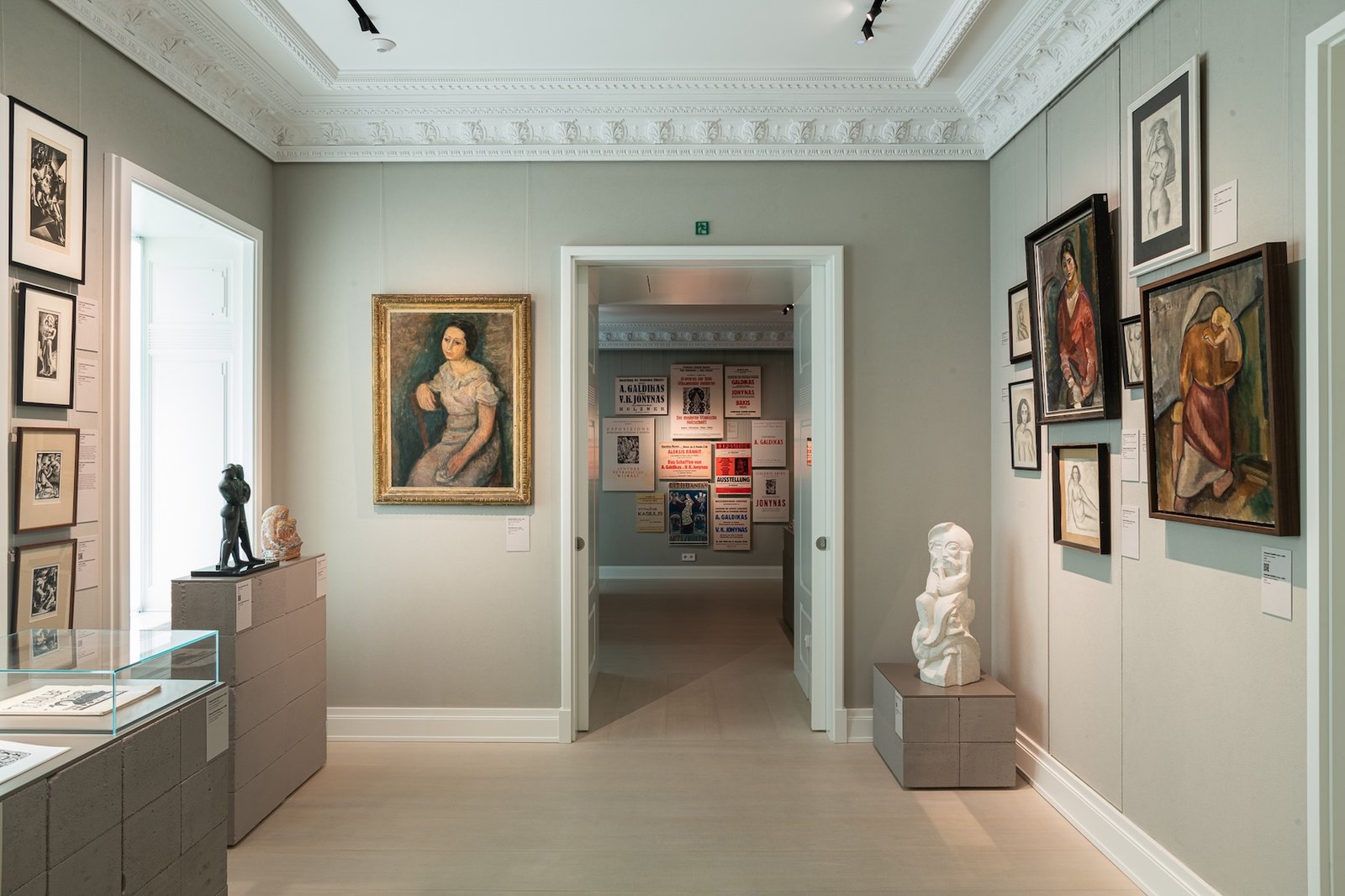
A new exhibition, Artists on the Move, has opened at the Lithuanian Art Centre TARTLE, presenting rarely exhibited works and the life stories of Lithuanian émigré artists who pursued paths of transatlantic and continental migration. The exhibition offers a retrospective journey tracing the footsteps of the country’s artists far beyond their homeland across nine decades of the twentieth century.
“The exhibition spans a period from studies at Parisian academies in the 1910s to the heights of modernism and the maturity of exile at the end of the century. It is a story about the itinerant artist who carries home in canvas, clay, or a sheet of graphic work – navigating borders and political shifts,” says art historian Prof. Dr. Rasa Žukienė, a specialist in Lithuanian diaspora art and artistic migration, who curates the exhibition together with art researchers Dr. Ieva Burbaitė and Emilija Vanagaitė.
Migrant Stories and Works: Geographical Trajectories
The exhibition is structured around geographical and creative trajectories. The narrative begins in interwar Paris – the cradle of Lithuanian modernism, where Lithuanian artistic sensibility first encountered Western modernism. The next chapter takes us to Freiburg, where artists and students of the Freiburg School of Arts and Crafts, displaced by war, managed to preserve cultural continuity even within temporary DP camps. From there, horizons expanded westward: having made their way to the United States or remained in France, these artists developed a distinctive, liberated, though often nostalgic, creative voice. The exhibition presents their most mature works, created after they had settled in American metropolises or European capitals, or, in the case of Pranas Domšaitis, after he ultimately found refuge in South Africa.
Art is not a luxury – it is a responsibility to society and a gift to future generations
“Although the works in this exhibition were created outside Lithuania, along with the stories of their makers they constitute an integral part of our culture. One of the museum’s central aims is the repatriation of Lithuanian cultural heritage and its wider dissemination – and thanks to these efforts, a significant number of the exhibited works have been returned to the homeland of their creators through various means,” observes Jurgita Semenauskienė, Director of Tartle.
Among the most striking examples are the paintings of Jonas Rimša, a substantial collection of which returned to Lithuania in 2008 after TARTLE’s founder Rolandas Valiūnas met Rimša’s sister, who was living in Argentina. To Valiūnas’s astonishment, she was over ninety years old, had spent her entire life abroad, and still spoke Lithuanian fluently. “Her only wish was for Rimša’s works to return to their homeland,” the collector recalls.
Some years later, in 2014, with the support of the Lithuanian community in Argentina, four sculptures by Matas Menčinskas, carved from quebracho – an exotic hardwood native to South America – were returned to Lithuania. One work in the collection, Motherhood, carries additional historical significance: it was presented as an official gift from Lithuanians in Argentina to the then Prime Minister Juozas Tūbelis, and had long been considered lost. “This exhibition embodies my favourite phrase: art is not a luxury – it is a responsibility to society and a gift to future generations,” says the museum’s founder.
A Broader Perspective on Migration
Although the reasons that compelled the artists featured in this exhibition to leave Lithuania were complex and varied, migration proved a powerful vehicle for the transmission of ideas. As artists moved across borders, they carried with them knowledge, experience, the influence of their mentors, and their own artistic ambitions.
“This exhibition offers an opportunity to examine the phenomenon of migration from a broader perspective. It would be no exaggeration to say that migration surrounds us every day, often with negative connotations. But this exhibition is not only about loss – it is also about searching, discovery, and the mark that Lithuanians have left on the world. Looking back at history, we can begin to appreciate the positive dimensions of such upheavals; and with that understanding, we may view the present with greater clarity,” says curator Emilija Vanagaitė.
The Exhibition’s Intrigue
Among the most compelling discoveries in the new exhibition is a portrait of Simone Petitjean, painted in 1947 by Irena Jackevičaitė-Petraitienė – a graduate of the Royal Academy of Fine Arts in Rome – acquired at a small London auction in winter 2026. “This is a work with a poignant story, bearing witness to the warm relationship between the administration of the Kempten displaced persons’ camp, where a large Lithuanian community was concentrated, and the Lithuanian war refugees sheltered there. The portrayed is Simone, a nurse and the wife of Claude Petitjean, Deputy Director of the United Nations Relief and Rehabilitation Administration (UNRRA),” says Dr. Burbaitė.
An inscription in the corner of the painting records that the portrait was offered as a gesture of gratitude to the Petitjean family for their support and attention to the needs of Lithuanians in Kempten. As Dr. Burbaitė notes, it is equally significant that until now only a handful of works by Jackevičaitė-Petraitienė have been held in national collections. The most notable among them is Vilnius Region under Occupation, held at the Vytautas the Great War Museum – a painting that became an almost iconic allegorical image of Lithuania’s lost capital during the interwar period.
“The portrait of Simone only confirms that Jackevičaitė-Petraitienė was a truly gifted painter. The exhibition reveals the migration experiences of Lithuanian artists not as a narrative of loss or unfulfilled promise, but as something far more complex and vital. Migration – then as now – is a condition of modern, dynamic societies, and we invite visitors to experience it as such,” says Dr. Burbaitė.
A Mosaic of Personalities and Stories
Artists on the Move brings together more than a hundred works and documents that illuminate the individual life stories of the artists represented and collectively assemble the kaleidoscopic experience of migration in its broadest sense. The exhibition presents not only works by Lithuania’s most celebrated artists – Pranas Domšaitis, Jacques Lipchitz, Jonas Mekas, Jonas Rimša, Kazys Varnelis, Viktoras Vizgirda, and Kęstutis Zapkus – but also those of lesser-known figures, among them Ona Dokalskaitė-Paškevičienė, Irena Jackevičaitė-Petraitienė, Mykolas Paškevičius, and Albertas Veščiūnas.
The exhibition opens on 2 June 2026 and runs until May 2027
The Lithuanian Art Centre TARTLE houses one of the largest private art collections in Central Europe. Its Lithuanian collection comprises nearly 8,000 objects, including paintings, sculptures, graphic art, maps, books, examples of goldsmithing, photographs, and historical artefacts. The museum opened in 2018 and its exhibitions explore Lithuania’s past – its social, political, and artistic contexts – through works of art and other visual sources. Since its opening, Tartle has welcomed more than 27,000 visitors. The centre was founded by Rolandas Valiūnas, art collector and managing partner of the law firm Ellex Valiunas.