By Eglė Samoškaitė, LRT.lt.
Belarus has released 123 political prisoners in exchange for a US decision to lift sanctions on Belarusian potash fertilisers, a move that analysts say reflects Washington’s economic interests more than a shift in Minsk’s authoritarian policies.
According to the Belarusian human rights group Viasna, 1,110 political prisoners remain behind bars in Belarus despite the releases ordered by the government of President Alexander Lukashenko.
Vytis Jurkonis, a lecturer at Vilnius University’s Institute of International Relations and Political Science, says the humanitarian element of freeing prisoners is being used largely as a facade. The real driver behind the US decision, he argues, is access to cheaper Belarusian potash.
US President Donald Trump has imposed a 10% tariff on Canadian energy resources, including potash fertilisers, and has recently threatened to raise those tariffs further. Lifting sanctions on Belarusian potash, analysts say, gives Washington greater leverage in trade disputes with Canada by opening an alternative supply.
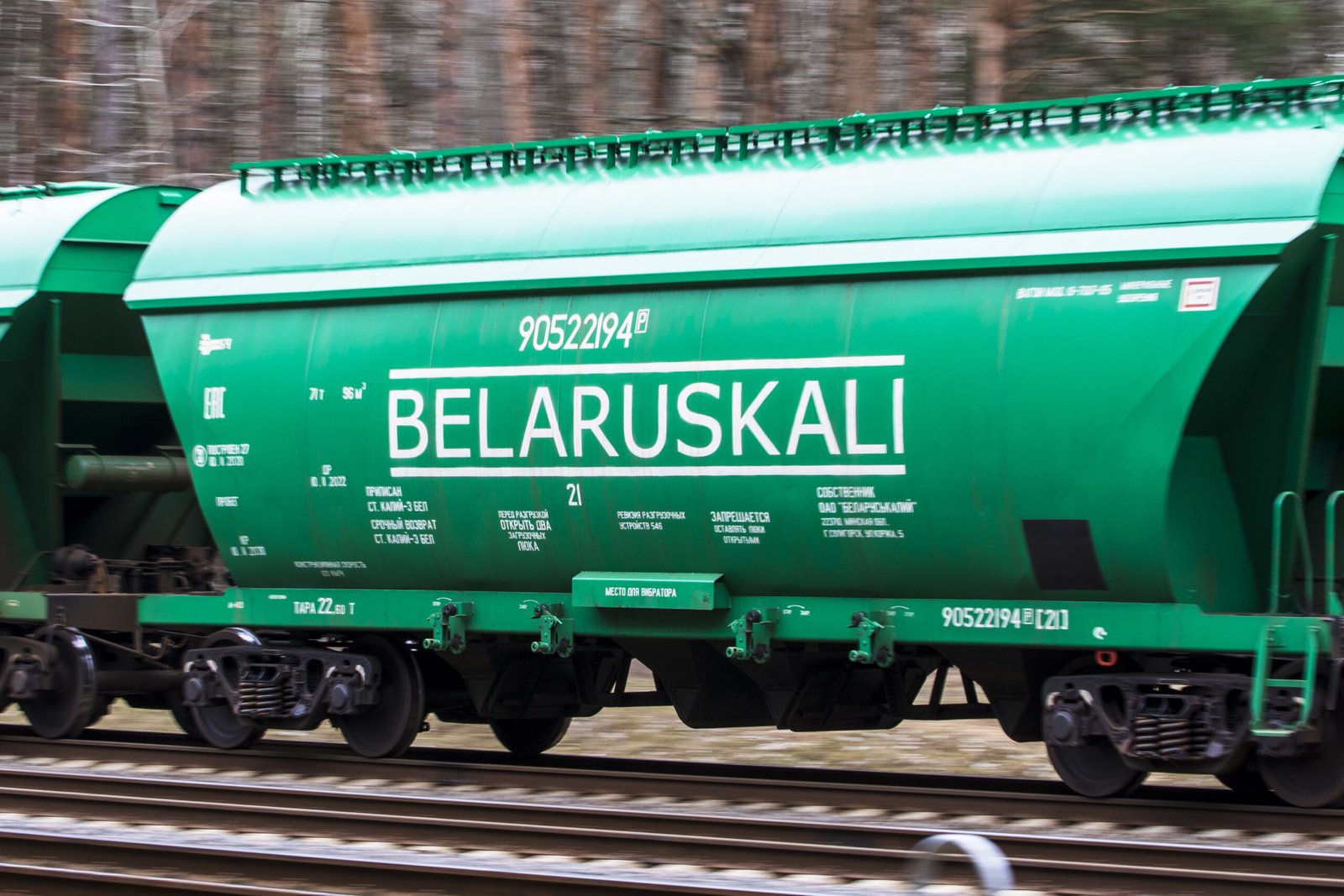
Until February 1, 2022, Belarusian state-owned potash producer Belaruskali exported fertilisers through Lithuania and the port of Klaipėda. The company was a major source of revenue for Lukashenko’s government. After the United States imposed sanctions in late 2021, Lithuania’s government adopted a national decision to halt potash transit through Klaipėda. The European Union followed with its own sanctions on Belaruskali, which took effect on June 3, 2023.
Read more: LRT.LT