By Evaldas Labanauskas, Milda Vilikanskytė, LRT.lt.
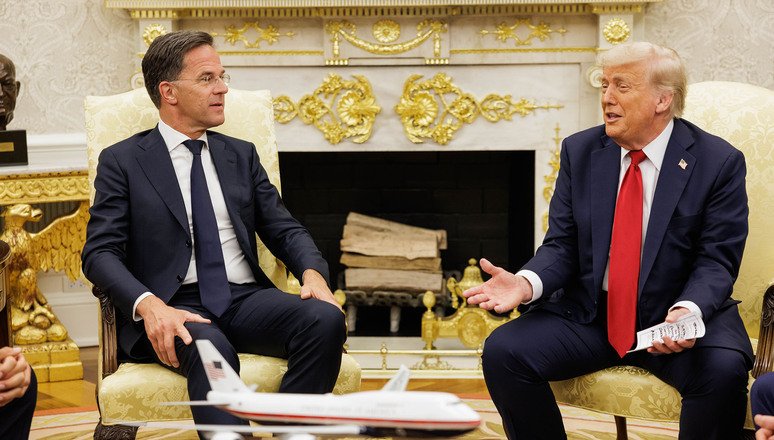
Starting in September, NATO is implementing organisational changes: some positions at its headquarters are being cut, the chain of command is shifting, and other structural adjustments are underway. Some critics argue the reforms are aimed at appeasing Donald Trump, drawing on methods reminiscent of Elon Musk’s controversial DOGE (Department of Government Efficiency) approach, while others insist they are intended to streamline NATO and reduce bureaucracy.
“NATO Secretary General Mark Rutte seeks to appease Donald Trump via, among other things, sweeping reforms of NATO Headquarters,” wrote Gerlinde Niehus, a former long-serving NATO official and now independent expert, on social media in mid-July. “How? In an avidly opportunistic anticipation of “Daddy’s demands”, NATO Headquarters (HQ) is subject to a so-called “efficiency exercise”, including staff cuts and merging functions. However, in essence it is largely a reform to ensure that NATO HQ is “Daddy’s home”. Taking inspiration from the ill-conceived US “DOGE” exercise, it is largely seeking ingratiation aligned to US MAGA politics.”
Although some former NATO officers and experts have supported this critique, the reforms are set to take effect in September. At least two deputy positions to the NATO Secretary General will be eliminated, the Secretary General’s Special Representative for Women, Peace, and Security will move to the Political Affairs Division, and the Climate and Energy Security Division will be transferred from the Innovations, Hybrid and Cyber Technologies branch to the Defence Policy and Planning Division. Public Diplomacy will be significantly reduced, and external project funding will be halted.
NATO officials did not comment to LRT.lt on the reforms, but inside the alliance’s headquarters, they are being described as measures to improve efficiency.
“Let’s start with the fact that we have a fairly new and energetic Secretary General. Naturally, every new leader coming into an organisation they’ve been selected or appointed to wants to make it as efficient as possible,” explained Lithuania’s NATO ambassador Darius Jauniškis. “The structure here [in NATO – LRT] is massive, with a lot of bureaucracy, and I believe Rutte wants to make his entire staff – essentially all the units that help him carry out his functions and keep NATO running – as efficient as possible.”
Read more: LRT.LT