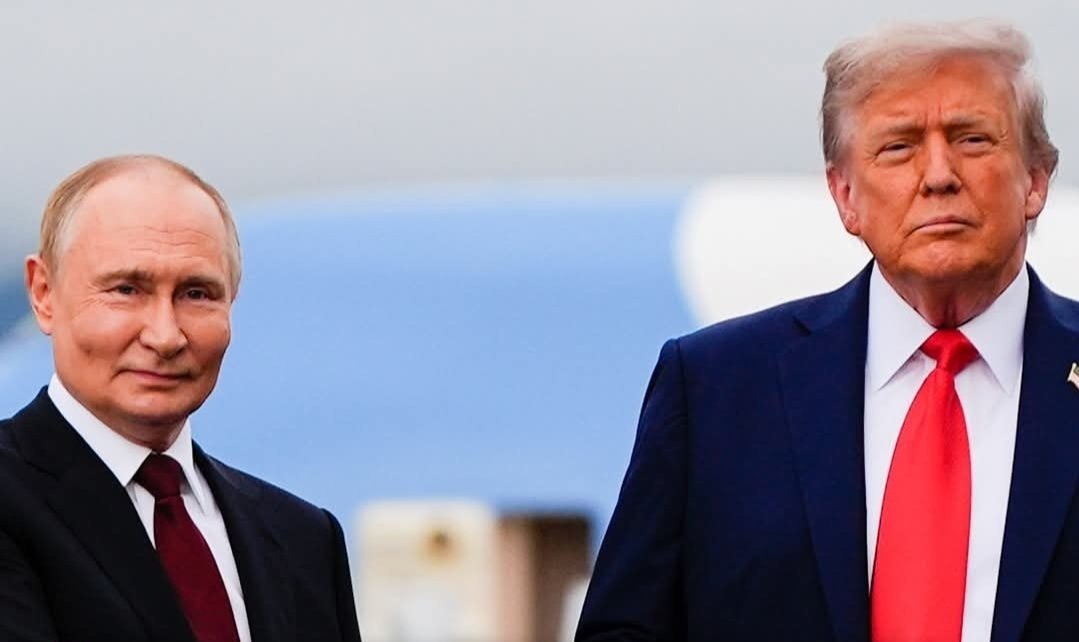
U.S. President Donald Trump and Russian dictator Vladimir Putin met at Joint Base Elmendorf-Richardson in a highly publicized summit aimed at negotiating an end to the war in Ukraine. It was their first in-person meeting since 2019 and marked Putin’s first visit to U.S. soil since 2015.
Grand arrival, modest outcomes
The meeting commenced with elaborate symbolism: a red carpet, a “ALASKA 2025” platform, and a U.S. Air Force flyover featuring F-22s and a B-2 bomber. Rather than the initially planned one-on-one conversation, the summit took a “3-on-3” form – Trump joined by Secretary of State Marco Rubio and envoy Steve Witkoff, and Putin accompanied by Foreign Minister Sergey Lavrov and aide Yuri Ushakov.
After nearly three hours of talks, both leaders emerged for a brief joint press conference, where neither would take questions. Trump hailed the meeting as productive, describing his relationship with Putin as “fantastic,” though he admitted, “there’s no deal until there’s a deal.”
No ceasefire, no breakthrough
Despite hopes for a ceasefire, the summit yielded no formal agreement to halt fighting. Trump emphasized that no agreement had been finalized and shifted the onus to Ukrainian President Volodymyr Zelenskyy, remarking, “Now it’s really up to President Zelenskyy to get it done.” Putin, for his part, spoke of an “understanding,” but provided no tangible details.
Putin reiterated Russia’s uncompromising stance: retention of occupied eastern Ukrainian territories and preventing Ukraine from joining NATO or the EU.
A Symbolic Victory for Putin?
Analysts widely saw the optics of the summit as a win for the Russian dictator. Despite being on U.S. territory, he commanded the proceedings – speaking first, arriving in “The Beast” (Trump’s state limo), and ending with an invitation for a future meeting in Moscow, which Trump acknowledged might stir controversy at home.
Meanwhile, the war continued unabated during the summit. Ukrainian authorities warned that Russian forces were preparing further offensives, and no indication of de-escalation surfaced.
Political Aftermath and Reactions
Ukrainian officials reacted with skepticism, accusing Putin of using the summit to gain time while continuing military operations. In Washington, reactions mirrored this unease: while some Republicans praised Trump’s posture, Democrats criticized the meeting for granting legitimacy to a leader wanted by the International Criminal Court.
Zelenskyy, still excluded from talks, called for genuine peace negotiations involving Ukraine and announced plans to meet with Trump in Washington soon.