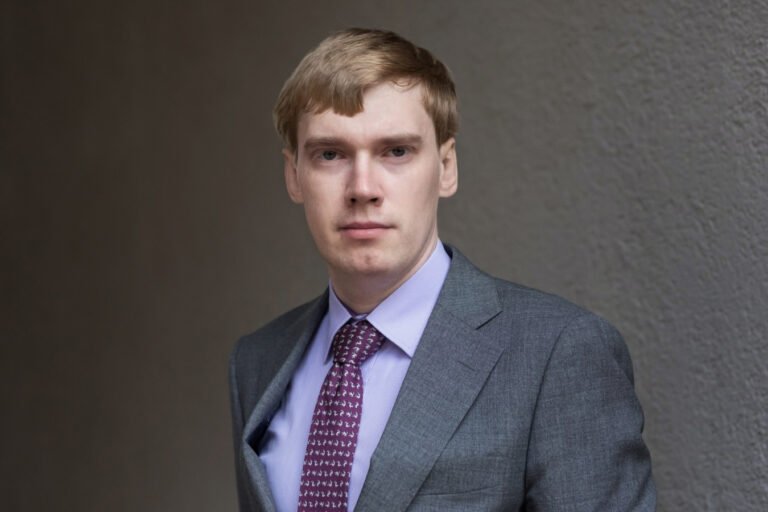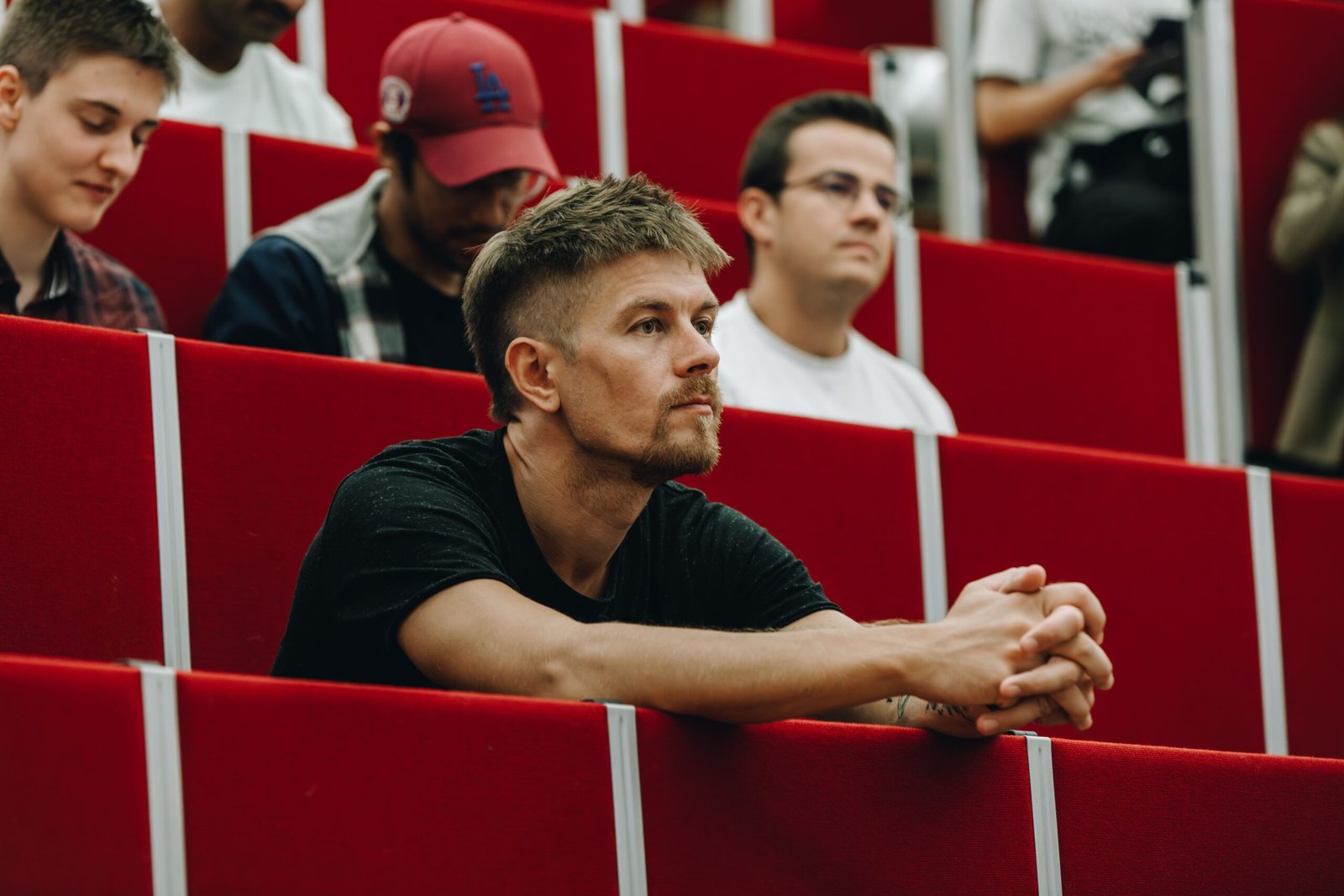
“Sociology is a cure for stupidity. It encourages us to look more deeply at various phenomena and social groups, and not to settle for simple answers – primitive, unfounded ramblings on various subjects – which we see so much of today, especially in the public sphere,” says Karolis Bareckas, a graduate of Applied Sociology at Vytautas Magnus University (VMU).
Karolis, who works in the field of communication, writes, travels, and explores distant lands, entered the Master’s programme in Sociology already holding Bachelor’s and Master’s degrees in Philosophy and bringing with him a wealth of experience from professional work, volunteering, travel, and living abroad. However, his Master’s studies in Applied Sociology at VMU were more than just another diploma for him; they were a way of looking anew at society, human behaviour, inequalities, the pace of the contemporary world, and even everyday phenomena.
Intellectual hunger led to further studies
Karolis says that he became interested in sociology during his earlier studies in Philosophy, but kept postponing the idea of studying the subject. “Then there came a point in my life when I began to feel intellectually starved – I missed learning something new and having discussions,” he recalls.
The graduate also speaks about the concept of “emotional labour”, introduced by sociologist Arlie R. Hochschild. “It’s about how, at work, you yourself have to project the emotions you want to see in your job, while hiding all the other – negative – emotions. Working in various corporations, I felt as if I was in some artificially created reality where everything was so fake. That’s why I longed for some kind of intellectual stimulation; I wanted to learn something new,” Karolis says.
According to the VMU graduate, one can read books and explore a topic of interest independently, but studies offer an entirely different learning experience – the opportunity to learn from experts in the field, discuss with teachers, and commit to consistent learning.
He says that his choice of sociology was also influenced by his experiences of travelling, volunteering, and living in different countries. Encountering various cultures and societies gradually helped shape his sociological perspective.
Sociology teaches us not to settle for simple answers
When asked how he would explain sociology in simple terms, Karolis answers without hesitation: broadly speaking, it is the study of society. And society, he says, is each and every one of us – VMU students, BMW drivers, runners, politicians, journalists, and any other social group. “Sociology examines the relationships between different social groups and how those groups interact,” he explains.
“Our relationship with the world is often superficial. We scratch the surface and don’t delve too deeply into anything. Sociology, however, encourages us to examine phenomena and certain social groups more deeply, and not to settle for simple answers, which we see so many of, especially in the public sphere,” he says.
According to Karolis, sociology seeks to understand why people behave the way they do, why certain groups have different opportunities, what causes inequalities in society, and how our relationships with one another are changing.
“Sociology is a discipline that delves deep and tries to explain society,” the VMU graduate concludes.
Applied sociology – a dynamic and practical discipline
Speaking about the Applied Sociology studies at VMU, Karolis highlights two aspects of the programme. One is sociological methods and their application; the other is the study of specific areas of society, such as medicine, politics, sexuality, leisure, sport, social networks, and other relevant phenomena.
“That’s exactly why I like sociology: it’s not as theoretical a field as it might seem at first glance. Yes, there are various sociological theories, but at the same time, sociology is always about research – about studying society and how it changes,” he says.
Karolis emphasises that sociologists draw on the latest research and constantly respond to changes in society. This is why, according to him, sociology is not theoretical, but very dynamic. “Sociologists can’t rely solely on old theories – they always have to take the latest research into account, because they understand that everything in society is changing rapidly and significantly,” the graduate says.
What he particularly enjoyed about sociology studies at VMU was the freedom and the opportunity to explore what interested him personally. “The teachers were flexible – no one imposed anything on you; you could explore and write papers on whatever interested you. I really liked that flexibility, freedom, and relationship with the teachers,” Karolis says.
Returning to university is possible at any stage of life
Karolis returned to VMU and to the Master’s studies in Applied Sociology after a longer break. According to him, more and more people today are returning to universities with professional and life experience already under their belts – wanting to deepen their knowledge or finally study what has long interested them.
“I’ve noticed a trend that many people who are already in their thirties or forties are returning to universities to study. It’s no longer like it used to be, when after a Bachelor’s degree you’d go straight on to Master’s studies. Now, many people come to study because they want to deepen their knowledge or study something they’ve always dreamed of studying,” he says.
According to the graduate, sociology studies are valuable regardless of age or previous career path, as they provide a broader understanding of society and people.
“It’s definitely worth studying sociology at any stage of life, because it gives you a great deal – it gives you an understanding of how society works. I no longer look at many things the way I used to before I had this knowledge,” Karolis says.
The fact that lectures were held in the afternoons or evenings also helped him balance his studies with work and other activities. However, according to Karolis, the most important factors were motivation and the ability to set priorities.
“I knew how much time I had, so I started doing everything right from the beginning of the semester. Since I enjoyed the studies and felt very motivated, everything fell into place quite naturally. Work was one thing, and studies were another – they became a refreshment and a counterbalance to my everyday working life,” he says.
A personal interest and research converged in the Master’s thesis
Karolis’s Master’s thesis, entitled “What Drives You Out of the House?”, which won an award in the best Master’s thesis competition, was also born out of personal interest. His leisure-time hobby – running – became the subject of his sociological research.
According to him, one of the advantages of sociology is that almost anything can become an object of research. “If you like computer games, you can study the gaming community. If you like sport, there are plenty of interesting topics in the sociology of sport. If you’re interested in politics, the influence of social media, or internet memes, you’ll always find a way to reflect on it sociologically,” he says.
Karolis is currently continuing his path in sociology – he teaches at VMU, is planning to pursue doctoral studies, and is interested in emotional inequality, dissatisfaction with politics, social polarisation, populism, and hate speech.
“Sociology, at least at this stage of my life, is a particular way of looking at the world. It has more or less permeated all areas of my life. Whatever you do, sometimes you still start thinking like a sociologist, rather than simply as an observer or participant in a situation,” says the VMU graduate.
A background in sociology is useful in any field
Although Karolis works in the field of communication, he sees sociology as a more universal tool for thinking, one that is useful in many professions.
“A background in sociology is useful in any field because it broadens your perspective and helps you better understand people, how society works, and why it is the way it is,” he says.
According to Karolis, sociologists do not take social reality for granted. They ask why some people have more opportunities than others, why inequalities exist in society, and how certain norms or behavioural patterns are formed.
“We accept many things without question. Sociologists, however, don’t take anything for granted – they try to understand why things are the way they are,” Karolis says.
Sociologists are needed today more than ever
Karolis is convinced that a sociological perspective is especially necessary today. Social media, virtual daily life, information overload, the wave of populism, disillusionment, anger, and social polarisation create a complex reality that requires a deeper understanding.
“Society has changed dramatically, especially with the emergence of social media and with our everyday life moving into the virtual world. Life has become so dense and fast-paced that we rush through our days on autopilot and often don’t understand what forces are affecting us,” he says.
According to the VMU graduate, sociologists can help explain this pace, the tensions arising in society, people’s disillusionment, and the simple but not necessarily well-founded answers spreading in the public sphere.
“Sociology studies such things and tries to untangle society, explain it, and give structure to all the confusion we live in today,” Karolis says.
Artificial intelligence (AI), according to him, is also becoming an important object of sociological research. Although AI can be a useful tool, Karolis emphasises the importance of responsible use and critical thinking.
“AI can be a good assistant, but it won’t replace a sociologist or a professional in any other field. We should use it responsibly and still continue to develop our own thinking,” the graduate says.
The key is not to be afraid to explore
Karolis would advise young people who do not yet know what to choose to listen to themselves first, rather than to the expectations of others.
“I’d advise not listening to your parents, teachers, or anyone else around you, because they won’t live your life for you. You need to listen to your inner voice and try to understand what your inclinations are,” he says.
Karolis emphasises that it is normal at eighteen not to know what you want to do in life. The key is to try things out, volunteer, travel, take an interest in things, allow yourself to make mistakes, and explore.
“Life isn’t a straight line where you simply move from one step to the next and keep moving forward. The search for yourself can last a lifetime. The most important thing in life is to do something, rather than simply waste time,” Karolis believes.
According to him, sociology can be an excellent field of study for those who enjoy reading, delving deeper, and understanding why things are the way they are, as well as for those who are not satisfied with superficial answers.