By journalist Inga Karlinska.
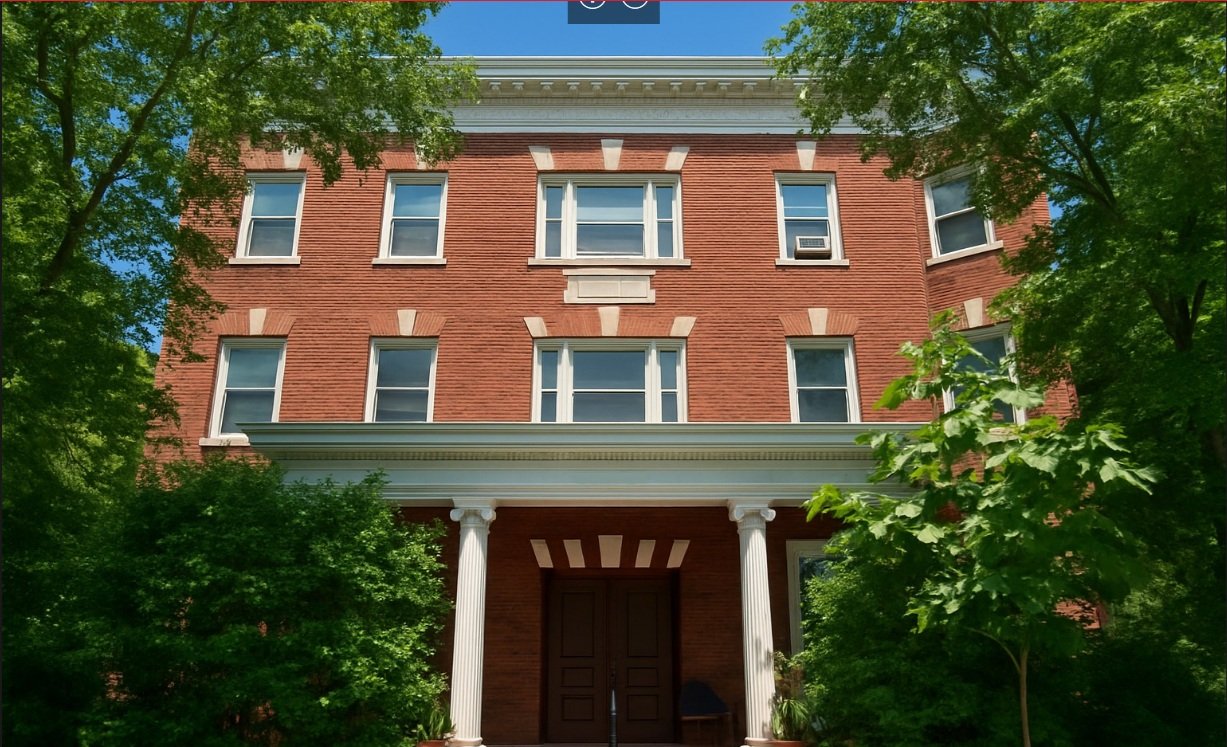
The potential sale of the New York Latvian House has, in recent months, become one of the most sensitive issues within the Latvian diaspora in the United States. Formally, it concerns a specific piece of real estate—costly to maintain and increasingly evaluated through economic logic. In practice, however, this story has long since transcended a single building in the Bronx.
At its core, the issue raises broader questions: how the diaspora treats its infrastructure, how decisions are made regarding historically significant community assets, and how transparent those decisions are. It is also a conversation about values—what the diaspora considers worth preserving, and what it is willing to relinquish when difficulties arise.
Concerns about the processes surrounding the future of the New York Latvian House have been voiced before. Notably, in 2023, the Australia-based newspaper Latvietis published a letter from a whistleblower group within the “Daugavas Vanagi” (DV). Over time, the question of the building’s sale has evolved into a broader issue of trust and governance. It is also possible that an alternative solution proposed by the nonprofit organization “LV100NY” has not been adequately explained to members.
A Place That Meant More Than an Address
The New York Latvian House was acquired in 1974 by the New York chapter of the DV. For more than fifty years, it has served as a social and cultural hub for Latvians in New York—a place for celebrations, commemorations, community gatherings, and hosting visitors from Latvia.
Over the years, it has provided accommodation not only for tourists but also for actors, directors, journalists, musicians, choirs, dance groups, athletes, and members of Latvian organizations from across the United States. It has been a rehearsal space, a venue for cultural events, and even a refuge for individuals in difficult circumstances. It has also helped form at least five Latvian families.
In other words, this house is not merely “property” but a living piece of social infrastructure—one that has fulfilled the very mission diaspora organizations often formally declare: preserving Latvian culture, fostering connections, maintaining language, and strengthening community cohesion.
This significance is emphasized by Valdis Čirksts, one of the founders of the nonprofit “LV100NY.”
Čirksts notes that one of the original arguments for acquiring the building was its ability to sustain itself financially. Residential units within the building were rented out to cover maintenance costs. In his view, this principle could still guide the building’s future—through a renewed management model that allows the property to generate income and support Latvian identity-related initiatives.
According to Čirksts, an alternative model has been proposed in which the DV would not bear the financial burden of maintaining the building, while its Latvian function would be preserved.
He frames the issue simply: the question is not whether losses should continue, but whether there is a willingness to evaluate an alternative in which the building continues to serve the community without becoming a financial liability.
However, the response from the board has reportedly been categorical: “not worth discussing,” later reiterated in writing regarding a Contract for Deed arrangement.
Alarm Bells Had Already Been Sounded
Čirksts’ position is not the first to raise concerns. In 2023, a whistleblower group within the DV described what they saw as problematic leadership changes in the New York chapter and expressed fears that these developments could lead to the loss of the Latvian House.
Particularly sharp criticism was directed at how voting outcomes were influenced by newly recruited members shortly before key decisions.
There has also been public criticism regarding internal governance—expulsion of dissenting members, rejection of new membership applications (around 60 cases), and decision-making processes lacking transparency or opportunities for remote participation and documentation.
This background is important: the issue is not simply about one nonprofit trying to stop a sale. Questions about governance, process, and the building’s future have existed well before “LV100NY” became publicly active.
A Financial Decision or a Value Choice?
At the same time, the opposing perspective cannot be ignored. One of the clearest arguments in favor of selling the building is grounded in economic reality: maintaining property in New York is extremely expensive, with major costs coming from heating and insurance.
This view is articulated by sociologist Ieva Zake, who states:
“I believe the sale of the building is entirely an internal matter for the ‘Daugavas Vanagi’ board and its members. Maintaining real estate in the U.S. is extremely expensive, especially in high-cost areas like New York. If DV cannot afford it, then the building should be sold. Theoretical concepts about diaspora identity, community cohesion, and ‘historical heritage’ unfortunately do not pay the bills—someone has to cover the costs.”
Čirksts counters that the proposed alternative model directly addresses this concern by generating income and removing financial burden from the organization.
Not Just About the Sale, but the Process
Another key issue is how decisions are made. Public criticism has focused not only on the potential sale itself but also on the internal decision-making process.
If there is a perception that major decisions about historically significant community assets are being made within a narrow circle, with limited transparency and representation, questions inevitably arise about whether such decisions align with the organization’s broader mission.
Journalistically, it is important to note that questions were also sent to the New York DV board, the central DV leadership, and the World Federation of Free Latvians. However, no response was provided by the time of publication.
This silence itself increases reputational sensitivity.
The Role of the Latvian State
Latvian government institutions were also asked whether such properties are seen as part of Latvia’s cultural and diaspora infrastructure.
Their responses reflect a dual reality: symbolic importance is acknowledged, but legal intervention is not possible.
The Ministry of Culture stated that diaspora properties are not under state ownership and therefore beyond governmental control. Meanwhile, the Ministry of Foreign Affairs emphasized the importance of such centers in preserving national identity, language, and culture abroad—but reiterated that they remain private assets.
In essence: the state recognizes their importance, but their fate lies entirely in the hands of the diaspora.
A Broader Question About the Future of the Diaspora
Ultimately, the story of the New York Latvian House is a question about what kind of diaspora the community wants to be.
Will it abandon physical infrastructure when it becomes difficult to maintain, or will it seek new management models to preserve places that have served as community anchors for decades?
Čirksts and his initiative argue that the community does not have to choose between financial loss and complete abandonment. If a model exists that preserves the building without imposing financial strain, then selling it on the open market is not inevitable—it is a choice.
Skeptics, however, maintain that practical sustainability must take precedence over symbolic meaning.
This tension—between historical significance and economic burden—is the core of the dispute.
What Is Really at Stake
One could say this is about a single building. But it is equally about the principles by which a diaspora governs its shared spaces.
If such decisions are made purely in financial terms, the community may become economically disciplined but institutionally hollow. If economic realities are ignored, symbols alone cannot sustain themselves.
This is not a simple clash between “realists” and “idealists.” It is a more difficult question: can the diaspora agree on a model where a historic property continues to serve the community without becoming an unsustainable burden?
And if such a model exists, are organizations willing to genuinely consider it?
Finally, if a solution that both preserves the property and removes financial burden is dismissed as “not worth discussing,” it inevitably raises a deeper question:
What, in this situation, is actually considered valuable?
Source: Diena.lv
(Translated using artificial intellect tool)