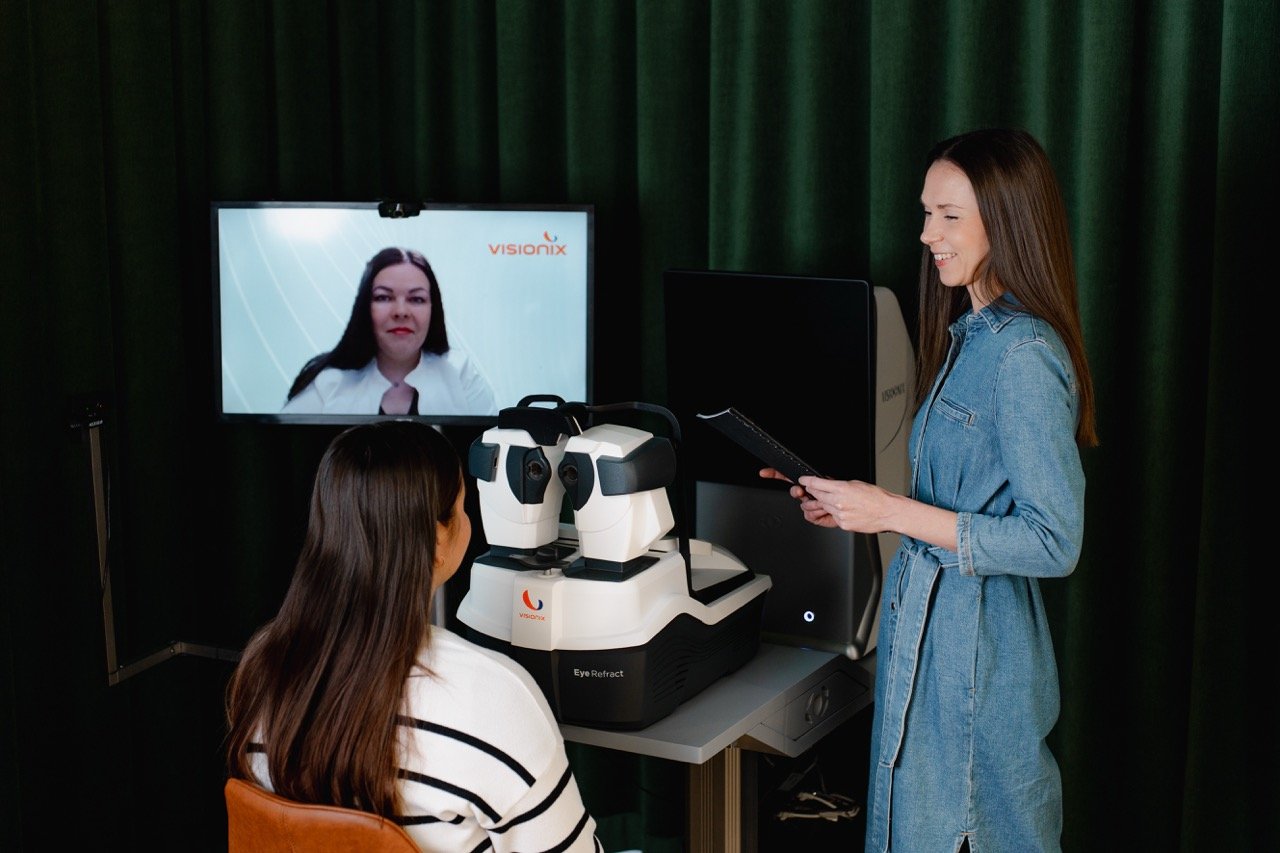
Latvia’s optical retail sector has significant potential for technology adoption – globally, digital and artificial intelligence solutions are increasingly used in vision diagnostics, while their integration in the local market has progressed relatively gradually so far. One of the most active drivers of this shift is the optical salon chain “METROPOLE”, which has invested more than €2 million in modernising its salons, becoming Latvia’s leading optical chain in the implementation of advanced vision-testing technologies. As a result, customers in Latvia now have access, for the first time, to two cutting-edge innovations – digital vision testing and AI-driven vision analysis. The modernisation programme aims to improve the customer experience and address common challenges such as lengthy appointments, waiting times, and the accuracy of vision assessments.
“These new technologies represent major innovations in vision diagnostics in Latvia. Artificial intelligence algorithms help assess the risk of developing three of the most common eye diseases, while digital vision testing makes it possible to carry out the procedure in any salon without an optometrist being physically present on site. This significantly saves resources for both professionals and customers,” explains Oksana Jakovela, Head of the “METROPOLE” optical salon chain.
In practical terms, the new technologies significantly simplify and speed up the vision-testing process. The new digital vision-testing technology enables examinations in locations where an optometrist may not be physically available. A trained consultant is present in the salon together with the customer, while the optometrist connects remotely and conducts the examination online: speaking with the person, asking questions, and recording the results.
Alongside digital vision testing, an artificial intelligence solution has also been introduced, expanding opportunities for early detection of eye conditions. It helps assess possible signs of three of the most common eye diseases. “Waiting lists for ophthalmologists are long, because traditionally people seek help from them for any vision or eye-health-related problem. However, if optometrists took on part of this workload, queues for doctors would be shorter,” notes O. Jakovela. She emphasises that artificial intelligence does not provide a diagnosis, rather, it helps notice potential changes at an early stage and determine whether a person should be referred to an ophthalmologist for further examinations.
According to estimates from the “IAPB Vision Atlas” international study, approximately 465,000 people in Latvia live with various visual impairments. Moreover, the majority – around 305,000 – are women, while approximately 160,000 men are also affected by vision problems. The main reason is that access to an ophthalmologist often involves long waiting times, especially for state-funded appointments. In the regions, the issue is even more evident, compounded by additional logistical challenges.
According to the expert, these two solutions will help reduce the workload of ophthalmologists, making initial vision screening more accessible to a wider range of people. Vision loss is not only a medical issue; it is also an economic one. Based on “IAPB Vision Atlas” estimates (GNI method), avoidable blindness and moderate visual impairment among people aged 50-64 cause annual productivity losses of approximately €333 million for Latvia’s economy. Furthermore, most of these losses are caused not by blindness, but by untreated or late-diagnosed moderate vision impairment, which reduces the work capacity of the working-age population. “This is precisely why timely diagnostics and referrals to specialists are so important, especially in regions and among people over the age of 40-50,” adds the head of the optical salon chain. She stresses that the relevance of this problem, and the fact that it has remained unresolved for years, prompted the introduction of innovations in Latvia that the optometry market has not previously offered.
This service is already available in 18 salons across Latvia, and the modernisation programme will continue. The company’s head notes that since 2024, more than €2 million has been invested in the modernisation programme. “Our goal is to use technology that is unique to the Latvian market to make diagnostics more accurate, more standardised, and more personalised, minimising the human error factor as much as possible. We are very proud to be the only salon chain in Latvia offering such services, thereby helping reduce waiting lists for ophthalmologists,” emphasises O. Jakovela.