By Karolina Aleknavičė, LRT.lt.
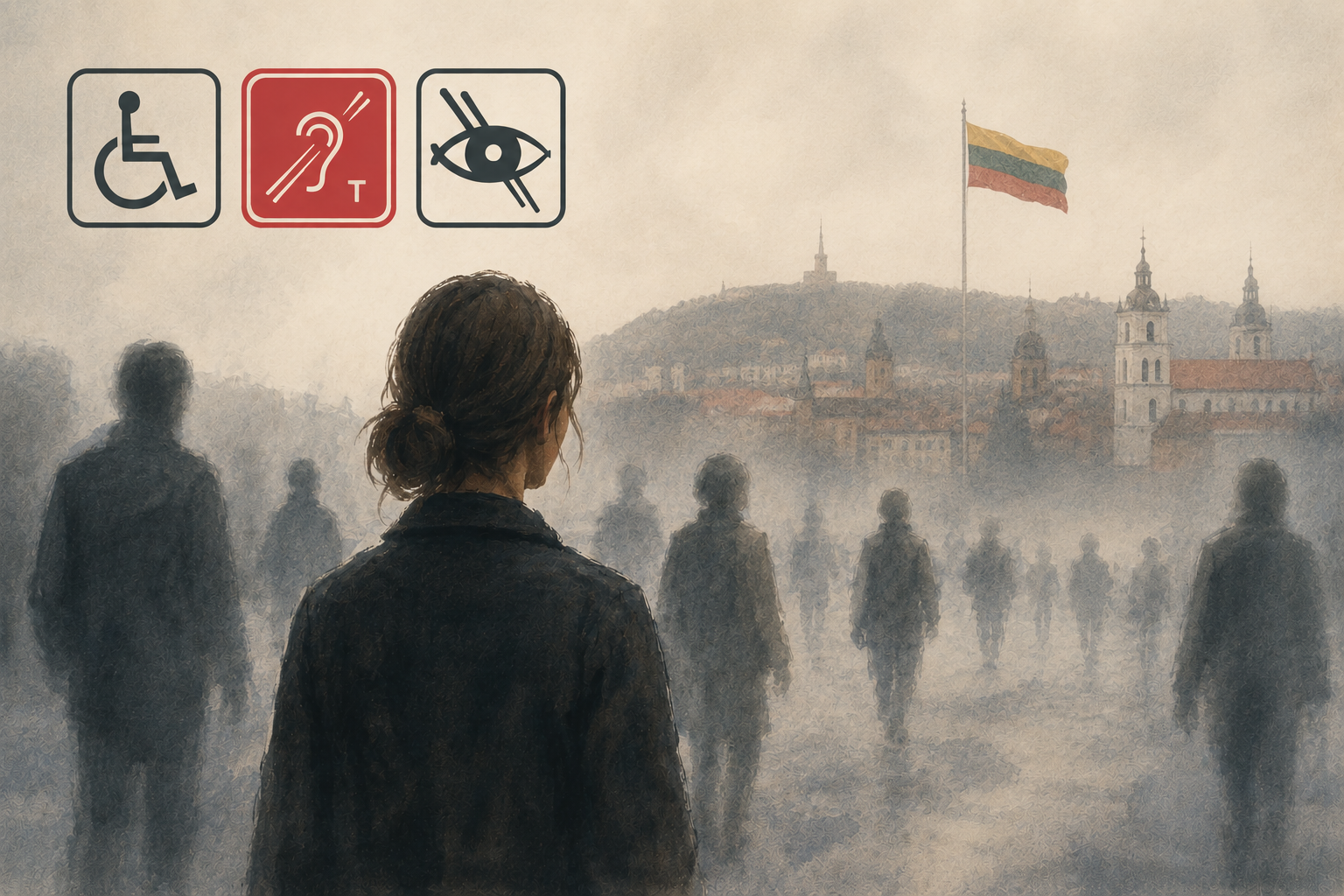
A country’s attitude towards its deafblind citizens is a measure of how advanced it truly is, says specialist educator Dalia Taurienė. By that measure, Lithuania has a great deal of catching up to do.
More than thirty years after independence, Lithuania still has no functional system for identifying, supporting or educating people who have both sight and hearing loss. There is no national organisation representing deafblind people, no tactile version of the Lithuanian language, and no reliable figure for how many deafblind people actually live in the country.
Based on comparisons with other nations, specialists estimate the number at around 12,000 – the vast majority of them elderly.
“I never thought we would fail to find our own people and help them,” said Taurienė, who has spent decades working with deafblind children.
A two-year-old with a rare syndrome
Edita Matonė is a family doctor from Kaunas, Lithuania’s second city. She is currently on parental leave, caring for her two-year-old son Tadas, who was born with CHARGE syndrome – a rare genetic condition that affects multiple body systems simultaneously.
Read more: LRT.LT