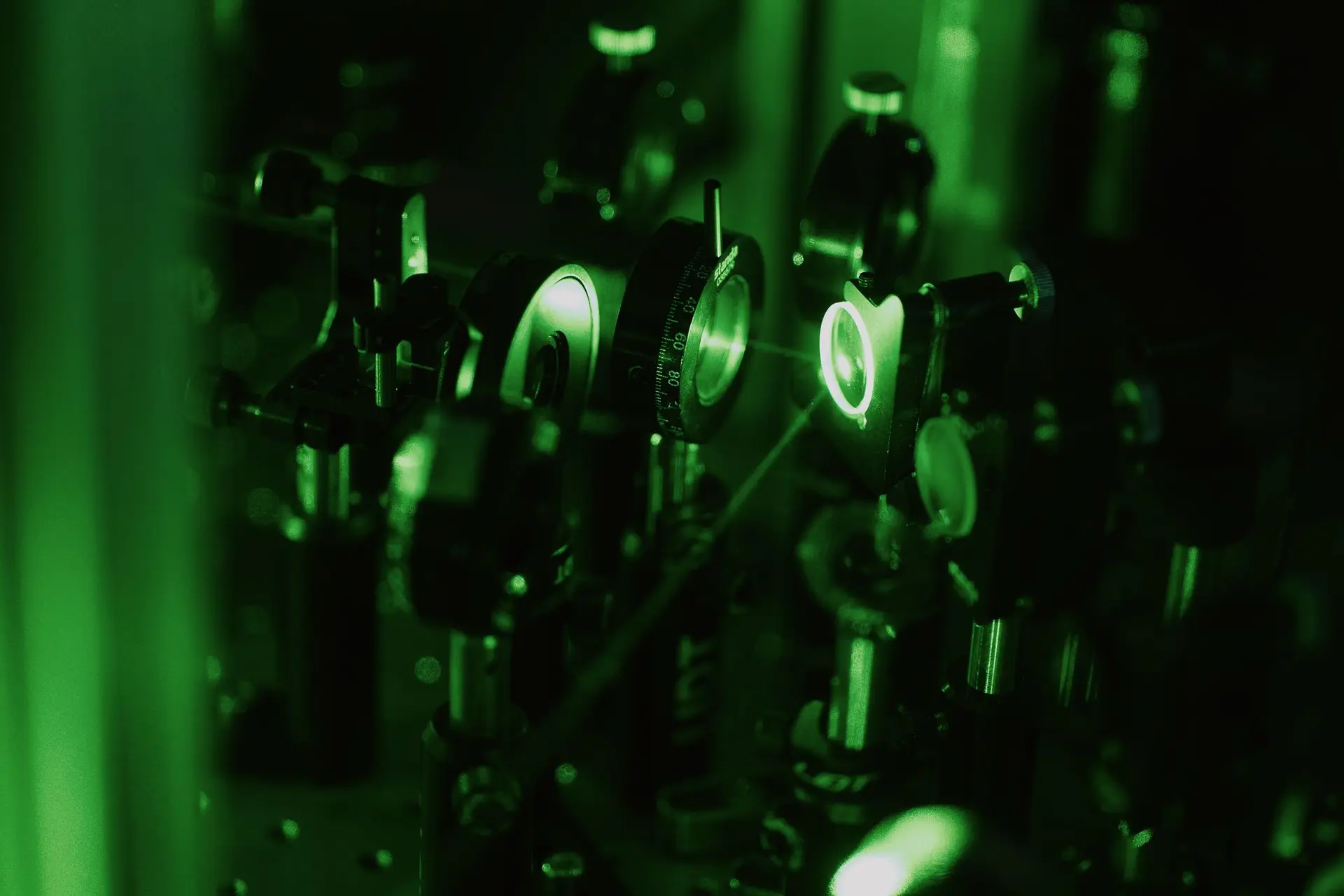
Six decades ago, physicists at Vilnius University fired up the country’s first ruby laser. Today, Lithuania exports laser technology to more than 80 countries, and the sector is growing at more than 16% a year. How did a small Baltic nation become one of the world’s leading forces in laser technology?
The story begins in 1966, just six years after the laser was invented in the United States, when Vilnius University physicists Juozas Vidmantis Vaitkus and Remigijus Baltramiejūnas built Lithuania’s first ruby laser.
The foundations were laid in academic laboratories, but the real turning point came in the 1990s, when companies that had grown out of university research made a bold decision: to compete globally from the outset. Today, the sector generates profit per employee more than twice the national average, and between 90-95% of Lithuanian laser products are exported.
“Lithuanian companies developed their own technologies from the very beginning rather than copying existing solutions,” says Kristina Ananičienė, executive director of the Lithuanian Laser Association. “That is what allowed the country to become one of the world’s leading developers of ultrashort pulse lasers.”
From pioneer to global architect
The nature of the work has changed enormously. Gabrielė Stankūnaitė, communications director at Light Conversion, one of the sector’s flagship companies, recalls that in the early days engineers worked with severely limited resources, improvising components, sourcing news from foreign catalogues and handling everything from manufacturing to logistics themselves.
Read more: LRT.LT