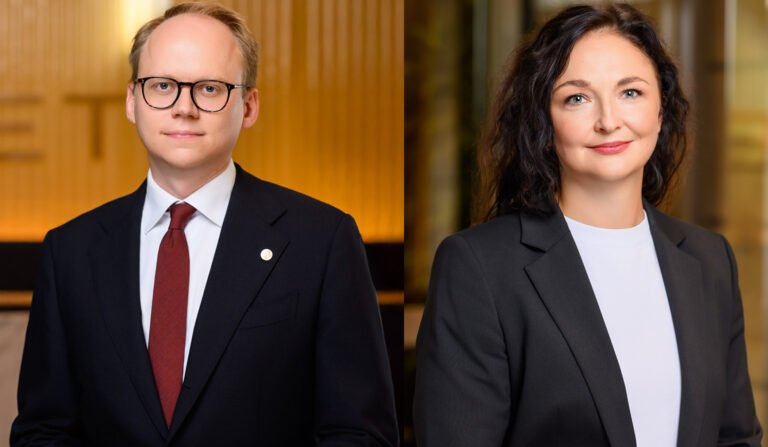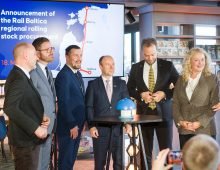
Riga hosted the Baltic Capital Markets Conference 2025, the largest capital markets conference in the Baltics, which brought together more than 500 participants and 35 speakers – international and local investors, entrepreneurs, regulators, and policymakers, including the Prime Minister of the Republic of Latvia and the finance ministers of all three Baltic countries. A common conclusion emerged from all five discussions: the potential of the Baltic capital market is still significantly underused, and its development is a key factor in the region’s long-term economic stability, growth, and security.
Long-term competitiveness depends on the ability to attract and channel capital
Opening the conference, Latvian Prime Minister Evika Siliņa emphasized that the long-term competitiveness of the Baltic states will depend on their ability to channel more savings into investments: “A developed and unified capital market means more financing for companies, more investment in the region, and greater prosperity in the long term. In Europe and the Baltics, too many resources are held in bank accounts and are not generating returns. This holds back innovation, competitiveness, and our ability to develop a modern economy. The potential in the Baltics is really great. By listing state-owned companies on the stock exchange, we can give a strong boost to the market, involving our own citizens and strengthening their opportunities to earn a return on their investments. Smart investments in company shares, bonds, innovation, and new technologies, including artificial intelligence, will promote economic development. Latvia and Europe can increase their competitiveness in the world!”
Financial literacy and the use of capital market instruments – a practical opportunity for the region to grow
In their opening speeches at the conference, both Mārtiņš Kazāks, Governor of Latvijas Banka, and Roberts Idelsons, Chairman of the Board of Signet Bank, emphasized that a developed capital market is not a luxury, but a necessity – a requirement for the region’s economic growth, stability, and ability to self-finance future development.
Mārtiņš Kazāks pointed out that in the Baltic States and Europe as a whole, the capital market plays a key role in promoting structural change in the economy and the region’s global competitiveness. At the European level, it is necessary to finally create a fully functioning unified financial market, reducing its fragmentation. Financial literacy is crucial for quality decisions and productive investments, both at the individual and corporate levels. “A strong capital market in the Baltics will not be created overnight. However, with determination, regional cooperation, and a modern policy framework and mindset, we can create a capital market that is dynamic, innovative, open, and responsible.”
Roberts Idelsons also emphasized the importance of financial literacy, especially among entrepreneurs, pointing out that this is one of the greatest sources of growth potential in the Baltic region. He highlighted that wider use of capital market instruments could significantly strengthen companies’ financing opportunities and the economic structure. Idelsons also pointed out that the growth of the Baltic bond market is essentially just beginning – investor interest and issuer activity show that the potential for bond issuance activity in the coming years is very high.
Baltic finance ministers: structural changes and greater capital market integration are needed
Arvils Ašeradens, Minister of Finance of the Republic of Latvia, Kristupas Vaitiekūnas, Minister of Finance of the Republic of Lithuania, Jürgen Ligi, Minister of Finance of the Republic of Estonia, and Burkhard Kübel-Sorger, Vice President and Chief Financial Officer of the European Bank for Reconstruction and Development (EBRD), agreed during a panel discussion on the importance of the Baltic capital market for the development of the region that structural solutions are needed for the development of the Baltic capital market. Several common priorities were raised during the discussion: significantly increase the liquidity of the capital market, promote the listing of state-owned companies on the stock exchange, reduce excessive regulation, encourage citizens to invest through tax breaks, and allow pension plans to invest more freely, thereby ensuring a greater flow of local capital into economic development. It was emphasized that successful public offerings are only possible if companies have a clear and convincing growth story.
The ministers also pointed out that one of the most significant challenges is attracting liquidity to the local stock market, while greater regional integration and closer Baltic cooperation would make the market more competitive and accessible to international investors. The ministers agreed that only through coordinated public policy, more active investor involvement, and cooperation among market participants can the Baltic capital market reach its potential.
IPOs and listing of state-owned companies – the most significant potential breakthrough
Capital market statistics show that the Baltic corporate bond market is growing dynamically, with total funds raised exceeding EUR 6 billion, issued by more than 110 companies in the Baltics. These impressive growth figures are largely the result of cooperation between policymakers, regulators, and the private sector, facilitated by events such as the Baltic Capital Markets Conference.
At the same time, discussions focused heavily on the development of the stock and IPO markets. Experts pointed out that IPO activity is recovering in Central and Eastern Europe, driven by positive economic results and investor interest in Europe and emerging markets. Although the Baltic states are lagging behind in this trend for the time being, there are several companies in the region with strong listing potential.
The Baltic market has historically attracted foreign investors, but in order for capital to return fully, market liquidity and depth must be significantly increased. Strengthening the local investor base also plays a crucial role: a motivating tax system for long-term savings, greater involvement of pension funds in local company shares, and the development of capital market education among retail individuals.
Experts emphasized that listing state-owned companies on the stock exchange is one of the most powerful tools for stimulating the market, as it increases liquidity, sends a signal of market confidence, attracts foreign investors, promotes public involvement in the capital market, and increases the efficiency of state-owned companies.
A successful IPO requires sufficient volume and a clear growth story, while cross-border listings and pre-listing funds help companies reach a wider range of investors and increase the international attractiveness of the market.
Strong capital markets are no longer a matter of choice. A focus on flexibility, public-private coordination, and greater financial literacy is exactly what the Baltic region needs. With targeted cooperation and a clear policy framework, the Baltic states can create a truly competitive, liquid, and future-proof capital market that will accelerate the region’s growth.
The conference is organized by COBALT, Eversheds Sutherland Bitāns, GSK Stockmann, Signet Banka, and Sorainen. Partners – BDO, LHV, Newsec, Tegos. Supporters – Baltic Institute of Corporate Governance, British Chamber of Commerce, Latvian Financial Industry Association, Latvian Private Equity and Venture Capital Association, Mission Latvia, Nasdaq. Information partners – Delfi, Dienas Bizness, Investors’ Club, IR, Mediāna, Radio SWH.
About Baltic Capital Markets Conference
The Baltic Capital Markets Conference has been organized since 2022 and is the largest capital market event in the Baltic States, bringing together leading industry professionals, investment specialists and regulators from Latvia, Lithuania and Estonia, as well as international experts. The aim of the conference is to promote the development and growth of capital markets in the Baltic States by providing a platform for the exchange of views, experiences and strategic solutions. In 2023, the conference received the Nasdaq Excellence Award “Nasdaq Baltic Awards 2023” in the category “Event of the Year on the Stock Exchange” in Latvia, confirming its importance and impact on the region’s financial markets.