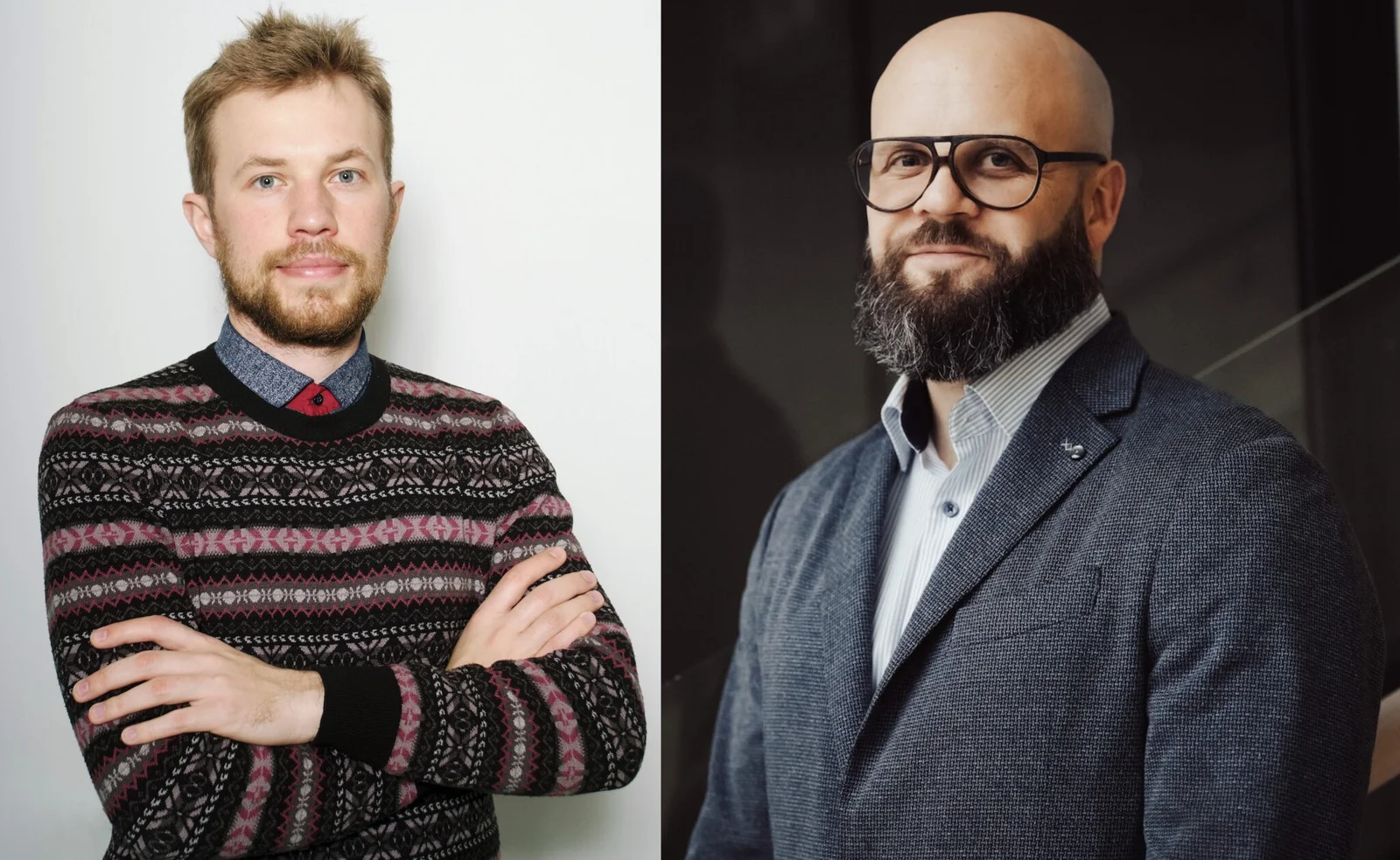
BY Dr. Dainius Genys, a member of The Migration and Intercultural Diasporic Life Laboratory, a research platform within the VMU Lithuanian Emigration Institute, Dmytro Mamaiev, a PhD Candidate in the sociology of migration at the Lithuanian Centre for Social Sciences (Institute of Sociology).
Lithuania’s reception of Ukrainians fleeing the war has often been described through the language of solidarity, generosity, and moral duty. Public discourse has highlighted institutional responsiveness, civic engagement, and the rapid organization of assistance. Yet hospitality is not only a political or administrative achievement; it is also a lived social condition. Beyond policies and programs lies a quieter question: what kind of everyday world does such hospitality create for those who must live within it?
This text approaches Lithuanian–Ukrainian encounters not from the standpoint of integration outcomes or policy effectiveness, but from the perspective of experience. It asks how care that is reliable, disciplined, and institutionally mediated is perceived by those who receive it, and how such a model of hospitality shapes daily life, social relations, and emotional expectations. Rather than treating Ukrainians as either successfully integrated or insufficiently included, we examine what it means to inhabit a particular regime of hospitality, one situated between safety and distance, gratitude and foreignness.
From the perspective of those who arrive, Lithuanian hospitality is rarely experienced as a singular gesture or a moment of emotional recognition. Instead, it unfolds as a patterned environment – predictable, restrained, and morally serious – within which everyday life must be learned anew. What appears self-evident to the host society often becomes an object of interpretation for the guest. Silence, distance, discipline, and institutional mediation, features Lithuanians rarely problematize, emerge as central experiential categories for Ukrainians living in Lithuania.
In this sense, Lithuanian hospitality is revealed not through declarations of solidarity, but through its texture: the everyday arrangements that structure interaction, limit proximity, and define what kinds of closeness are legitimate. For Ukrainians, this texture is neither overtly hostile nor fully embracing. It is, as we will see it in a minute, contradictory – simultaneously protective and distancing, reassuring and emotionally sparse.
Parallel Worlds
Many Ukrainians describe their social existence in Lithuania as unfolding across parallel worlds that rarely intersect. One world is institutional and functional: workplaces, language schools, municipal offices, NGOs. Here, interaction is regulated, polite, and emotionally contained. Roles are clear, expectations explicit, and assistance structured. The other world is intimate and Ukrainian: private apartments, online groups, informal gatherings, where language flows freely, emotions are unfiltered, and the war remains a constant presence.
Sociologically, this duality reflects a broader pattern of segmented integration. Inclusion is achieved primarily through systems rather than relationships. Belonging is functional before it becomes social. For Lithuanians, this sequencing appears natural; institutions are the primary carriers of trust. For Ukrainians, however, the separation between functional inclusion and social closeness produces a sense of suspension, of being inside society without fully inhabiting it.
This parallelism is not unique to Lithuania, yet it acquires a specific intensity here due to the moral weight assigned to order, privacy, and self-restraint. Social life does not easily spill over institutional boundaries. Work remains work; help remains help. Emotional registers are carefully managed. As a result, Ukrainians may feel socially visible yet relationally peripheral.
Silence as Social Language
One of the most frequently noted features of Lithuanian social life is silence. For Lithuanians, silence functions as a neutral or even positive social state: it signals respect for boundaries, non-intrusiveness, and emotional self-sufficiency. Silence is not an absence of relation, but a mode of co-presence that does not demand performance.
For Ukrainians, especially in the initial stages of settlement, this silence can be deeply ambiguous. It resists immediate interpretation. Does it mean disinterest, politeness, discomfort, or care? In the absence of verbal reassurance, newcomers must learn to read silence contextually. Over time, many come to recognize it as a form of moral restraint rather than rejection.
Analytically, silence operates as a boundary-maintaining mechanism. It protects social space from premature intimacy while allowing coexistence to remain stable. Yet this very stability comes at a cost. Silence delays emotional recognition. It slows the formation of trust for those whose biographies are marked by rupture and urgency.
Thus, silence becomes both a resource and a burden. It offers calm and predictability, but it also places interpretive labor on the newcomer. Ukrainians must adjust their emotional expectations, learning that care may be expressed not through words, but through reliability and non-interference.
The Slowness of Friendship
Friendship in Lithuania, as experienced by many Ukrainians, is not impossible but slow. Trust is not assumed; it is accumulated through time, consistency, and shared routines. Lithuanians tend to observe before they open up. Relationships are not initiated through emotional disclosure, but through repeated presence.
From a sociological perspective, this slowness reflects a moral economy of trust rooted in historical vulnerability. In a society where abrupt disruptions have been common, emotional investment is treated cautiously. Depth is valued over immediacy; endurance over intensity.
For Ukrainians, this temporal logic can be disorienting. Coming from contexts where solidarity is often expressed through rapid emotional engagement, the Lithuanian pace may feel withholding. The need for connection, intensified by displacement and loss, collides with a host culture that privileges patience.
Yet over time, this slowness can also be reinterpreted. When friendships do form, they tend to be durable. Ukrainians often note that once trust is established, it is not easily withdrawn. Friendship here is not expansive, but stable.
Emotional Discipline: Virtue and Burden
Emotional discipline occupies a central place in Lithuanian social life. Control, restraint, and measured expression are widely recognized features of everyday interaction. In the context of hospitality, these traits perform a double function: they can create an impression of coldness, yet they also help ensure that care remains governable, sustainable, and resistant to emotional exhaustion.
For Ukrainians, emotional discipline is experienced ambivalently. On the one hand, it creates an environment free from intrusive expectations. One is not required to perform gratitude, narrate trauma, or engage emotionally on demand. This can be deeply relieving. On the other hand, emotional discipline limits opportunities for spontaneous connection. Feelings remain largely privatized.
Sociologically, emotional restraint functions as a stabilizing mechanism. It prevents emotional overload and protects institutional actors from burnout. However, it also redistributes emotional labor onto those who arrive. Ukrainians must regulate their own needs for reassurance and belonging, adjusting to a moral climate where emotions are carefully rationed.
This tension produces a specific form of ambivalence: gratitude for safety coexists with a muted sense of loneliness. Care is present, but it rarely spills into intimacy.
Selective Empathy and Moral Privilege
Another dimension shaping Ukrainian experiences in Lithuania is relative empathy. Ukrainians are received within a specific moral and political configuration. They are framed as neighbors, Europeans, and victims of an identifiable aggressor. This framing grants them moral privilege – access to protection, legitimacy, and public sympathy.
From the Ukrainian perspective, this privilege is both enabling and troubling. It ensures safety, yet it highlights the conditional nature of compassion. Some Ukrainians are acutely aware that their reception differs markedly from that of other migrant groups. This awareness introduces ethical discomfort: being welcomed generously while others remain excluded.
Analytically, relative empathy reveals the boundaries of Lithuanian hospitality. Compassion is not universal; it is mediated by geopolitical narratives, cultural proximity, and symbolic similarity. Ukrainians do not merely receive care; they inadvertently expose the criteria by which care is distributed.
This exposure turns hospitality into a mirror. It reflects not only generosity, but also the moral hierarchies embedded in humanitarian practice. Ukrainians become witnesses to the limits of solidarity, even as they benefit from it.
Sociological Diagnosis: Moral Companionship
Taken together, these dimensions suggest that Lithuanian hospitality, as lived by Ukrainians, is not best understood through the lens of integration or inclusion. It operates instead as a form of moral companionship. Hosts and guests coexist within a shared moral order that prioritizes reliability over intimacy, endurance over expressiveness.
Hospitality here is not a completed achievement but an ongoing practice. It requires continuous adjustment, of expectations, emotional rhythms, and interpretive frameworks. Lithuanians offer stability without promises of closeness; Ukrainians respond with patience without guarantees of belonging.
This model is neither deficient nor ideal. It is historically situated and unfinished. It allows care to persist under conditions of uncertainty, yet it leaves emotional needs partially unmet. It protects without fully incorporating.
Sociologically, this points to a broader condition of contemporary solidarity: a shift from emotional immediacy to managed care. Solidarity is no longer expressed primarily through affective fusion, but through sustained, rule-based support. The stranger is not absorbed, but accommodated.
In this unfinished process, hospitality reveals its paradox. What makes it durable also makes it distant. What secures coexistence also postpones intimacy. Ukrainians living among Lithuanians inhabit this paradox daily – between gratitude and distance, safety and foreignness.
We suggest that what emerges between hosts and guests is not integration, but something quieter and more fragile: a shared moral space in which living together is possible without erasing difference. Hospitality, in this sense, is not an endpoint. It is the slow, disciplined work of remaining present to one another among strangers.