In 2026, Lithuania’s renewable energy sector had to address not only how much electricity its power plants generate, but also whether they are adequately protected against cyberattacks. Cybersecurity audits of larger power plants and energy storage systems exposed gaps ranging from default passwords to unclear responsibility for network maintenance. Yet the security of smaller power plants remains an open question.
By May 31 this year, owners of existing power plants and energy storage systems in Lithuania with an installed capacity exceeding 100 kW were required to conduct a cybersecurity audit and submit a security declaration to the relevant electricity network operator.
The Power Grid Has Also Become an IT Network
According to Dr Šarūnas Stanaitis, CEO of Inion Software, in the past, when a few large power plants generated a large share of the electricity, they were fully secure against cyber threats because dedicated IT teams looked after their networks. Even without remote control capabilities, the grid operator could simply call a power plant and ask it to reduce or increase generation. The plant operator would make the adjustment on site. Today, all power plants, whether 3 kW or 30 MW, connect to the internet in one way or another. Manufacturers’ monitoring systems make it possible to track plant performance, control operations and update inverter firmware.
“In my view, Chinese equipment is used in roughly nine out of ten Lithuanian power plants. A handful of manufacturers dominate the market, so many renewable energy plants can be controlled through a single manufacturer’s system. If several large plants controlled through the same system were to shut down while feeding electricity into the grid, it could cause the grid to collapse.
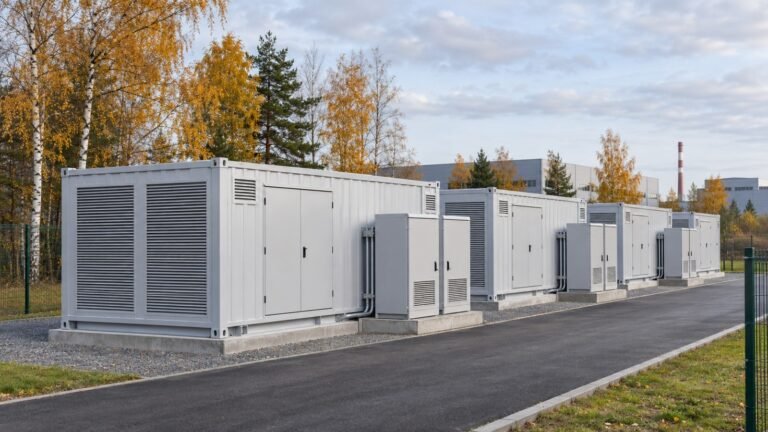
The issue is even more acute with energy storage systems: if control of a battery storage system were disrupted and its safeguards failed, it could even catch fire,” says Stanaitis.
He adds that user data is another concern. If attackers gain access to a monitoring system, they could steal information such as users’ email addresses or phone numbers.
Audits Revealed What Was Happening Inside Power Plants
While analysing power plant operations in Lithuania, Inion Software found that some routers and inverter communication devices still used default usernames and passwords. In some cases, gaining wireless access to the equipment was too easy. At one plant, the team had only just begun inspecting the network when it noticed that a connected server was sending and receiving large volumes of data over the internet. What the server was being used for remained unclear.
“A company’s power plant is often entrusted to an energy engineer. They look after generation, faults and maintenance. But who monitors access to the equipment? Who updates the firewall or investigates a sudden increase in data traffic on the plant’s network? When analysing power plants, we found that these tasks were often assigned to no one,” says Stanaitis.
The Security of Smaller Power Plants Remains Unresolved Beyond 2026
According to the renewable energy specialist, Lithuania has around 2,000 power plants with a capacity exceeding 100 kW and, by his estimate, nearly 200,000 smaller installations. These operate at homes and smaller businesses, with a combined capacity of around 2 GW. How many are protected against cyber threats? This unanswered question poses a risk to grid stability.
“In 2026, Lithuania focused mainly on the security of larger power plants. Now, I believe it is time to agree with grid operators and equipment suppliers on how we will address the security of smaller installations,” says the CEO of Inion Software.
What Can We Expect in 2027?
On December 29, 2025, more than 30 wind and solar power plants in Poland were targeted in a coordinated cyberattack. In October this year, a cyberattack in France targeted refrigeration systems at more than 700 stores. Some food products spoiled as a result.
“I believe Europe could see similar attacks on power plants in 2027. Lithuania is prepared for such attacks: protective measures were introduced at larger power plants this year. The security of smaller power plants remains an open question,” Stanaitis concludes.