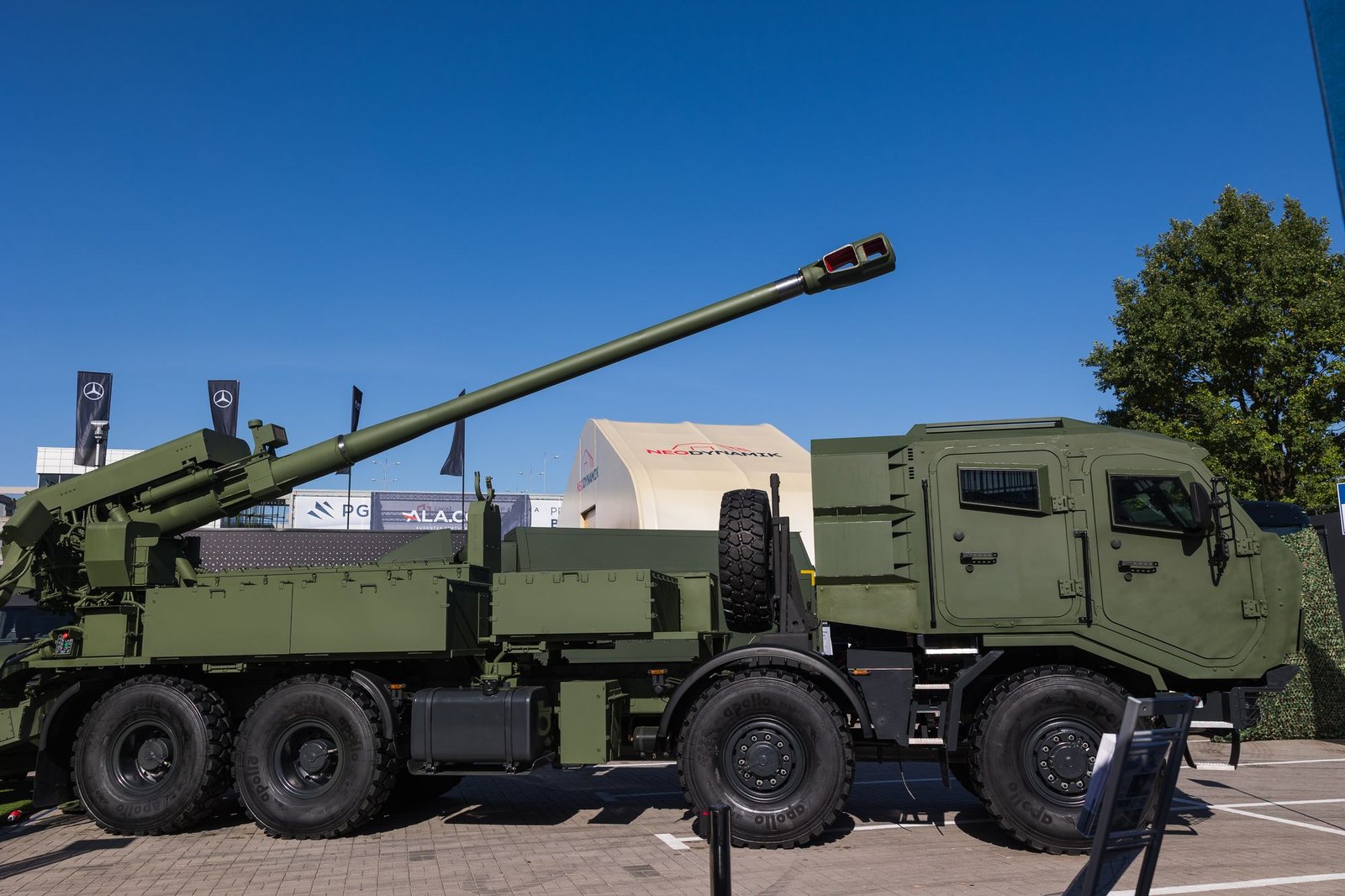
Polish companies are collaborating on the production of special-purpose vehicles for the armed forces, preparing to launch the manufacture of modern 155 mm wheeled self-propelled howitzers.
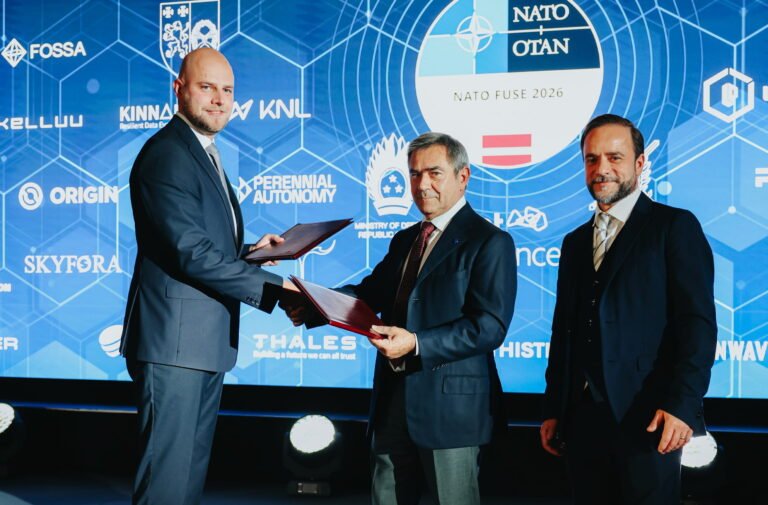
PK MIL, a company from the PONAR Wadowice group, and SZCZĘŚNIAK Pojazdy Specjalne from Bielsko-Biała have signed a Memorandum of Understanding (MoU) regarding planned cooperation in selecting and adapting chassis suited for the production of 155 mm wheeled artillery systems.
Following the delivery of 45 heavy recovery and technical rescue vehicles for the armed forces of the Kingdom of Sweden, this is the next project in which these two Polish enterprises are joining forces in the defence sector supply market.
Cooperation in executing complex contracts—regardless of the industry—allows companies to combine strengths, expertise, and resources, thereby increasing their overall potential. Another equally important benefit is the sharing of risk and responsibility. Experts also point to the importance of innovation and collaboration achieved by bringing together diverse perspectives and expertise.
“We are accelerating research and development, building a resilient supply chain, strengthening the industry and its resilience, and—last but not least—preventing bottlenecks in planned production,” argues Piotr Rosikowski, Director of Technology and Development of the PONAR Wadowice company.
An important stage in the development of this cooperation will be launching the production of the 155 mm Bogdana self-propelled howitzer, which has proven itself on the Ukrainian front line for years. Thanks to the involvement of Polish enterprises, solutions developed by the Kramatorsk Heavy Machine Tool Plant will gain export potential. Given the procurements and tendering procedures reported in recent months, the global market for these vehicles is estimated at several thousand units per year in the coming years. Wheeled traction provides armed forces with the necessary firepower at ranges of up to 50 kilometres without the logistical burden generated by tracked artillery. Alongside deliveries of new vehicles, the issue of upgrading and overhauling those already in service remains equally important.
“Therefore, from the outset, we assume that the future cooperation between both companies would also include implementing solutions to enable maintenance, repair, and operational support for these vehicles with their end users,” emphasizes Marek Warzecha, Chairman of the Management Board of PK MIL. He adds: “I would like to stress that our planned cooperation aligns with the strategy of developing relationships between technologically strong companies with appropriate manufacturing capabilities that can jointly deliver state-of-the-art solutions for armed forces—both Polish and international.”
It is worth noting that in recent weeks, SZCZĘŚNIAK Pojazdy Specjalne also signed agreements with Finland’s SISU Auto. This collaboration aims to jointly develop military recovery vehicles and armoured firefighting and rescue vehicles. The Bielsko-Biała-based company will also be responsible for the development and production of tactical and armoured vehicles for the STAR Hyperion 8×8, intended to ultimately serve as a platform for the WB Group. (GLADIUS is a reconnaissance and strike system comprising unmanned aerial vehicles and strike elements, rather than simply a loitering munition system.)
In turn, PONAR Wadowice has been designated as a Polish defence industry company selected for technology transfer regarding the maintenance, repair, and overhaul of components in South Korean K2 tanks. Together with the Polish Armaments Group (PGZ), PONAR will also develop, among other things, hydropneumatic suspensions tailored to the requirements of wheeled platforms from the Polish manufacturer JELCZ.
“The scale of PONAR’s expertise in this area is exceptional,” recalls Chairman Marek Warzecha. “The future result of our cooperation—the creation of a Polish wheeled hydropneumatic suspension for heavy vehicles—also represents a significant technological leap aimed at making the Polish defence industry independent from foreign suppliers,” concludes Marek Warzecha.
SZCZĘŚNIAK Pojazdy Specjalne Sp. z o.o. is a family-owned company with Polish capital that specializes in the development and production of heavy recovery and rescue vehicles for the armed forces, as well as reliable and modern fire engines. The company boasts its own engineering and manufacturing infrastructure, holds a Ministry of Interior and Administration (MSWiA) licence for defense and security operations, and maintains implemented quality management systems.
“We have acquired a partner who brings the necessary experience and flexibility in selecting the wheeled platform. This is crucial given the export potential of this howitzer and the accompanying technical requirements of potential end users. A chassis that performs perfectly in one region may face servicing infrastructure barriers elsewhere,” adds Jacek Zygmunt, Member of the Management Board of PK MIL.
SZCZĘŚNIAK collaborates with leading chassis manufacturers (including MAN, Scania, and SISU), consistently building its position as an integrator of military wheeled platforms and an industrial partner in international modernization programmes.
“In this cooperation, we primarily see an opportunity to combine the experience and competencies of two Polish companies that complement each other well. We are keen to jointly build solutions that are not only state-of-the-art, but can also be produced, serviced, and further developed in Poland. This is an important direction for us and a real opportunity to create a product that is competitive in international markets as well,” said Dr Grzegorz Szczęśniak, President of the Management Board of SZCZĘŚNIAK Pojazdy Specjalne Sp. z o.o.
It is worth recalling that Poland is recording one of the fastest growth rates of defence investment among developed nations, and the country is currently transitioning from importing weapons to manufacturing them domestically. Poland’s defence budget has grown from 2.2% to 4.8% of GDP this year since the outbreak of full-scale war in Ukraine. In cash terms, this amounts to approximately $53 billion, placing Poland fourth in the EU after Germany, France, and Italy.