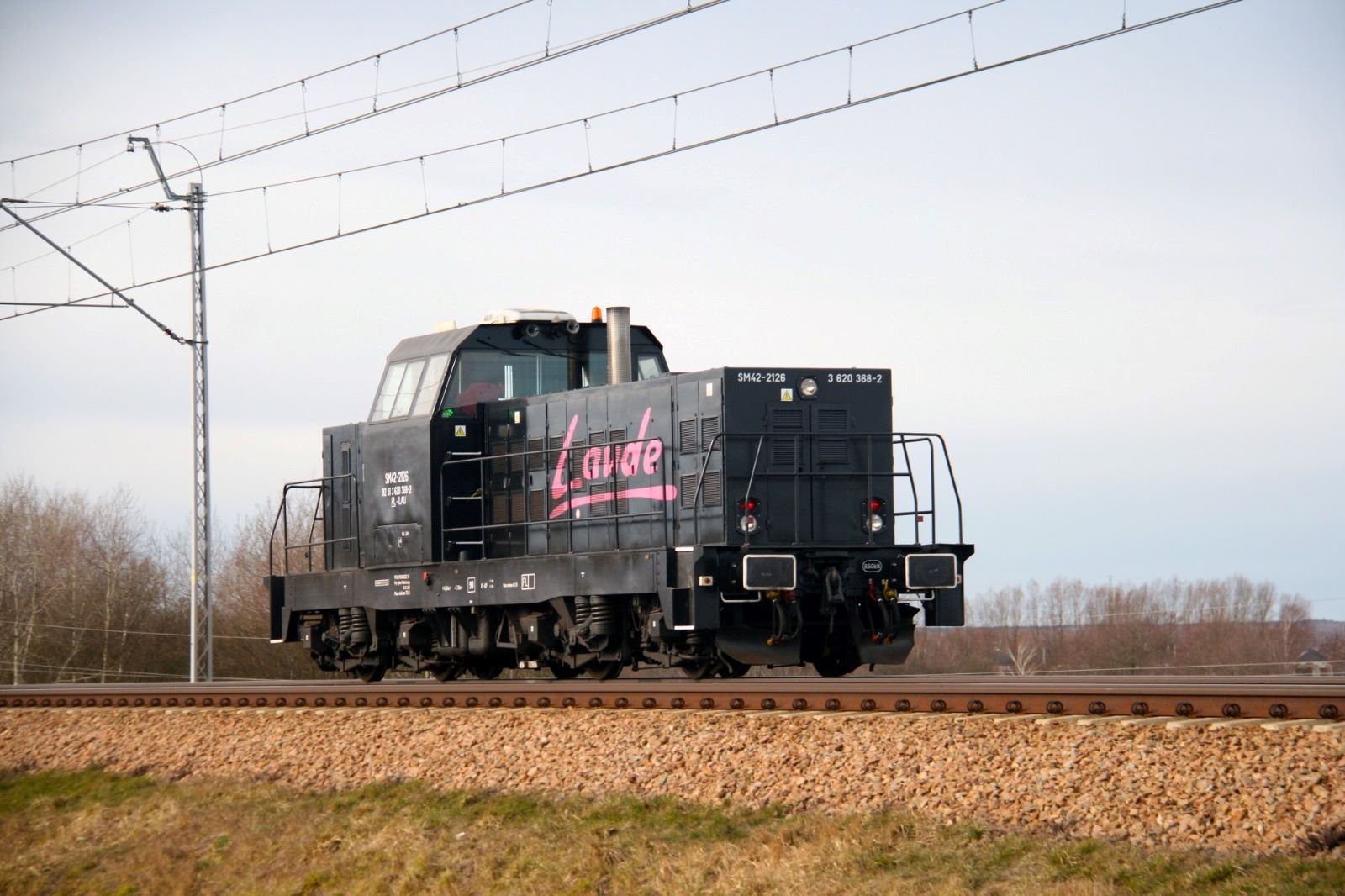
A significant proportion of the locomotives used for freight transport in the European Union were manufactured in Eastern Europe. In the case of these machines, it is relatively easy to replace their wheelsets and adapt them for operation on Ukraine’s railway network. It is important to remember that Ukrainians are not asking for new locomotives – they need ones that can be put into service almost immediately. Since the beginning of Russia’s full-scale invasion, 533 locomotives belonging to Ukrzaliznytsia (Ukrainian Railways) and another 75 owned by private industrial companies have been damaged. Only some of them can be repaired.
According to experts from Laude Smart Intermodal, the key to providing meaningful assistance to Ukraine lies in coordinated action by Poland and other European countries. It is worth noting that, at the end of October, Finland announced that it would donate ten operational Dv12 diesel locomotives to Ukraine, along with a package of spare parts.
“I am absolutely convinced that European countries should transfer a substantial proportion of their old but still operational locomotives, which are approaching the end of their service lives, to Ukraine. These should then be replaced with new rolling stock, supported by existing EU funds or new financial instruments introduced by the European Union.
“Such an initiative would provide a tremendous – and, frankly, much-needed – boost to European locomotive manufacturers, including those in Poland. It is worth noting that this decision would not only help Ukraine but also significantly reduce unpredictability in EU rail freight operations, as the efficiency of old locomotives is less than 50%.
“Finally, considering the survival prospects of locomotives operating in Ukraine, there is no need to carry out extensive overhauls. It would be sufficient to maintain them in operational condition through routine servicing. There is also no reason why maintenance facilities could not be located on the Polish side of the border. This approach is already used for other types of vehicles and has been operating successfully for years. There are plenty of suitable locations along Poland’s broad-gauge railway lines,” argues Marcin Witczak, President of the Management Board of Laude Smart Intermodal.
Replace and Transfer
We are all aware that Russian forces are systematically destroying Ukraine’s railway rolling stock, which has become one of the primary targets of Russian drones.
“Polish railway operators can assist with freight transport outside Ukraine, but they have virtually no capacity to transfer locomotives for use within the country. Finland is in a considerably better position, partly because its railway network still uses the broad track gauge inherited from the Russian imperial era,” adds Marcin Witczak.
The proposal occasionally appearing in the media to transfer the entire locomotive fleet operating on Poland’s broad-gauge railway line to Ukraine may attract considerable attention, but there is currently no possibility of rapidly replacing the donated rolling stock with new equipment.
“Nevertheless, this is also one of the ideas worth exploring. It could be implemented within a relatively short period – no more than a dozen or so months – provided there is full cooperation with locomotive manufacturers and certification authorities to ensure that new locomotives receive priority approval for operation. In my opinion, the process could certainly be accelerated, starting with a review of the relevant procedures,” concludes Marcin Witczak.
At this stage, it would be worth considering a plan to transfer several hundred old diesel locomotives that have already been withdrawn from service and are readily available at Polish companies. Those that are no longer operational could serve as a valuable source of spare parts.