The Coffee and Tea Market Research Institute continuously monitors the most interesting developments in Poland’s coffee and tea market. From the abundance of available data, it selects those which, in the experts’ view, illustrate consumer habits and the changes taking place among consumers of the country’s two most important beverages.
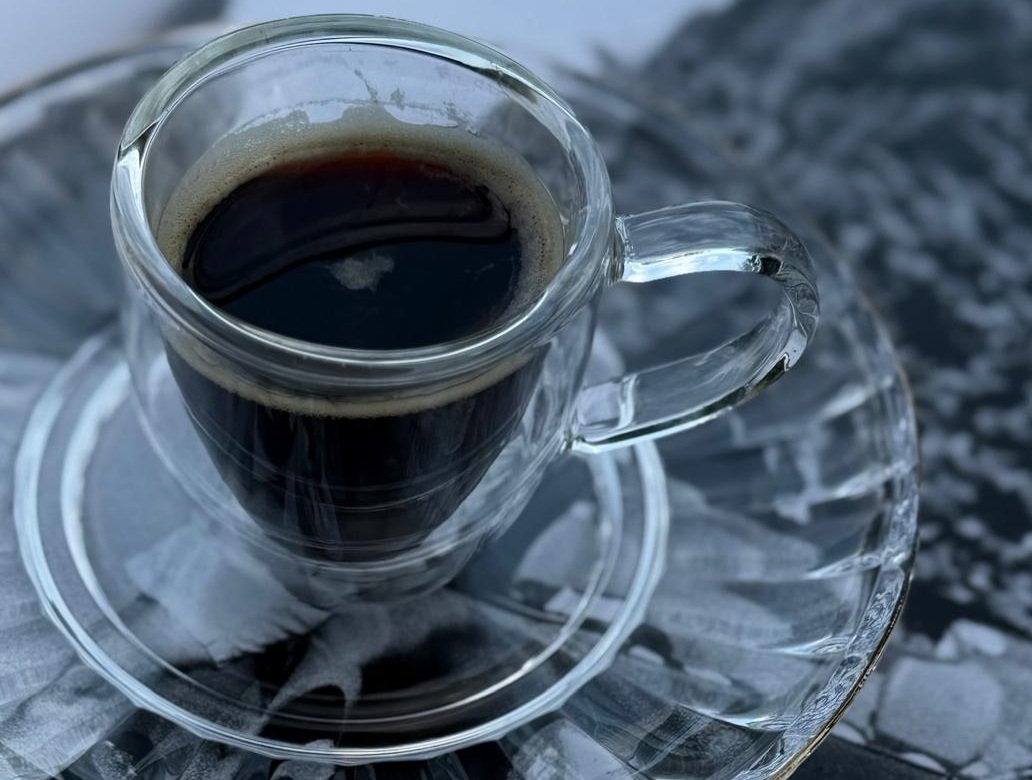
The latest available data show that more expensive and higher-quality products are steadily gaining importance, meaning that consumers are increasingly choosing better-quality beans. Ground coffee and various ready-to-drink coffee beverages, such as cold brew and canned latte, are also gaining popularity. It is also worth noting that coffee buyers are paying increasing attention to sustainability and product origin.
“At the same time, the market clearly shows that classic flavours are displacing novelties, a trend described as an ‘escape from the world of AI’. Both coffee and tea are associated with a calm atmosphere — hygge, the Danish idea of cosiness — in contrast to matcha’s loud and eye-catching aesthetic. Consequently, increasing emphasis is being placed on creating environments that encourage people to put aside their phones and laptops, build relationships and engage in conversation,” says Dr Sylwia Mokrysz, President of the Coffee and Tea Market Research Institute.
Looking at the Polish market, let us begin with the fact that the number of establishments serving coffee has increased by 8.8% compared with last year. At the same time, their revenues grew by nearly 3%.
“This clearly demonstrates that the market is growing in terms of price rather than sales volume. If we set aside the issue of inflation, we believe this also confirms that Polish consumers’ coffee preferences are changing. I would say that we are seeing growing interest in high-quality coffees sold at reasonable prices,” Dr Sylwia Mokrysz explains.
Market analyses also show that the fastest-growing segments are specialty espresso, decaffeinated coffee and drip bags, which allow coffee to be brewed directly in a cup without a coffee machine.
Flavoured coffees remain popular
As far as flavours are concerned, demand in Poland for nut-flavoured coffees remains strong, particularly in premium combinations of nuts — such as hazelnut or pistachio — and chocolate. Another market trend is dirty chai, which combines classic espresso with ginger, cardamom, cinnamon, cloves and, of course, pepper; this may take the form of a gingerbread spice blend or simply cardamom. Another notable trend is “swicy” — a combination of sweet and spicy flavours, a name derived from the English words sweet and spicy.[1] In this trend, once-fashionable syrups have been replaced by flavour notes of predominantly natural origin.
What are we drinking this year?
“Research shows that we have taken a liking to sachets containing ground coffee, which we brew like a tea bag. We choose them because they are convenient and we find their taste acceptable. True coffee classics are not losing popularity, as perhaps best illustrated by the decisive return of traditional espresso, consumed without milk. Cold-brewed coffees are also worth mentioning, as they have become one of this year’s major consumer phenomena, if not outright hits. Decaffeinated coffees are performing well, mainly thanks to modern production technology that allows the beverage to retain its authentic taste and aroma. Finally, it is worth noting that a growing number of consumers are developing a taste for coffees produced using experimental bean-processing methods, in which the beans are fermented with various fruits and spices,” says Sylwia Mokrysz.
Does Allegro reveal the truth?
Analysts at the Coffee and Tea Market Research Institute draw attention to some particularly interesting conclusions emerging from coffee-market data collected by Allegro.
“Within one month, the value of coffee sales on the marketplace reached PLN 9.5 million, with approximately 184,000 packages changing hands. The platform has a significant influence on the shape of Poland’s coffee trade,” Dr Sylwia Mokrysz notes.
Other data from the same source show that transactions are dominated by coffee beans and freshly roasted coffee, accounting for 54% and 31% of the basket respectively. Ground coffee represents approximately 13.1% of the market’s value, while instant coffee accounts for 12.9%. Decaffeinated coffee, meanwhile, has a share of approximately 8%.
“The market is changing in step with consumer habits. The transformation we are witnessing has become the subject of numerous academic studies. Those interested are invited to consult the scientific journal Coffee & Tea Marketing Journal, published as part of the activities of the Coffee and Tea Market Research Institute,” Dr Sylwia Mokrysz concludes.
[1] TikTok is shaking up the menu again. This unusual combination is selling increasingly well, https://www.horecatrends.pl/trendy/119/tiktok_znow_miesza_w_menu_to_dziwne_polaczenie_coraz_lepiej_sprzedaje,96018.html, accessed 11 September 2026.