By CEO of The Latvian Federation of Security and Defence Industries (FSDI Latvia) Elīna Egle.
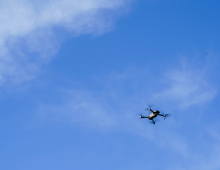
The events of recent weeks in Latgale, and subsequently the “echo” of these events in Riga—where drones have posed a threat to Latvia’s airspace and critical infrastructure—have raised a number of questions among the public and led to changes within the Cabinet of Ministers and the Saeima. One of the most frequently asked questions even today is: Is Latvia truly a major drone manufacturing power, as we tend to emphasize both in the public sphere and at international exhibitions?
Looking at the current situation, it must be said that at first glance this question truly seems justified and understandable. It has emerged alongside the public uproar surrounding the fallen drones and the changes in the political leadership of the Ministry of Defence and the government. However, in order to answer it fairly and objectively, two closely related aspects must be separated. One concerns the industry’s capability to manufacture modern drones and counter-drone solutions. The other is whether the state and security institutions actually use these solutions — purchasing and integrating them into operational activities in a timely manner. Manufacturing and public procurement are two completely different processes. According to best practice, these processes should work hand in hand, complementing one another. In reality, however, the situation is quite different. While the industry struggles to find attentive ears in the domestic market, foreign militaries are far more proactive in identifying and adopting the best solutions developed in Latvia. Consequently, one must ask: why are drones and counter-drone systems manufactured in Latvia being purchased, integrated, and used in countries such as Ukraine, the United Kingdom, Belgium, and elsewhere, but not sufficiently in our own country?
And this is precisely where the root of the problem lies.
Latvia’s security and defence industry companies have repeatedly demonstrated their technological and innovative capabilities. Our companies are not only capable of manufacturing drones and counter-drone systems, but are also able to develop and implement new, modern solutions within a very short time frame, adapting to the realities of war and the evolving security environment. Latvian companies regularly participate in field tests, international conferences, seminars, and military demonstrations, where they continuously prove the effectiveness of their technologies.
Keeping pace with global technological development, Latvia manufactures ground, underwater, surface, and aerial drones, as well as counter-drone solutions, including spoofing and signal-jamming systems. Moreover, these solutions are not merely experimental ideas or prototypes — they are exported and used internationally. Latvian companies have signed contracts with both European Union and NATO member states, as well as partners from other continents. This is significant proof of the industry’s quality and competitiveness. That is why it is especially paradoxical that, while foreign armies actively purchase and use drones and counter-drone systems produced in Latvia, the integration of these solutions within Latvia itself remains slow and insufficient. Yes, Latvia has signed several contracts for the development and procurement of drones and related systems. An Autonomous Systems Competence Centre has been established. Steps have been taken in the right direction. But these are only a few steps, and for the scale of the challenge ahead, they are far from enough and far too slow. Regrettably, despite the industry’s openness to cooperation, consultations, demonstrations, seminars, meetings, and other forms of engagement, comprehensive and continuous cooperation between the industry and end users remains seriously lacking.
For Latvia to achieve superiority in its airspace, we must answer one decisive question: if Latvian companies are capable of creating world-class technologies, why are these technologies not being used in a timely and sufficient manner to strengthen Latvia’s own security? Our companies offer counter-drone technologies that are field-tested and capable of successfully meeting operational requirements. These technologies are demonstrated to state institutions, the Ministry of Defence, the National Armed Forces, and other security structures. Furthermore, drone technologies are constantly being improved by closely following developments in warfare, tactics, technologies, and operational approaches. Yet, for reasons not entirely clear, solutions manufactured in Latvia are often not procured in the volume or at the speed required by the current security situation. We must adapt the public procurement system to emergency conditions, integrate new technologies into defence capability doctrines, and ensure comprehensive training programmes for the integration of these solutions, including within the framework of civil-military cooperation.
Meanwhile, abroad, Latvian technologies are highly valued.
The fact that foreign militaries actively purchase and use drones and counter-drone systems developed in Latvia, while domestic manufacturers often remain in the background within Latvia itself, is unfortunately a serious signal of underutilized potential. Moreover, it represents a significant reputational blow to the previous political approach, where much was said publicly about developing the drone industry, while in practice local technologies were not fully integrated into the national security system.
It must also be said that Latvia’s drone industry is currently being unfairly discredited. There has been no situation in which a drone manufactured in Latvia failed to accomplish its mission or where a counter-drone solution developed in Latvia failed to perform according to the established requirements. Latvian companies have proven their capabilities again and again. Therefore, great caution must be exercised in today’s discussions. Drone incidents in Latvia have clearly become a convenient instrument for political manipulation and Kremlin disinformation. It is evident that the situation is being exploited for political games and narrative-building shortly before the parliamentary elections. Unfortunately, this has also contributed to government destabilization and the resignation of the Minister of Defence, which the Prime Minister justified partly by delays in decisions regarding the procurement of counter-drone technologies.
However, this is not the time for political intrigue or shifting blame onto one another. This is the time for pragmatic and thoughtful action.
Latvia currently has a unique opportunity to build its security on technologies created by its own companies. We possess the knowledge, innovation, manufacturing capacity, and export experience. Our industry manufactures, improves, innovates, and exports. It serves as an example to others while also being capable of protecting its solutions from plagiarism.
Is Latvia a drone manufacturing superpower? Yes, Latvia is an internationally recognized leader in drone manufacturing. I have absolutely no doubt about that.
But that alone is not enough. The state, the armed forces, and security services must be capable of making decisions much more rapidly, cooperating much more closely with the local industry, and integrating solutions developed in Latvia into our national security system much more purposefully. Latvia’s security cannot rely solely on loud slogans or conference presentations. It must be built on real procurements, partnerships, and practical technological implementation. Latvia IS an internationally recognized drone manufacturing power — this is evidenced by the number of companies, specialists working within them, and technological solutions developed here in relation to the country’s small population size, regardless of political games within the state. The drone incident in Rēzekne does not disprove this fact; on the contrary, it only highlights even more clearly the urgent need to fully utilize the potential that Latvia already possesses today.
Source: federacija.lv