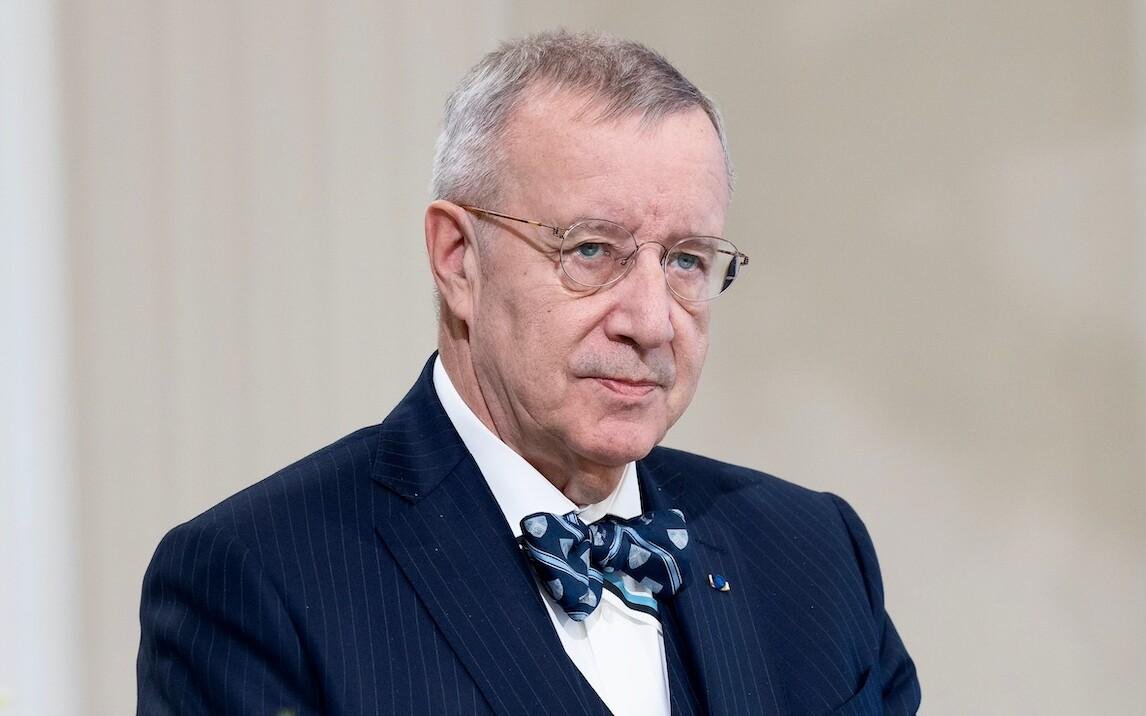
We cannot outsource our future. If we remain passive, others will absorb the talent and reap the rewards. But if we act, we will not only strengthen our university — we will accelerate the entire scientific, cultural and economic metabolism of Estonia, finds Toomas Hendrik Ilves.
Let me start with language, even though it’s not my area of expertise. In 1632, the scientific language of Academia Gustaviana was Latin. Until World War II, German would have naturally served as the language of scholarly communication in our corner of Europe. A century ago, German was also the global language of physics; when I attended university, my alma mater in the United States still required knowledge of German or Russian in order to earn a doctorate in physics. Today, neither is required.
English has become our lingua franca. Perhaps one day — especially if we fail to take responsibility for our future amid a rapidly shifting geopolitical landscape — our meetings in Tartu will be held in Mandarin.
In what follows, I will focus on the opportunities we have to become more international at a time when the world is marked by great geopolitical anxiety. Not on how difficult everything is, but on how challenging times can open up new possibilities. I’ll look at it from a slightly different angle: how geopolitical shocks are reshaping the academic world and how we can turn those changes to our advantage.
An apocryphal joke and the truth it hides
I’ll begin with a completely apocryphal story from the 1940s in Los Alamos, New Mexico — a place that, during World War II, was the ultra-secret nuclear weapons development site under the Manhattan Project. Physicists Edward Teller, John von Neumann, Leo Szilard and Robert Oppenheimer are deep in discussion about the challenges of building an atomic bomb. At one point, the American Oppenheimer leaves the room and one of the three remaining men says: “Good, now we can speak Hungarian again.”
Read more: ERR.EE