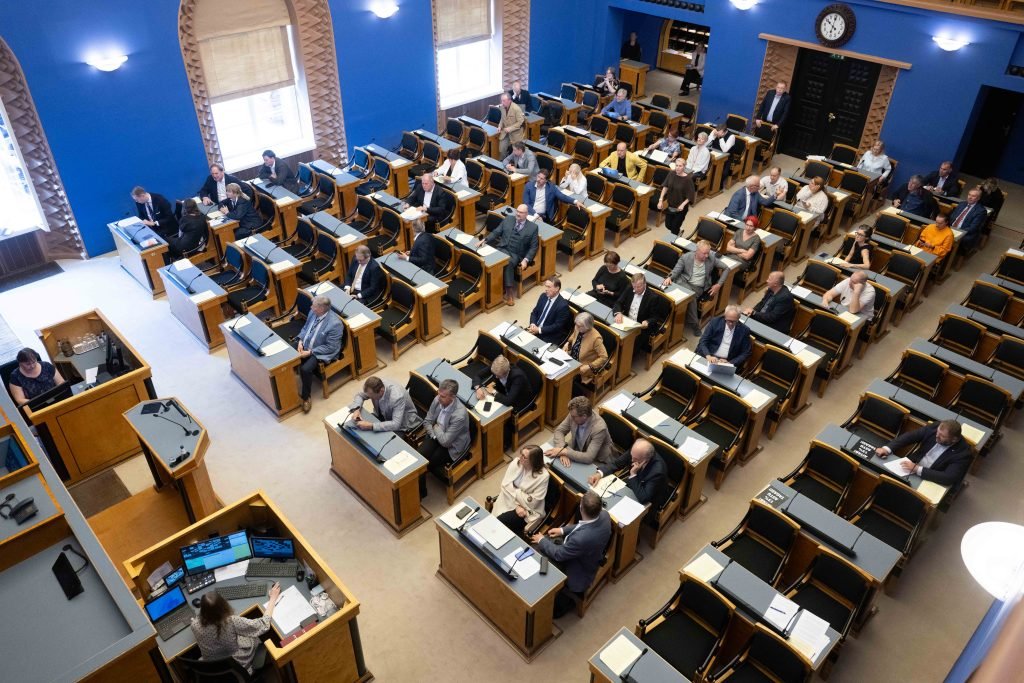
Estonia’s Riigikogu has passed legislation creating an accelerated planning and permitting route for industrial investments of at least €40M, with the aim of completing major procedures within roughly one year.
The new law sets a threshold tied to 0.1% of Estonia’s GDP, which based on current Statistics Estonia figures amounts to a minimum of €40M. Eligible projects must be located in Estonia and relate to industry, manufacturing, processing or a connected field, and must come with a well-developed project plan and demonstrated wider economic benefits for the region and the country.
Two planning routes are available depending on the project’s location and readiness. Where no site has been designated in an existing plan, an accelerated national spatial planning procedure is intended to wrap up within approximately one year. If a suitable site is already covered by a county or municipal comprehensive plan, the local authority can issue special design conditions without launching a full detailed spatial plan, potentially reducing the local process to a matter of months.
A key feature of the new framework is that steps previously handled one after another can now run in parallel. A dedicated ministry contact point will help investors coordinate the process and monitor agreed deadlines, removing repeated administrative steps and waiting periods.
A decision recognising a project as a strategically important investment will be valid for five years. If a building permit is issued within that window, the decision remains valid until an occupancy permit is granted. The faster timetable does not remove environmental or quality requirements.
The Riigikogu has approved the law, but the government has yet to publish the detailed eligibility and assessment rules in a regulation following the law’s entry into force. Enterprise Estonia chair Ursel Velve noted that slow procedures can hold back projects even when business plans and financing are in order, and said the fast track is intended to reduce that risk for higher-value manufacturing and new technology investments.
Source: investinestonia.com