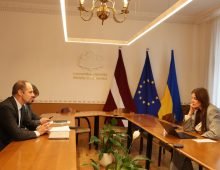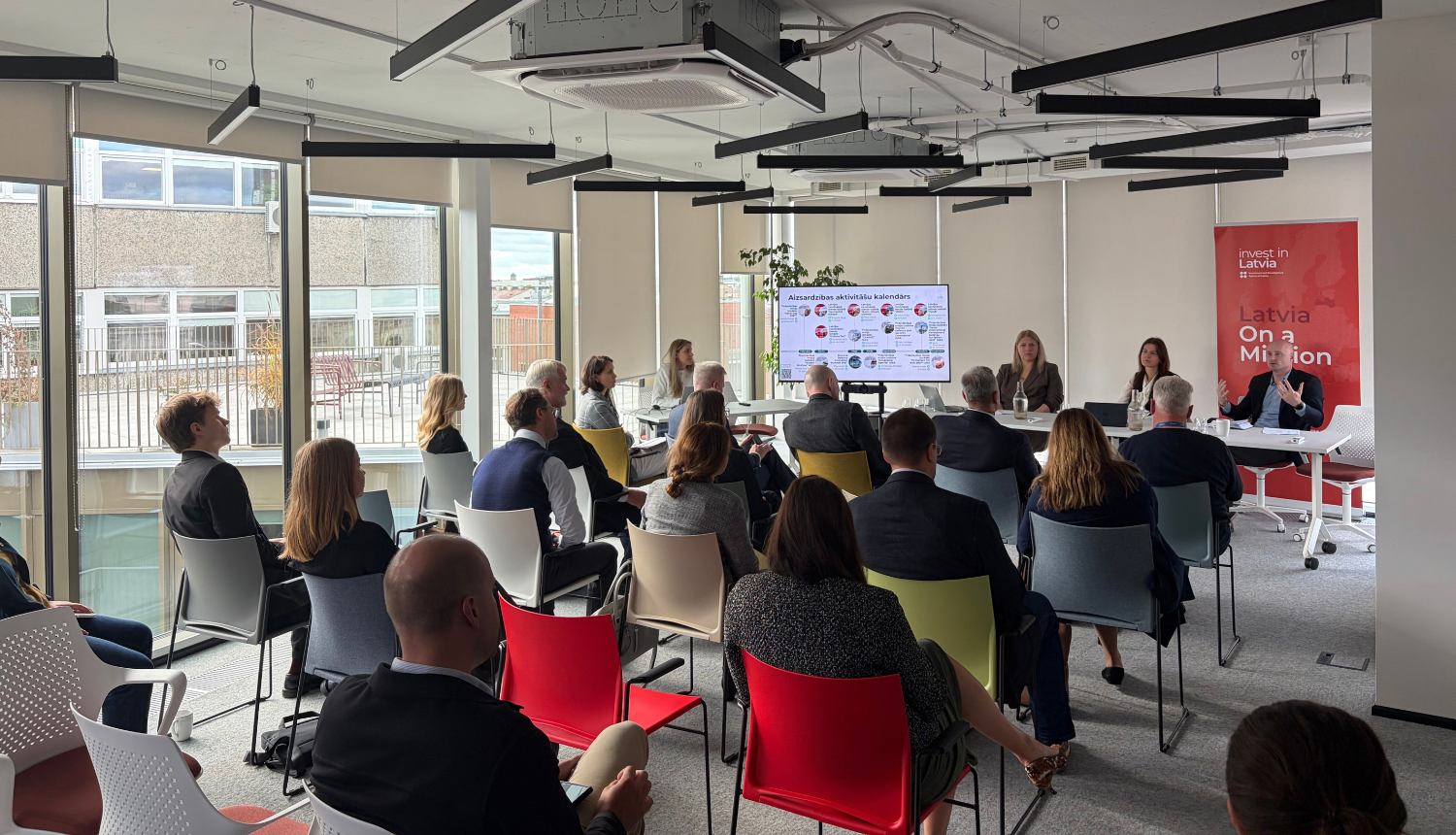
A subgroup of the Defence Industry Advisory Council has begun work under the leadership of the Investment and Development Agency of Latvia (LIAA) to help Latvian defence companies reach international buyers and support the development of manufacturing in Latvia. At its first meeting in Riga on 6 October, representatives of public institutions, industry associations and chambers of commerce outlined priorities for cooperation on exports, investment attraction and the planning of international events.
Demand for defence technologies is opening up new opportunities for Latvian companies, but competition for contracts, investment and a place in international supply chains is intense. The subgroup’s task is to facilitate information sharing, consider industry proposals and coordinate the work of participating institutions and organisations in line with companies’ needs.
“The defence technology sector offers Latvia an opportunity to develop high-value-added manufacturing, create skilled jobs and increase exports. The Advisory Council’s subgroup allows us to bring everyone around the same table to discuss businesses’ needs and agree on how each institution can help. LIAA’s role is both to help companies reach international buyers and partners and to attract investment for manufacturing development in Latvia. Business initiative is also essential — clearly defined target markets, cooperation with our overseas representatives and regular information sharing. This enables us to work together on concrete business opportunities,” emphasises LIAA Director Ieva Jāgere.
The subgroup will coordinate support from LIAA, the Ministry of Defence, the Ministry of Foreign Affairs and the Ministry of Economics, drawing on the experience and contacts of industry associations, business organisations and chambers of commerce. At the inaugural meeting, participants reviewed the proposed working model and suggested topics for further work.
Export connections and a broader Latvian offering
The discussion focused particularly on the quality of business meetings at international exhibitions and trade missions. Participants proposed organising dedicated defence industry delegations, approaching potential international partners well in advance and helping companies prepare clear, compelling proposals.
“An international industry event held in Latvia allows us to showcase our manufacturing capabilities far more extensively than we can at a single exhibition abroad. The Drone Summit provides a strong foundation for presenting a broader Latvian defence industry offering — from technologies and finished products to components and assemblies. It also gives mechanical engineering and metalworking companies an opportunity to meet international buyers and enter defence supply chains. Through the subgroup, we can coordinate this work in advance to show international partners both our companies’ areas of expertise and the opportunities for cooperation,” says Ivars Eniņš, Vice-President of the Latvian Confederation of Industry Development.
Participants emphasised that defence supply chains also offer opportunities for companies that manufacture components and assemblies or provide the technologies and services defence manufacturers need. Cooperation among several Latvian companies could also enable them to combine their offerings into broader, integrated solutions.
Cooperation with LIAA’s overseas representative offices, Latvian embassies and military attachés is essential to building export connections. The meeting also addressed the need to update the defence industry catalogue regularly so that it serves as a practical tool for presenting Latvian companies and their offerings to international partners.
Participants reviewed the calendar of international activities for 2026 and 2027, which includes trade missions, Latvian national pavilions and industry events in Europe, North America, Australia and South Korea. The discussion highlighted the importance of coordinating events well in advance and attracting international buyers, partners and investors.
From investment plans to production
Alongside exports, the meeting focused on establishing new manufacturing facilities and expanding existing production in Latvia. Companies were encouraged to inform LIAA about regulatory and administrative barriers that hinder development or influence investment decisions. LIAA can refer these issues to the relevant ministries for consideration.
The forthcoming defence industry investment roadmap was proposed as one of the tools for further work. It examines the investor’s journey from an initial idea to project implementation in Latvia, with particular attention to regulatory requirements and stages where practical improvements are needed.
Participants proposed involving a wider range of finance providers to ensure that companies at different stages of development have access to suitable funding sources — from business angels and venture capital to bank financing for manufacturing expansion. They also suggested establishing clear performance indicators to track the sector’s development and assess the benefits of these activities for businesses.
The subgroup is expected to meet twice a year, with thematic working meetings and information exchanges organised between sessions as needed.